At a glance
- Best for
- History, architecture and manuscripts
- Gateway
- Timbuktu Airport (TOM), very limited service
- Time needed
- Two to three days
- Best season
- November to February
- UNESCO
- Timbuktu, listed 1988
- Language
- Songhai, Tamasheq, Arabic and French
A note before you plan
Timbuktu is remote and sits in northern Mali, where armed groups operate and where the city has faced blockades, attacks and shelling in recent years. Kidnapping of foreigners is a serious threat. Every major government advises against all travel. This guide explains the city's history and heritage; please read your government's current advice before considering any trip.
Why Timbuktu is legendary
Founded by Tuareg herders around the 12th century, Timbuktu grew rich at the meeting point of camel caravans from the Sahara and boats on the Niger. Gold, salt, cloth and books passed through it. Under the Mali Empire, especially after Mansa Musa's famous pilgrimage to Mecca in 1324, and later under the Songhai Empire, it became a centre of Islamic learning with thousands of students.
For Europeans, who could not reach it for centuries, Timbuktu became a byword for the end of the world. The explorer René Caillié returned from it in 1828; Alexander Gordon Laing had reached it two years earlier but was killed on the way back.
The mosques
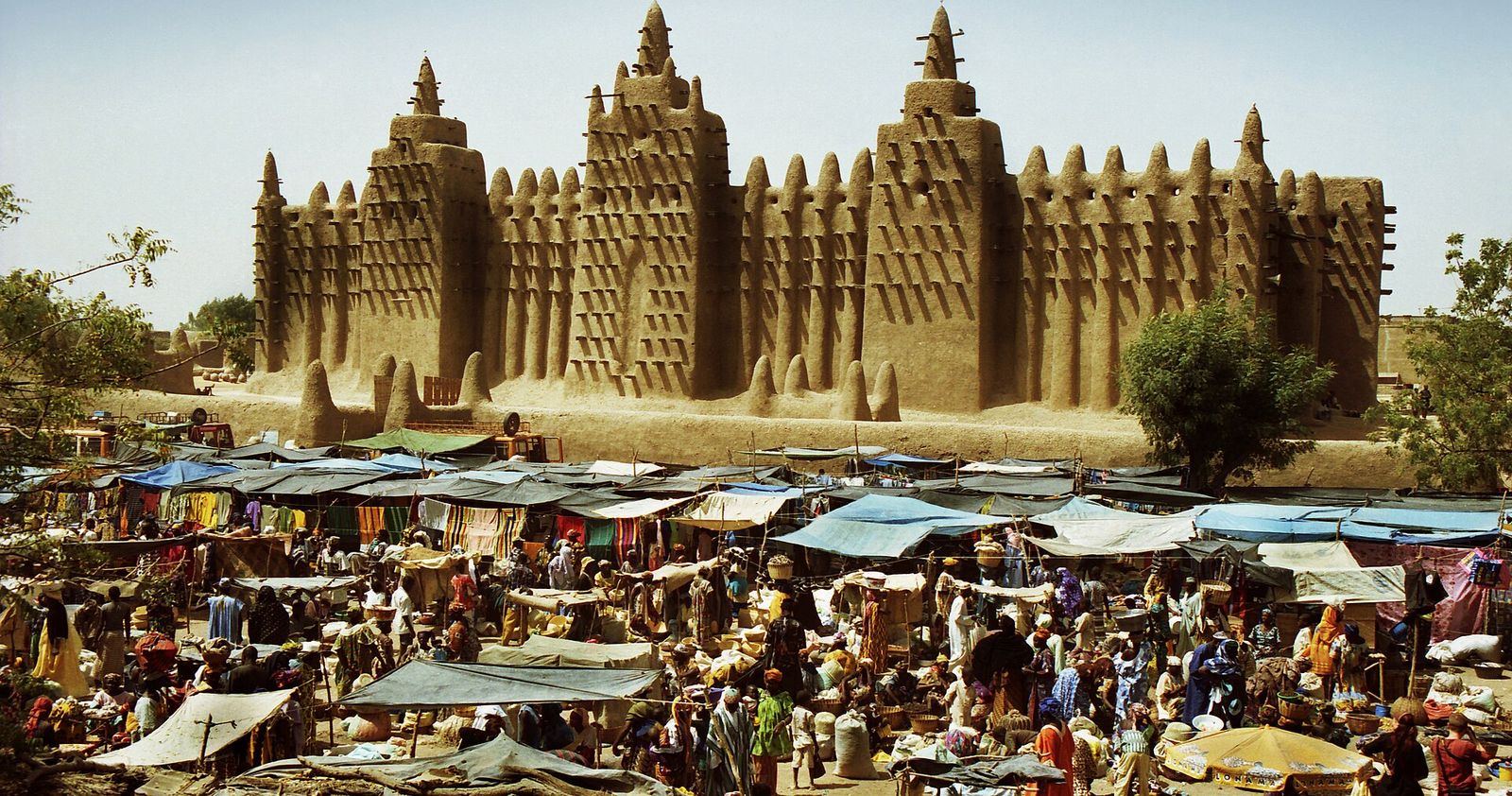
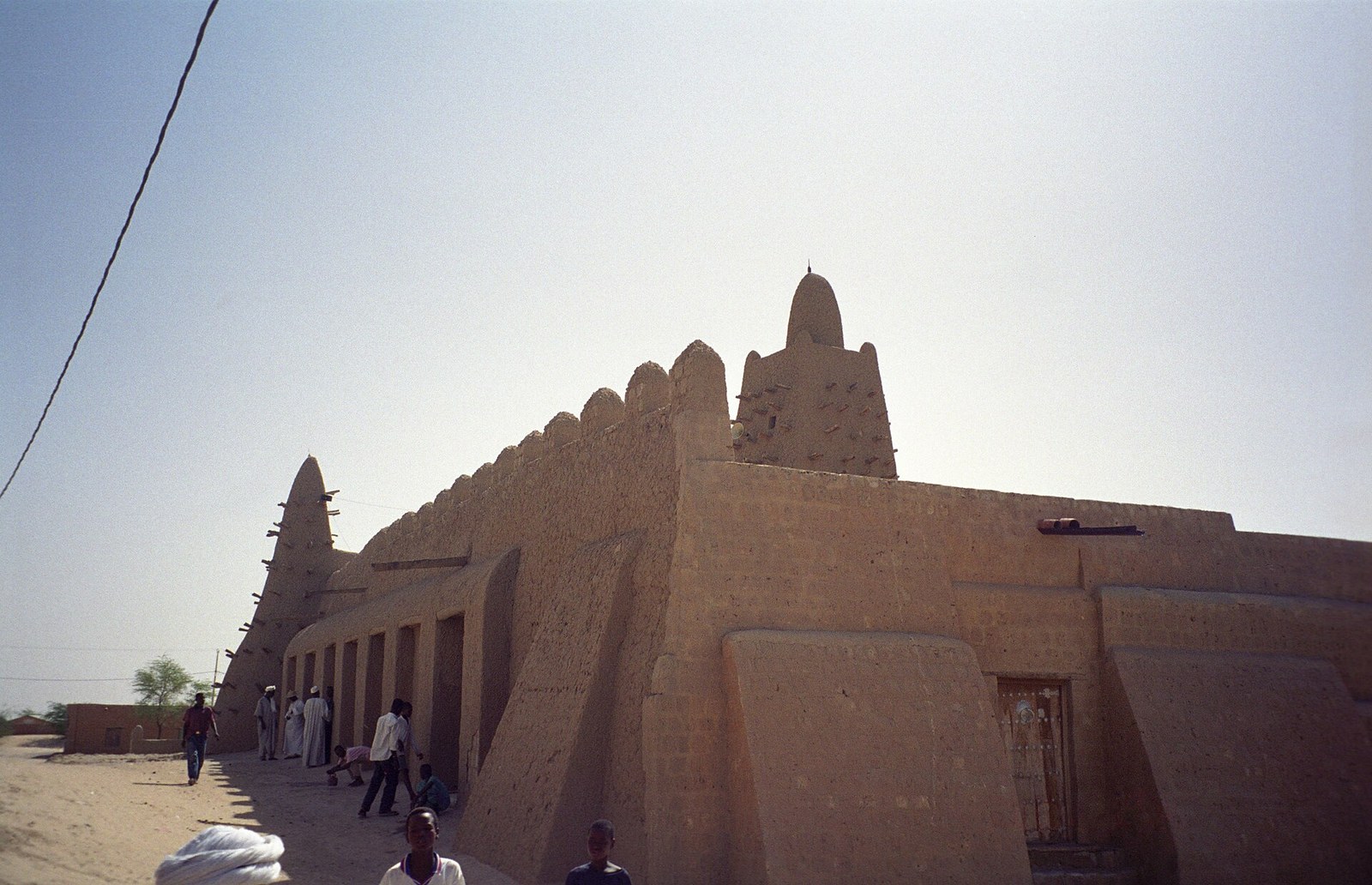
- **Djinguereber Mosque**: built around 1327 on the orders of Mansa Musa and designed, by tradition, by the Andalusian poet and architect Abu Ishaq es Saheli. It is the oldest and most famous of the city's mosques.
- **Sankoré Mosque**: the heart of the old university, where scholars taught law, astronomy, medicine and theology.
- **Sidi Yahia Mosque**: built in the 15th century and named after a revered scholar.
All three are part of the UNESCO site, which has been on the List of World Heritage in Danger since 2012.
The manuscripts
Timbuktu's families kept hundreds of thousands of manuscripts on religion, law, science, poetry and history, some dating back to the 13th century. The **Ahmed Baba Institute** holds a major public collection. In 2012 and 2013, during the occupation of the city, librarians and families smuggled most manuscripts to Bamako in secret, one of the great heritage rescues of our time. Much of the collection is still kept in Bamako, and many items have been digitised and can be viewed online.
Destruction and rebuilding
During the 2012 occupation, armed groups destroyed many of the city's mausoleums of saints. Local masons rebuilt them with support from UNESCO, and the work was completed in 2015. In 2016 the International Criminal Court convicted a member of the armed group for the destruction, the first case to treat attacks on cultural heritage as a war crime.
Other sights
The houses where René Caillié, Heinrich Barth and Gordon Laing stayed are marked with plaques, and the **Flame of Peace** monument commemorates the 1996 burning of weapons that ended an earlier Tuareg rebellion. The **Festival au Désert**, once held near Timbuktu, has not taken place there for many years.
Getting there
Timbuktu has no safe overland route at present, and flights have been extremely limited. Anyone with essential reasons to go should take advice from their organisation or embassy.
Seeing Timbuktu from home
You can explore Timbuktu without travelling. Many manuscripts have been digitised by libraries and cultural projects, the UNESCO site page has photographs and history, and books and documentaries tell the story of the city and its rescued libraries.
Questions about Timbuktu
Can I visit Timbuktu now?
Every major government advises against all travel to northern Mali, and there is no safe overland route. Read your own government's current advice before considering any trip.
Where are the Timbuktu manuscripts now?
Many were moved to Bamako in 2012 and 2013 to protect them, and much of the collection remains there. Many manuscripts have also been digitised and can be viewed online.
Who built the Djinguereber Mosque?
It was built around 1327 on the orders of Mansa Musa, emperor of Mali, after his pilgrimage to Mecca.
Is Timbuktu a real place?
Yes. Timbuktu is a city in northern Mali, near the Niger River, and a UNESCO World Heritage Site.
Facts checked . Fees, schedules and entry rules change, so always confirm the latest with the official source.