At a glance
- Best for
- Architecture, history and markets
- Gateway
- By road via Ségou and the Bani ferry
- Time needed
- One to two days
- Best season
- November to February
- UNESCO
- Old Towns of Djenné, listed 1988
- Language
- Bambara, Fulfulde, Bozo and French
A note before you plan
Djenné lies in central Mali, an area where armed groups are active and where every major government advises against all travel. The Old Towns of Djenné are on UNESCO's List of World Heritage in Danger. This guide explains what makes the town special so that you understand it, but please read your government's current advice before even considering a visit.
Why Djenné is extraordinary
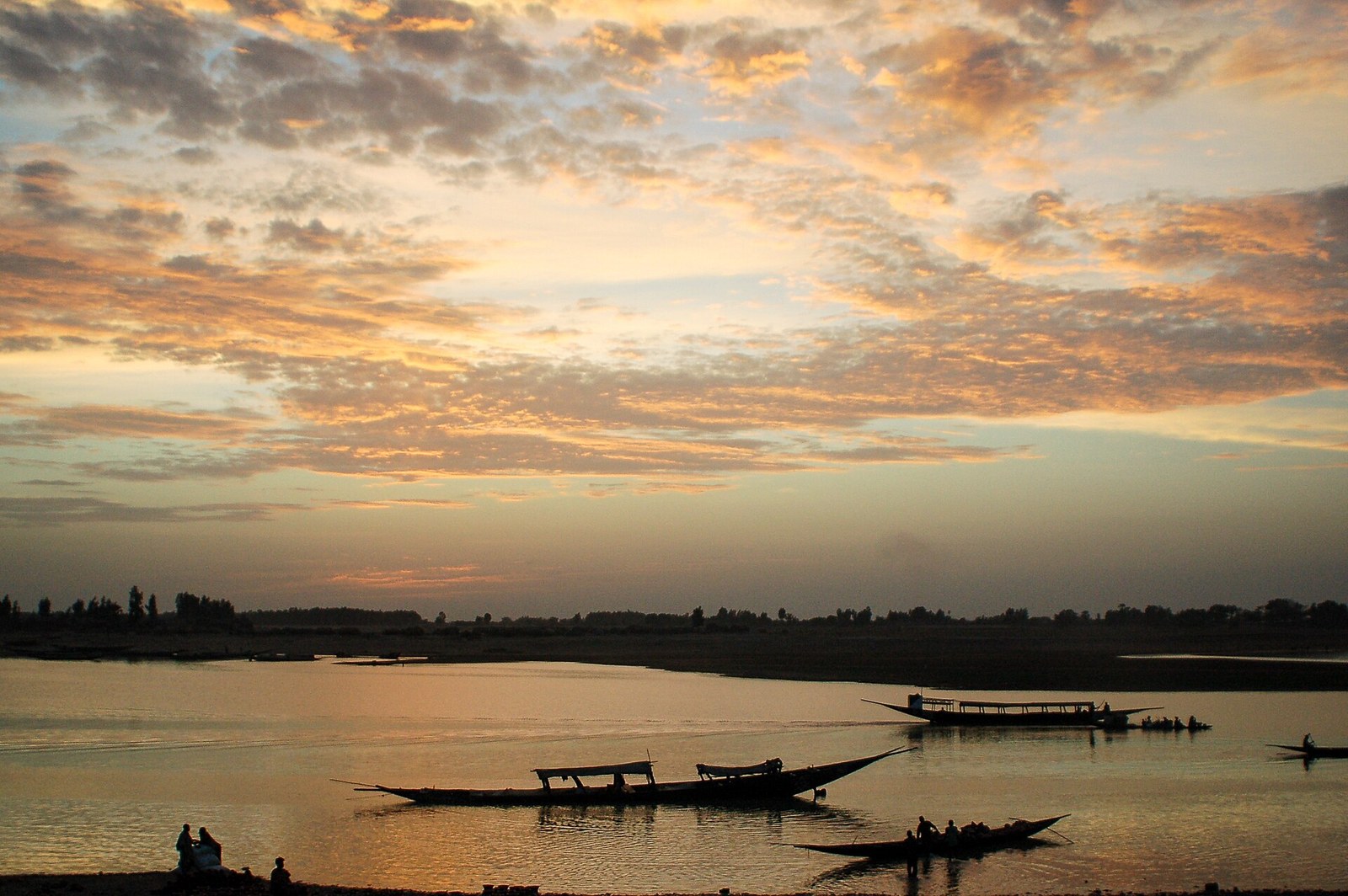
Djenné was founded around the 9th century near the older site of Djenné-Djeno, one of the earliest known cities in West Africa. It grew rich on trade between the forests of the south and the desert routes to Timbuktu, carried by boat through the flooded inner delta. Its Islamic scholars and its architecture became famous across the region.
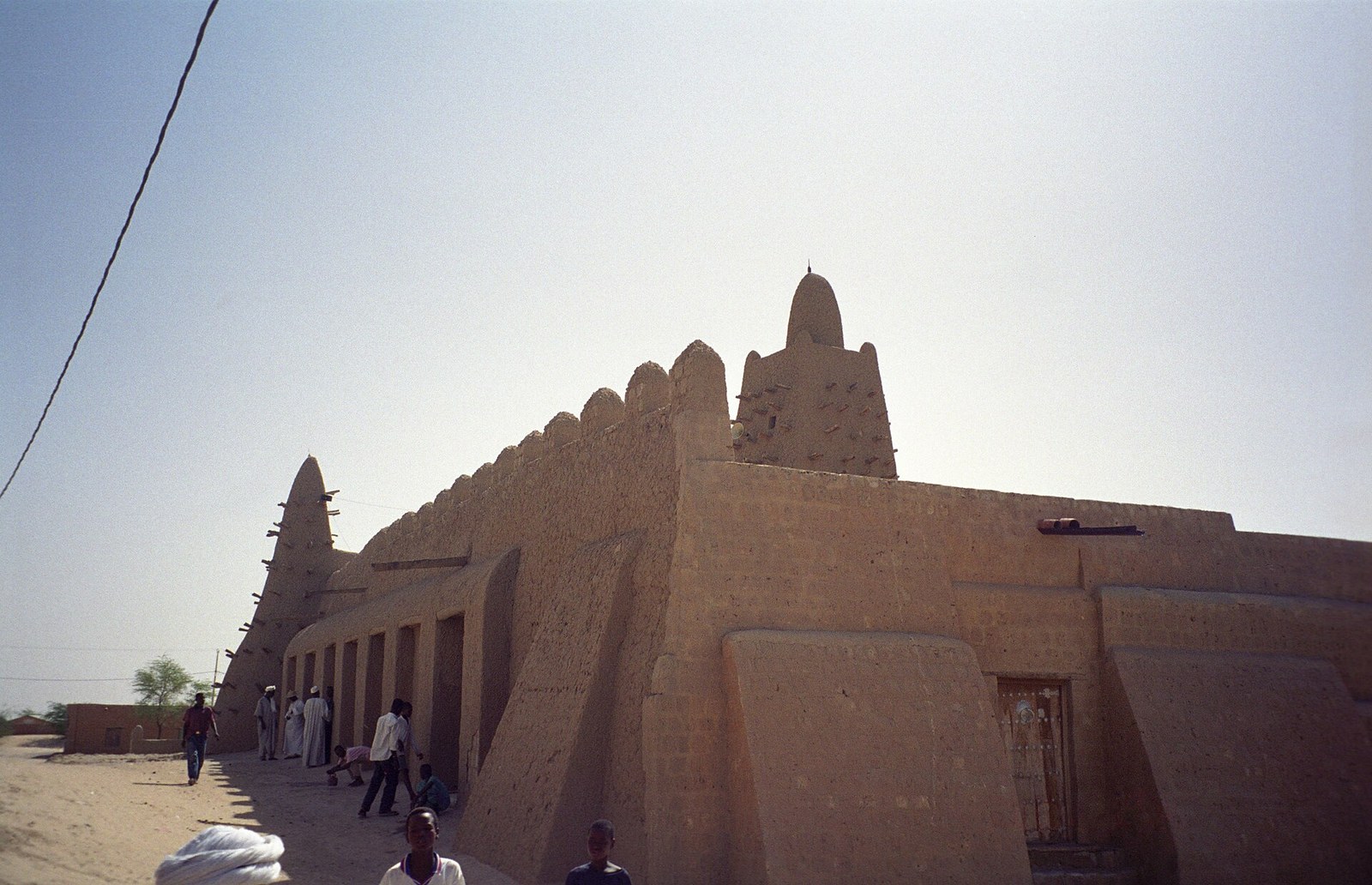
The whole town is built of banco, sun-dried mud brick plastered with mud. Around two thousand traditional houses survive, many with tall façades, pinnacles and carved wooden doors in a style called Sudano-Sahelian. Masons belong to a guild, the barey ton, whose knowledge passes from father to son.
The Great Mosque
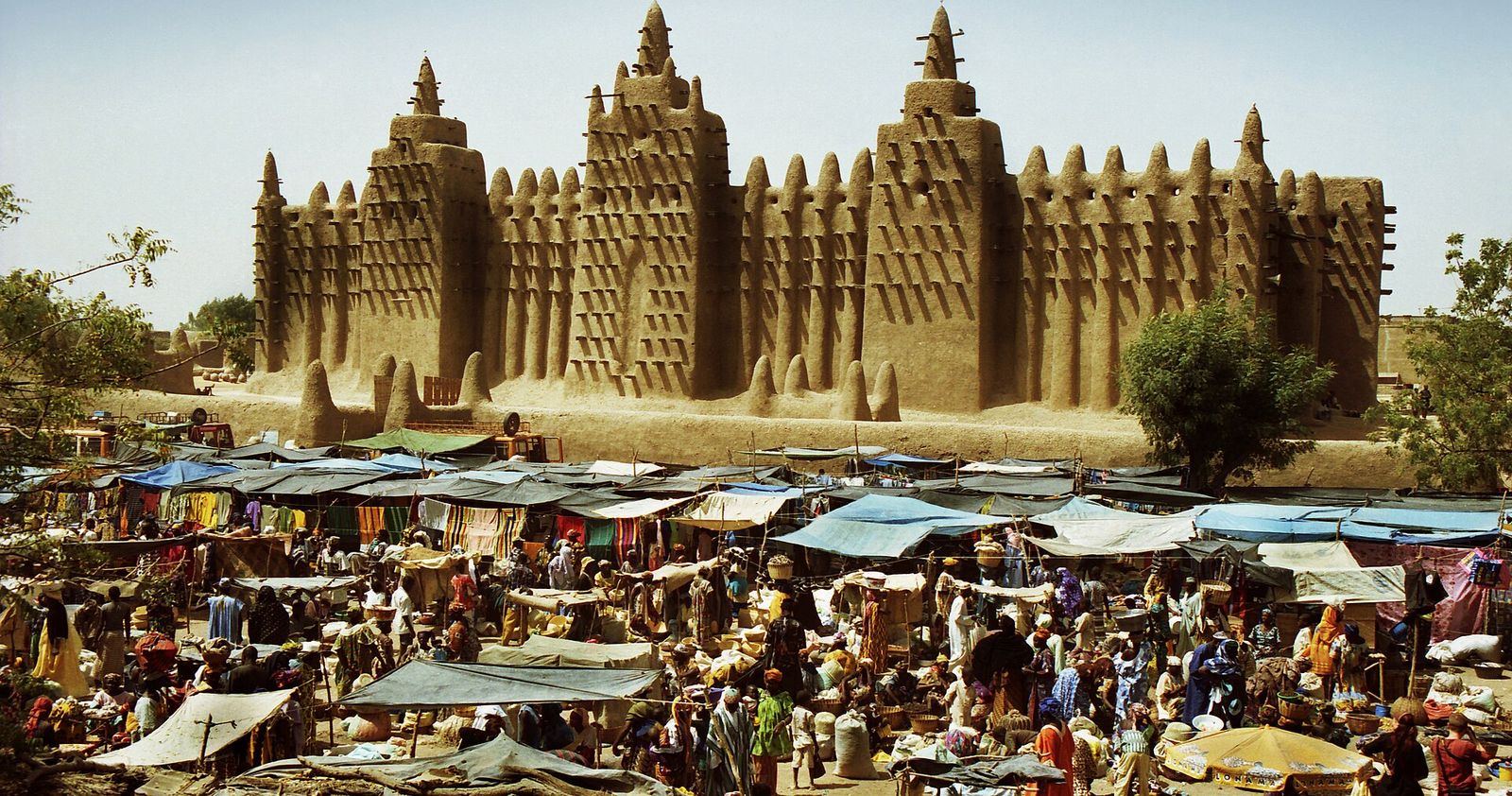
The current mosque was rebuilt in 1907 on the site of earlier mosques, raised on a platform to protect it from the floods. Its three towers and rows of protruding palm wood beams, called toron, are recognisable worldwide. Non-Muslims have not been allowed inside since the early 2000s, but the outside is impressive from the square and from nearby rooftops.
The Crépissage
Each year, usually in spring before the rains, the whole town gathers to replaster the mosque in a festival called the Crépissage. Young men race to carry mud up ladders and onto the walls while women bring water and elders oversee the work, all to drums and singing. It is a living example of shared heritage, and its date is set locally each year.
The Monday market
On Mondays the square in front of the mosque fills with traders from the delta: Bozo fishermen, Fulani herders, Bambara farmers and merchants selling cloth, spices, dried fish, pottery and livestock. It is one of the most photographed markets in Africa. Ask before photographing people.
Djenné-Djeno
A few kilometres from town lie the mounds of Djenné-Djeno, the ancient city that flourished from around 250 BC. Archaeologists found terracotta figures, iron tools and evidence of long distance trade. There is little to see on the surface, but the site changed how historians understood early African cities.
Food and stays
Djenné's food is simple and good: rice dishes, fish from the river, tô and fresh milk from Fulani herders. A few small hotels and guesthouses, some built in local mud-brick style, once welcomed visitors; many have seen almost no guests in years, so confirm any booking directly.
Getting there
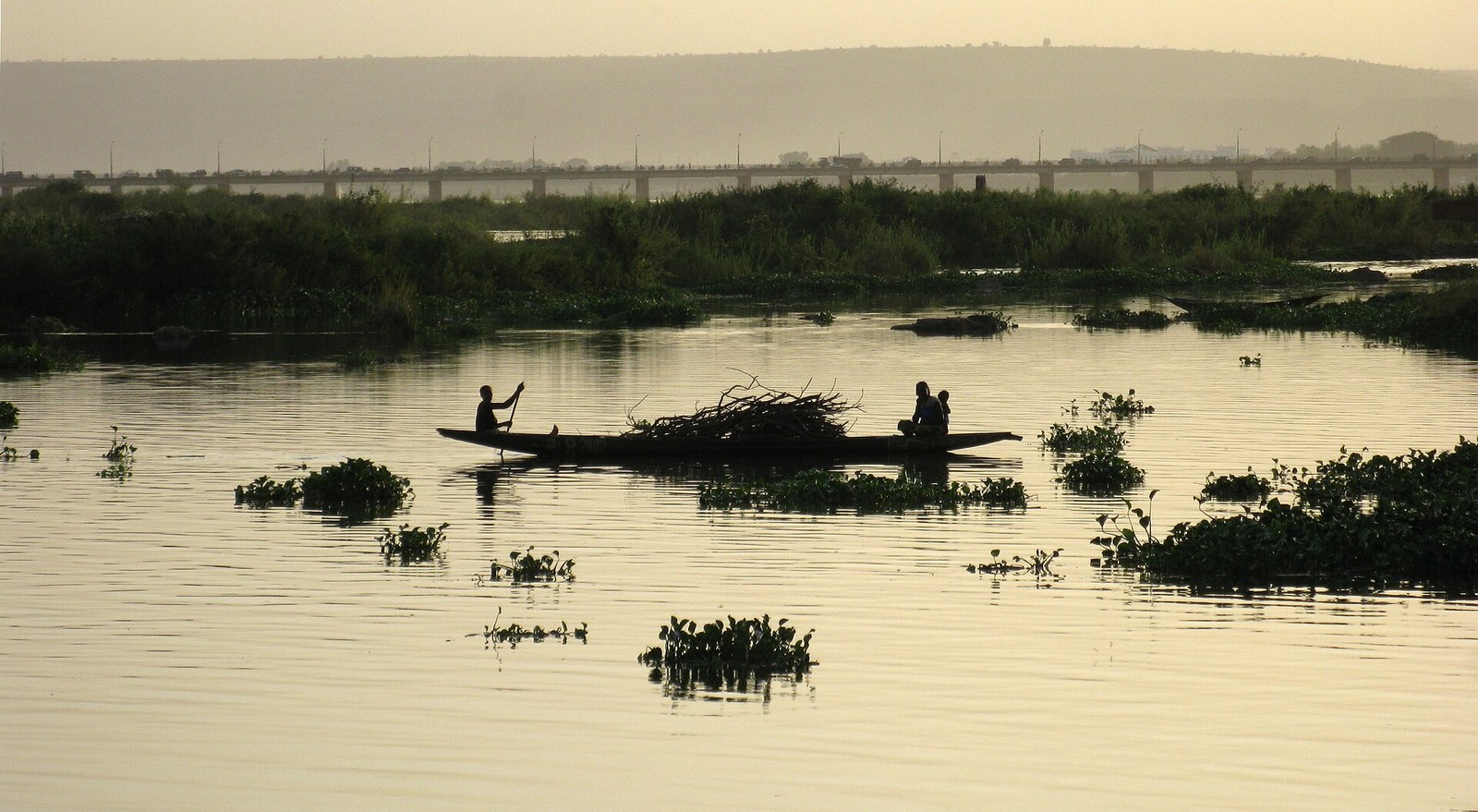
Djenné sits on an island reached by a short ferry across the Bani River, off the main road between Ségou and Mopti. Road travel in this region is high risk, and there is no safe public transport option to recommend today.
Respecting the town
Djenné is a deeply religious town and a living community, not a museum. Dress modestly, ask before photographing people or entering courtyards, and greet elders. Masons, imams and families have cared for the town for centuries, and outside visitors have always been asked to follow their lead.
Questions about Djenné
Can non-Muslims enter the Great Mosque of Djenné?
No. Non-Muslims have not been allowed inside since the early 2000s. The exterior can be seen from the square and nearby rooftops.
When is the Crépissage festival?
It usually takes place in spring, before the rains, on a date set locally each year. Check close to the time if you are in contact with people in Djenné.
Is Djenné a UNESCO World Heritage Site?
Yes. The Old Towns of Djenné were listed in 1988 and have been on the List of World Heritage in Danger since 2016.
Is it safe to visit Djenné now?
Every major government advises against all travel to central Mali. Read your own government's current advice before considering any trip.
Facts checked . Fees, schedules and entry rules change, so always confirm the latest with the official source.