At a glance
- Best for
- Family visits, music, markets and museums
- Gateway
- Bamako-Sénou Modibo Keïta International Airport (BKO)
- Time needed
- Three to five days
- Best season
- November to February, cooler and dry
- Getting around
- Yellow taxis, hotel cars and trusted drivers
- Language
- Bambara and French
Why Bamako is worth your time
Bamako is not a polished city, and that is part of its draw. Life happens outdoors: in the grins, the tea circles where friends gather on plastic chairs, in tailor shops sewing bazin for the next wedding, in the markets that fill whole districts. It is also one of Africa's great music cities. Salif Keita, Oumou Sangaré, Amadou and Mariam and the Diabaté family of kora players all built careers here, and on a good weekend you can still hear a live band or a wedding party drumming late into the night.
Security is the starting point for any visit. Most governments advise against all travel to Mali, including Bamako, which has seen attacks, including on the airport area in 2024. Since 2025 a fuel blockade by armed groups has also hit transport and power. Read your government's current advice before you book, check your insurance and keep plans flexible.
The neighbourhoods
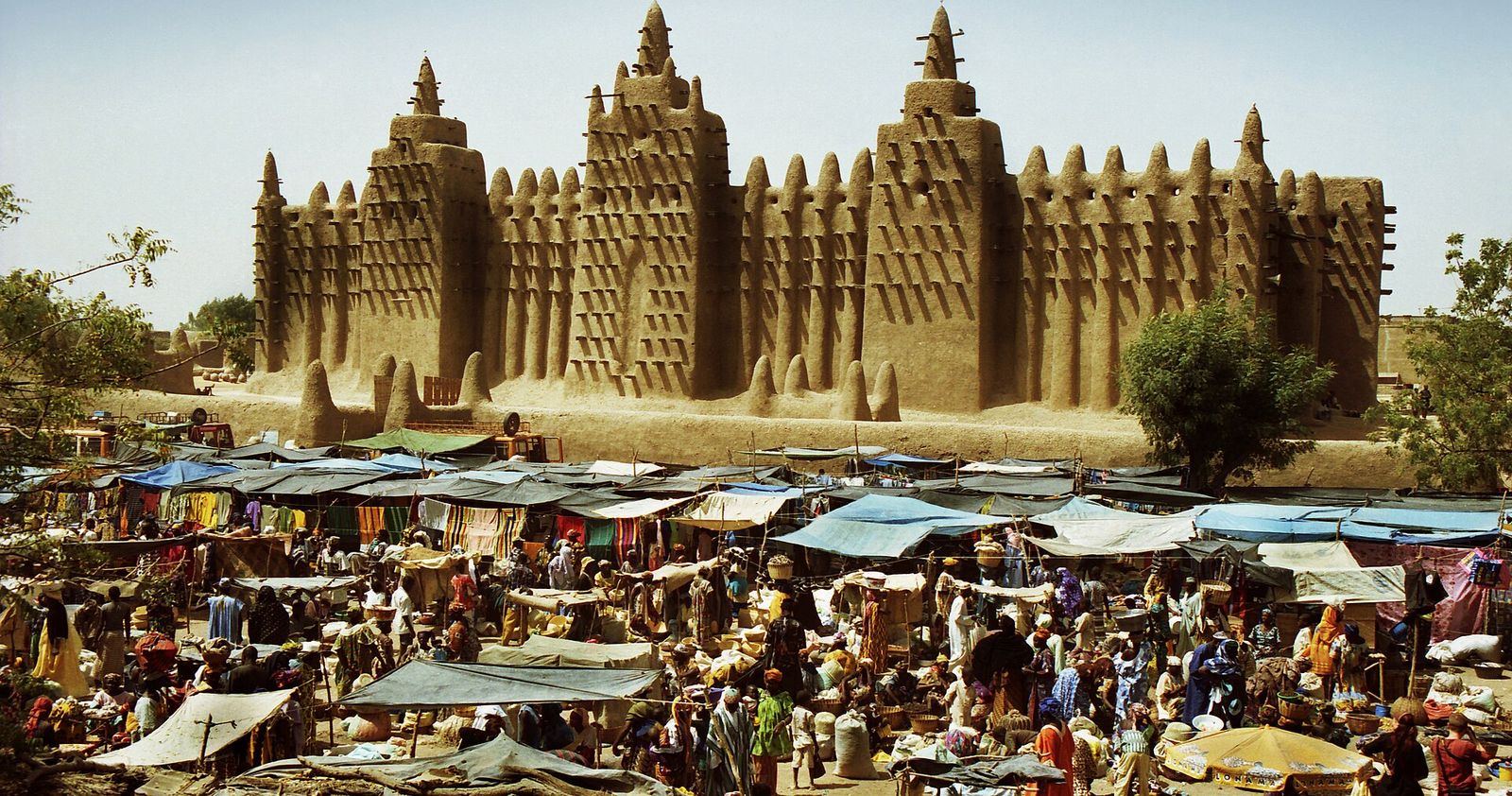
- **Centre and the Grand Marché**: the old commercial heart on the north bank, around the Grand Mosque and the pink market building, busy and crowded by day.
- **Hippodrome**: a lively district of restaurants, bars and small hotels, popular in the evenings.
- **ACI 2000**: a newer business district of offices, apartments and some of the better hotels and restaurants.
- **Badalabougou and Quartier du Fleuve**: quieter, greener areas near the river, home to several guesthouses and embassies.
- **Hamdallaye and Niarela**: busy residential and commercial districts where many families live.
- **Kalaban Coura and the south bank**: fast growing districts across the bridges, closer to the airport road.
What to see and do
Start with the **Musée National du Mali**, one of the best museums in West Africa, with textiles, masks, archaeology and a fine collection on Dogon and Bambara culture. It sits beside the **Parc National du Mali**, a shady botanical park with walking paths and a café, a calm escape from the heat. Nearby, the **Musée du District** tells the story of the city itself.
For markets, the **Grand Marché** and the streets around it sell cloth, spices and everything else, while the **Marché de Médine** is huge and local. The **Maison des Artisans** gathers jewellers, leatherworkers and weavers, and the fetish stalls near the Grand Marché show the traditional medicine side of Malian life. Look out for bogolan mud cloth, indigo, bazin and silver jewellery.
In the evening, look for live music. Venues come and go, and some famous clubs have closed, so ask your hotel which bands are playing that week. Weddings and baptisms, often in the street with tents and griots, are where much of the best music happens, and diaspora visitors will likely be invited to several.
Food and drink
Bamako eats well. Try **tiguadege na** (peanut stew), **tô** with okra or baobab leaf sauce, **riz gras** (rice cooked in a rich tomato sauce), grilled **capitaine** fish from the Niger and **fakoye**. Street grills sell brochettes and grilled chicken at night, and fruit sellers offer mangoes in season. Drink **bissap** (hibiscus), **gingembre** (ginger) and the strong, sweet green tea that comes in three rounds. Lebanese, French and Senegalese restaurants are popular too.
Where to stay
The large international hotels sit in ACI 2000 and near the river, with walls, guards and backup power, which matters during outages. Mid-range hotels and guesthouses cluster in Hippodrome, Badalabougou and Quartier du Fleuve. Many diaspora visitors stay with family, which is often the most comfortable and safest choice.
Getting around
Yellow taxis are everywhere; agree the fare before you get in. Sotrama minibuses are cheap and crowded. Most visitors use hotel cars or a driver recommended by family or colleagues, especially at night. Avoid walking after dark and stay away from demonstrations and military sites.
Practical tips
Carry cash in CFA francs, as cards work only in larger hotels and some shops. Power and fuel shortages can be frequent, so keep phones charged. Dress modestly, ask before photographing people and never photograph soldiers, police or government buildings.
Questions about Bamako
How many days should I spend in Bamako?
Three to five days lets you see the National Museum, the markets and the river, hear some music and rest from the heat. Family visits usually run longer.
Is Bamako safer than the rest of Mali?
Generally yes, but it is not risk free. Most governments still advise against all travel to Mali, including Bamako. Read your own government's current advice before travelling.
Which area is best to stay in?
ACI 2000 and the riverside areas near Badalabougou and Quartier du Fleuve have the most secure hotels. Hippodrome is livelier for food and evenings out.
Can I hear live music in Bamako?
Yes, though venues change often. Ask your hotel or family which bands are playing, and remember that weddings and family celebrations are where much of the best music happens.
Facts checked . Fees, schedules and entry rules change, so always confirm the latest with the official source.