At a glance
- Best for
- River life, markets and history
- Gateway
- Mopti Ambodedjo Airport (MZI) and the road from Ségou
- Time needed
- One to three days
- Best season
- November to February
- Nearby
- Sévaré, Djenné and the Bandiagara Escarpment
- Language
- Fulfulde, Bambara, Bozo and French
A note before you plan
Mopti and the surrounding region, including Dogon Country, have been at the centre of Mali's conflict since 2012. Armed groups are active, villages have been attacked and road travel carries a high risk of kidnapping and violence. Every major government advises against all travel. This guide explains what makes the area special, but please read your government's current advice first.
Why Mopti mattered
Mopti grew in the colonial era as a port for goods moving along the Niger between Ségou, Djenné and Timbuktu. Salt slabs from the desert mines of Taoudenni, dried fish, grain, cloth and livestock all passed through its harbour. Bozo fishermen, Fulani herders, Bambara and Dogon farmers and Tuareg traders met here, giving the town a mix of peoples and languages unlike anywhere else in Mali.
What made Mopti special
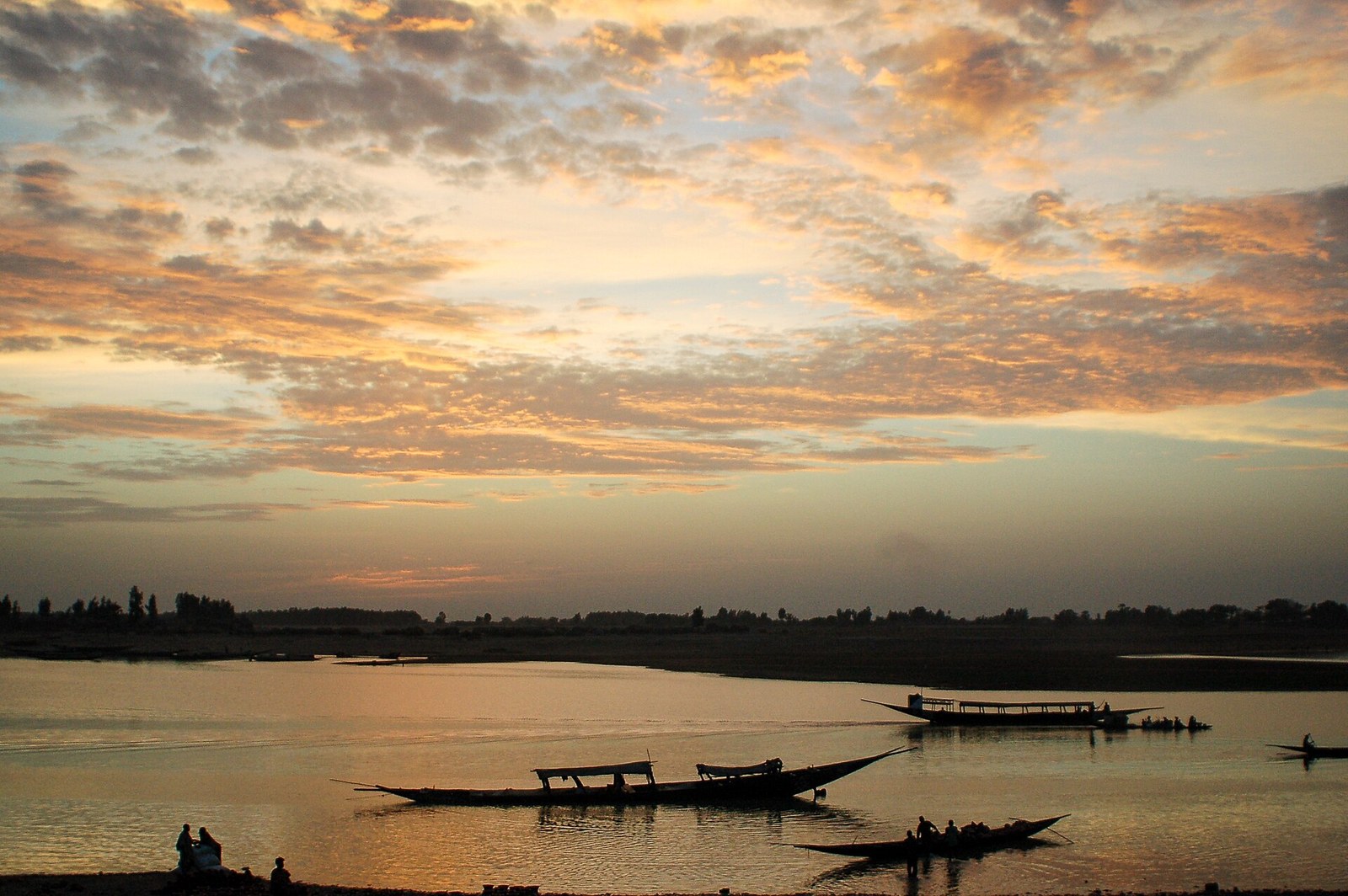
- **The port**: the long harbour where pinasses load and unload, with boat builders working on the shore and salt slabs stacked for sale.
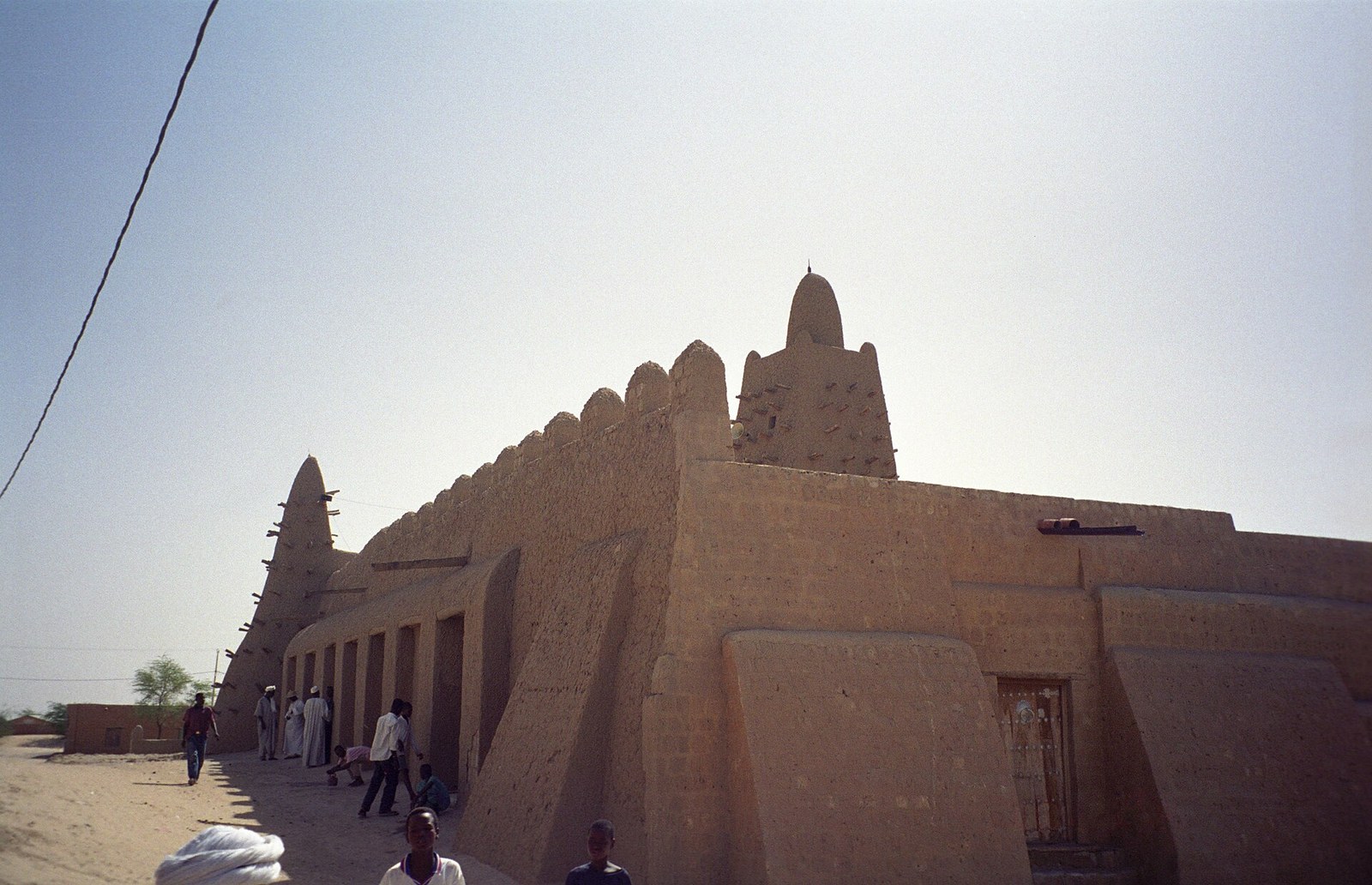
- **The Komoguel Mosque**: a fine mud-brick mosque in the Sudano-Sahelian style, built in the 1930s and restored with help from the Aga Khan Trust for Culture.
- **The markets**: the main market and the fish market, with dried and smoked fish from across the delta.
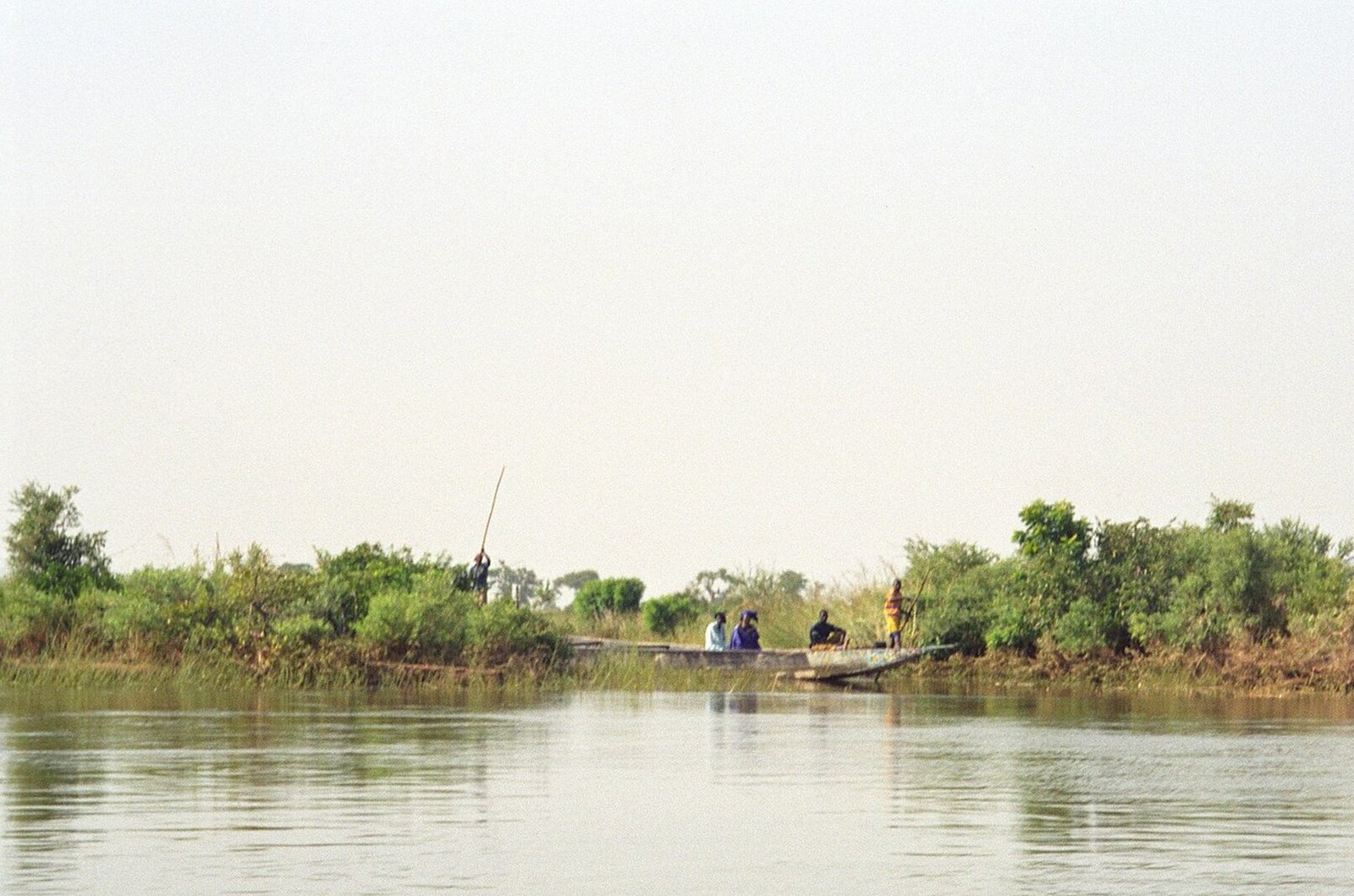
- **Pinasse trips**: boat rides to Bozo fishing villages on the river, once a highlight for visitors.
- **Sévaré**: the twin town on the mainland, on the main road, where most hotels and the airport are found.
Dogon Country
East of Mopti rises the Bandiagara Escarpment, a sandstone cliff more than a hundred kilometres long. The Dogon people built villages into and below it, with granaries topped by thatched roofs, toguna meeting shelters and cliff dwellings left by the earlier Tellem people. The Cliff of Bandiagara is a UNESCO World Heritage Site, famous for its masks, dances and cosmology.
For years, trekking from village to village was one of the great walks in Africa. Since 2012 it has been effectively closed to visitors, and the area has suffered serious violence. The Dogon masks and culture can be seen safely at the National Museum in Bamako.
Food
Mopti's food centres on fish: grilled capitaine, smoked fish in sauces and fried fish with rice. Fulani dishes with fresh milk and millet are common, and Dogon country is known for its onions and shallots, grown in small gardens by the cliffs.
Getting there
Mopti is far from Bamako by road, and the route passes areas covered by strict travel advice. The airport at Sévaré has seen very limited scheduled service. Anyone with essential reasons to go should take advice from their organisation or embassy first.
Crafts of the region
The Mopti region is known for Fulani wedding blankets woven in strips, Dogon carvings and doors, and leather goods. Many of these crafts now reach Bamako's Maison des Artisans and markets, where they can be bought safely. Ask sellers about the origin of older pieces, as genuine antiques may not be exported without permission.
Seasons on the river
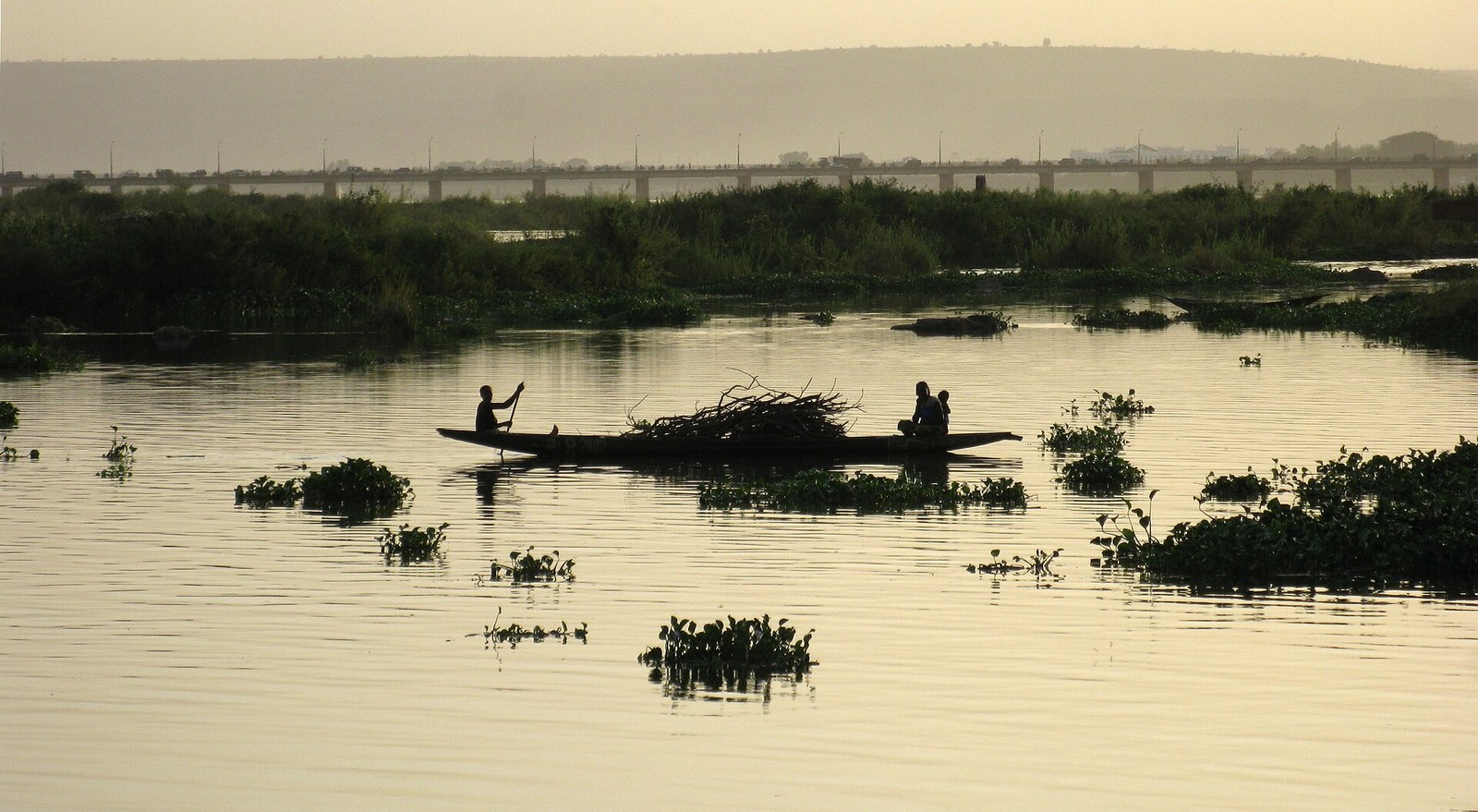
The Niger and Bani rise after the rains, flooding the inner delta from around September to December. Boat traffic, fishing and farming all follow the water, and the landscape changes completely between the flood and the dry months.
Questions about Mopti
Can I visit Dogon Country?
Not safely at present. The Bandiagara area has suffered serious violence and every major government advises against all travel there. Bamako's National Museum has an excellent Dogon collection.
What is the difference between Mopti and Sévaré?
Mopti is the old port town on the river islands, and Sévaré is the newer town on the main road a few kilometres away, with the airport and most hotels.
Why is Mopti called the Venice of Mali?
Because it is built on islands linked by causeways at the meeting of the Bani and Niger rivers, and boats are central to life there.
Is Mopti safe to visit now?
Every major government advises against all travel to central Mali. Read your own government's current advice before considering any trip.
Facts checked . Fees, schedules and entry rules change, so always confirm the latest with the official source.