At a glance
- Best for
- Beaches, seafood, temples and city views
- Airport
- Gimhae International (PUS)
- Time needed
- Two to three days
- From Seoul
- About two and a half hours by KTX
- Best season
- May to June and September to October
- Big event
- Busan International Film Festival in October
Why visit Busan
Busan gives you a completely different side of Korea from Seoul. It is a port city built on steep hills, so views open up everywhere: across Haeundae's skyline, over the lit up Gwangan Bridge at night, or down narrow stairways to the harbour. It is also easy to combine with Gyeongju, which is less than an hour away, and with Jeju by a short flight.
Beaches
Haeundae is the famous one, a long sandy beach backed by hotels and towers, busy in July and August and lovely in spring and autumn. Gwangalli Beach faces the Gwangan Bridge, which lights up after dark, and has a strip of cafés and bars along the front; on Saturday evenings in many months there is a drone light show over the water. Songjeong is quieter and popular with surfers, and Dadaepo has wide tidal flats and sunsets.
Markets and food
Jagalchi Fish Market by the harbour is Korea's largest seafood market. Choose your fish downstairs and have it prepared as sashimi or a spicy stew in the restaurants upstairs. Nearby, BIFF Square and Gukje Market are good for street snacks such as ssiat hotteok, a sweet pancake filled with seeds. Busan's signature dishes are dwaeji gukbap, a milky pork and rice soup, and milmyeon, cold wheat noodles that refugees created during the Korean War. Eomuk, Busan's famous fish cake, is sold everywhere.
Temples and culture
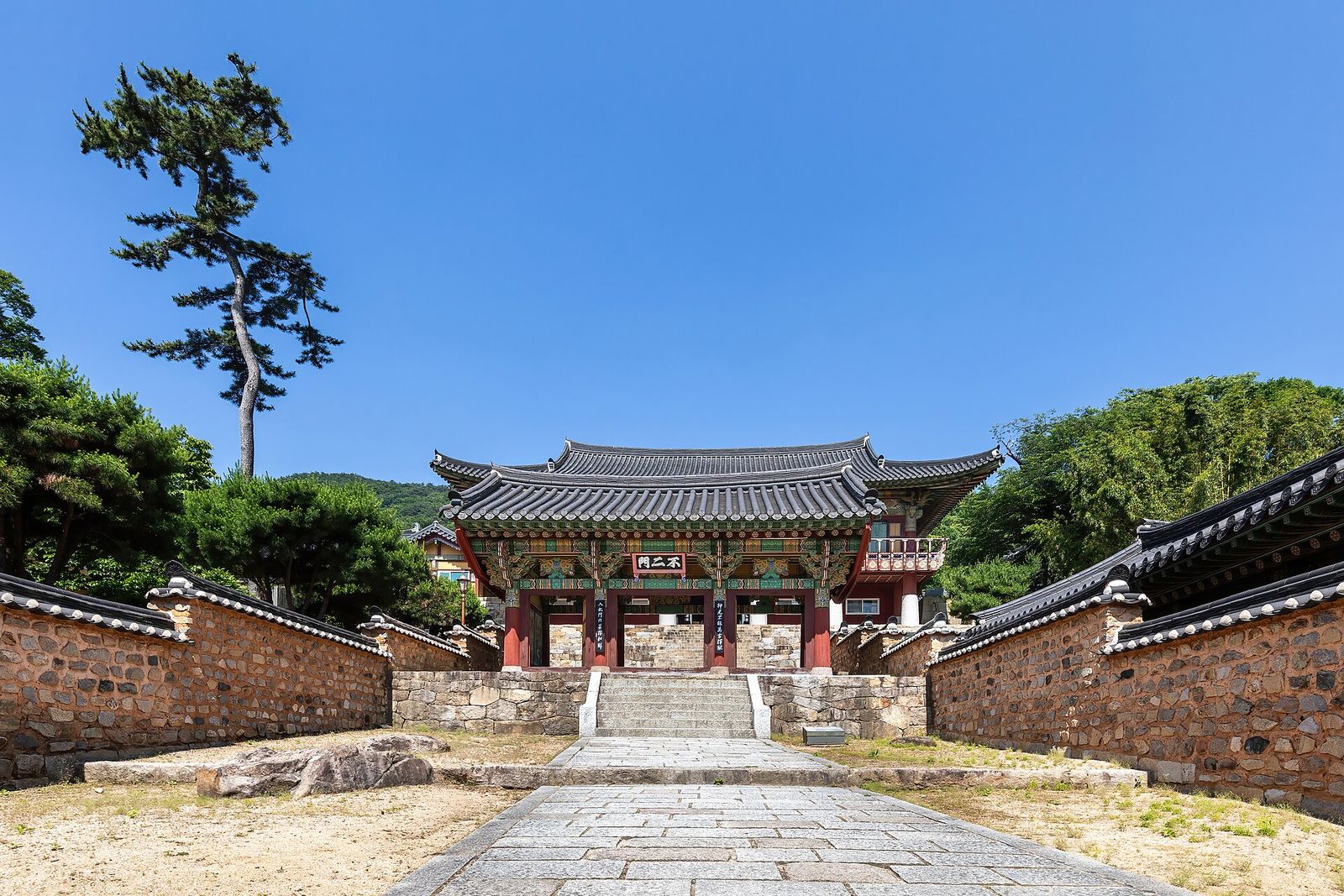
Haedong Yonggungsa is a rare seaside temple, built on rocks above the waves in the northeast of the city; arrive early to beat the crowds. Beomeosa, in the mountains to the north, is one of Korea's great temples and offers temple stay programmes. Gamcheon Culture Village is a hillside of brightly painted houses with art installations and alleys to wander, but remember people live there. The UN Memorial Cemetery is a moving reminder of the Korean War, when Busan was the temporary capital.
Walks and views
The Haeundae Blueline Park runs a beach train and small sky capsules along the old coastal railway to Cheongsapo and Songjeong. The Igidae coastal walk gives cliff and skyline views, and Taejongdae, at the tip of Yeongdo island, has lighthouses and dramatic rocks. Huinnyeoul Culture Village on Yeongdo is a quieter alternative to Gamcheon, with cafés overlooking the sea.
Festivals
The Busan International Film Festival each October is Asia's biggest film festival, and the Busan Fireworks Festival over Gwangalli usually takes place in autumn. Summer brings beach festivals at Haeundae.
Getting around
Busan has a good metro, and the same transport card you use in Seoul works here. The KTX from Seoul arrives at Busan Station, near Nampo and Jagalchi, and the light rail and buses link the beaches. Gimhae Airport has domestic flights to Jeju and many flights around Asia.
Where to stay
Stay in Haeundae for beach life and big hotels, Gwangalli for night views and bars, Seomyeon for shopping and transport, or Nampo for markets and an easy walk to the station area.
Questions about Busan
How do I get from Seoul to Busan?
The KTX high speed train takes around two and a half hours from Seoul Station to Busan Station. Domestic flights from Gimpo are also quick, and express buses are a budget option.
Is Busan worth visiting if I only have a week?
Yes. Two or three days in Busan, with a day in Gyeongju, gives a strong contrast to Seoul and fits well into a seven day trip.
When is the best time for Busan's beaches?
The official swimming season runs in summer, roughly July and August, when lifeguards are on duty. June and September are warm and less crowded.
Is Busan good for families?
Very. Beaches, the aquarium at Haeundae, the Blueline Park beach train and easy metro rides make it relaxed for children.
Facts checked . Fees, schedules and entry rules change, so always confirm the latest with the official source.