At a glance
- Best for
- Mosques, souqs, beaches and boat trips
- Airport
- Muscat International Airport (MCT)
- Time needed
- Two to three days
- Best season
- October to April
- Getting around
- Taxis, ride hailing apps and Mwasalat buses
- Dress
- Modest in the souq and mosques, relaxed in hotels
Why visit Muscat
Muscat is the gentlest possible introduction to Arabia. It is clean, calm and polite, people are used to visitors, and the sights are close enough together to fit into a couple of easy days. It is also the natural base for day trips to wadis, beaches and the mountains, and the place where almost every international flight lands.
Sultan Qaboos Grand Mosque
Completed in 2001, the Grand Mosque in Bawshar is the city's great landmark. Its prayer hall holds one of the largest hand woven carpets in the world and a vast Swarovski crystal chandelier, and the courtyards and arcades are beautiful in the soft morning light. Non-Muslims can visit in the morning outside Friday, and dress is checked at the gate: long sleeves and long trousers or skirts for everyone, and a headscarf for women. Arrive early, as it gets hot on the marble.
Muttrah: souq and Corniche
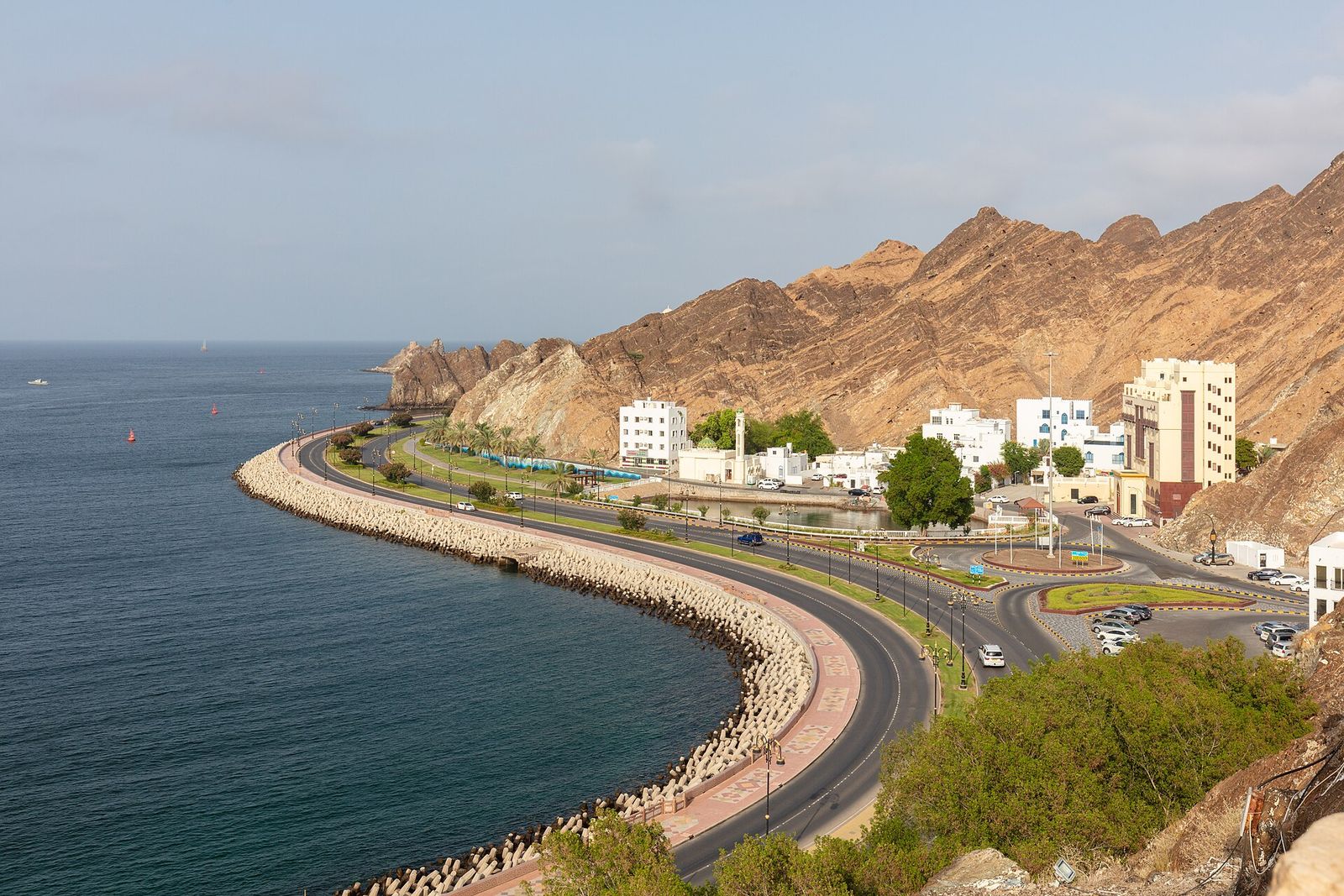
Muttrah is the old port district and the most atmospheric part of the city. The covered Muttrah Souq is a maze of lanes selling frankincense, silver khanjar daggers, pashminas, dates and halwa. It is liveliest in the late afternoon and evening. Outside, the Corniche curves along the harbour past the fish market, old merchant houses and a watchtower you can climb for views. Locals walk here at dusk and it is the best free evening in Muscat.
Old Muscat
A short drive east, the walled old town sits in a small bay guarded by the Portuguese era forts of Al Jalali and Al Mirani. The ceremonial Al Alam Palace, with its blue and gold columns, can be seen from the gates. Nearby, the National Museum tells Oman's story from prehistory to the present, and Bait Al Zubair is a private museum of costume, weapons and photographs.
The Royal Opera House
In Shatti Al Qurum, the Royal Opera House Muscat hosts opera, ballet, orchestras and Arab music through the winter season, and its marble halls and gardens can be toured by day. Check the programme before you travel; a performance here is a memorable evening.
Beaches and the sea
Shatti Al Qurum has a long public beach lined with cafés. Further out, Qantab and Al Bandar Al Khayran are rocky coves where fishermen take visitors out by boat. Dolphin watching trips leave from Marina Bandar Al Rowdha in the morning, and the Daymaniyat Islands, a protected reserve, offer some of the best snorkelling in Oman on day trips in the cooler months.
Where to stay
Qurum and Shatti Al Qurum suit most first-timers, with beach hotels, malls and restaurants. Muttrah is cheaper and close to the souq. Al Mouj and the resort strip around Barr Al Jissah suit beach holidays and families. The city is spread out, so pick one base and use taxis.
Food
Try shuwa, the slow cooked spiced lamb served on Eid, mashuai grilled kingfish, harees and Omani halwa with strong cardamom coffee. Traditional restaurants such as Bait Al Luban in Muttrah serve Omani food in a setting of carpets and cushions. Indian and Pakistani food is everywhere and excellent value, a legacy of long trade links across the Arabian Sea.
Getting around
Muscat is built around one long highway. Taxis are orange and white; agree the fare before you get in or use the OmanTaxi or Otaxi apps, which use meters. Mwasalat runs city buses that are cheap and comfortable but slow. Walking works within Muttrah and Old Muscat, which are linked by the coast road.
Practical tips
The weekend is Friday and Saturday, and many sights close on Friday morning. Dress modestly away from hotel pools. In summer, midday temperatures are extreme, so plan indoor visits at noon. Use the free trip planner to add day trips, and see places to visit for food and stays.
Questions about Muscat
How many days do I need in Muscat?
Two days covers the Grand Mosque, Muttrah, Old Muscat and the Opera House. A third day lets you add a boat trip, snorkelling or a wadi.
When can non-Muslims visit the Grand Mosque?
Usually in the morning from Saturday to Thursday. Hours can change, especially in Ramadan, so check before you go and dress to the code.
Is Muscat walkable?
Muttrah and Old Muscat are pleasant to walk in the cooler months. The rest of the city is spread out along a highway, so use taxis or ride hailing apps between areas.
Where is the best beach in Muscat?
Shatti Al Qurum is the easy city beach. Qantab and the coves south of the city are quieter, and the Daymaniyat Islands are best for snorkelling.
Facts checked . Fees, schedules and entry rules change, so always confirm the latest with the official source.