At a glance
- Best for
- Archaeology, history, photography and kayaking
- Location
- Off Temwen Island, Madolenihmw, on the east of Pohnpei
- Time needed
- Half a day to a full day
- Best time
- High tide by boat or kayak, or a dry morning on foot
- Getting there
- Hired driver or tour from Kolonia, then a short walk or boat
- Good with
- Kepirohi Waterfall nearby
What you will see
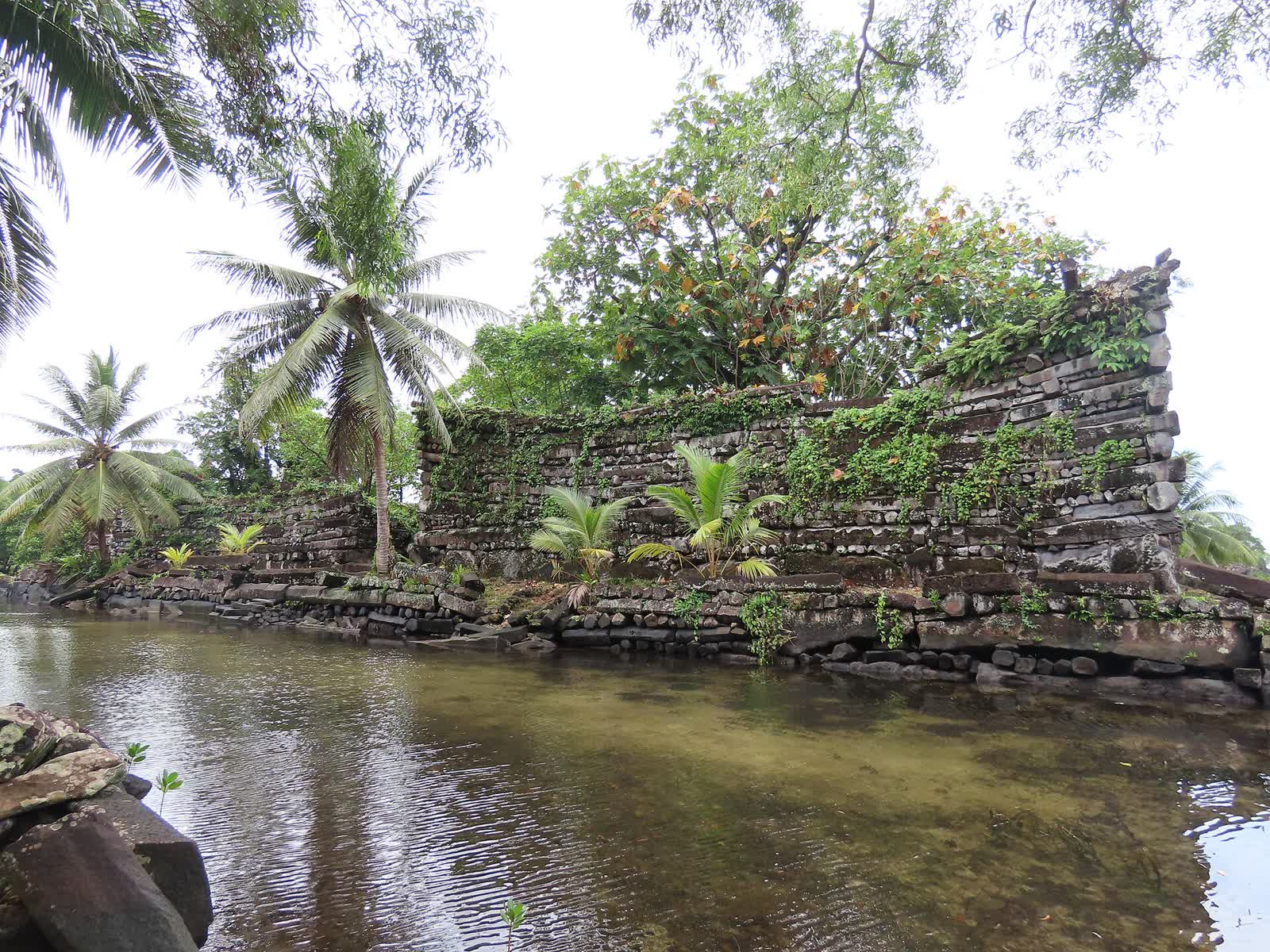
The site is a network of islets separated by tidal channels, which is why it is sometimes called the Venice of the Pacific. The most visited is **Nandauwas**, the royal mortuary, where walls of stacked basalt logs rise high above head height around an inner courtyard and tomb. Nearby islets were used for priests, food preparation, canoe houses and ceremonies. How the builders moved and stacked logs weighing several tonnes is still debated, and local stories say the stone flew into place by magic.
A little history
According to Pohnpeian tradition, two brothers, Olisihpa and Olosohpa, came to the island and began the city, which grew into the seat of the Saudeleur rulers who governed all of Pohnpei. Their rule was overthrown by the hero Isokelekel, and power passed to the system of Nahnmwarki chiefs that still exists today. Archaeologists date construction over several centuries, with the main building period well before European contact. Today the site belongs to the people of Madolenihmw and is cared for with the national and state governments.
When to go
The tide changes the visit. At **high tide**, you can travel by boat or kayak along the channels between the islets, which is the most atmospheric way to see the site. At **low tide** and on foot, the usual approach is a short walk through mangroves and a wade across a channel to Nandauwas. Mornings are cooler and usually drier. After heavy rain the path is muddy and the stones slippery.
How to visit
Most people come from Kolonia, roughly an hour away by road, with a hired driver or a tour. Dive and tour operators on Pohnpei offer half day trips, sometimes combined with **Kepirohi Waterfall** and lunch, and some include a boat or kayak through the channels. Arriving independently, you pay a small access fee to the landholders at the start of the path; keep small notes in US dollars. A local guide adds a great deal, explaining the stories that the stones alone cannot tell.
Respect and safety
Nan Madol is sacred to many Pohnpeians, and some islets are believed to be guarded by spirits. Do not climb on walls, move stones or take anything away, and avoid loud behaviour. Wear sturdy shoes or reef shoes that can get wet, bring water and insect repellent, and protect your phone and camera in a dry bag. The walls have been damaged by storms and growing vegetation, which is one reason UNESCO has listed the site as in danger, so follow any closures or roped areas.
Making a day of it
Pair Nan Madol with a swim at Kepirohi, lunch in Madolenihmw or back in Kolonia, and, if the tide and weather allow, snorkelling on the outer reef. Photographers should aim for the soft light of the morning. Read more about the island in our Pohnpei guide, and use the free trip planner to fit it around your flights.
What to bring
Pack reef shoes or sandals with straps, quick drying clothes, a hat, sunscreen, insect repellent, drinking water and a dry bag. A light rain jacket is useful in any month. Bring small US dollar notes for access fees and tips, and a snack, since food stalls near the site are few and may be closed.
Questions about Nan Madol
Can I visit Nan Madol without a guide?
Yes, you can walk in after paying the landholders at the start of the path, but a guide adds the history and stories and helps with tides and crossings.
Do I need to swim to reach Nan Madol?
Usually not, but you may wade through a channel at low to mid tide. Wear shoes that can get wet and keep electronics in a dry bag.
Why is Nan Madol on the danger list?
UNESCO listed it as in danger because of silting channels, mangrove growth and storm damage that threaten the walls. Conservation work is ongoing.
How long does a visit take?
Plan a half day from Kolonia, or a full day if you add Kepirohi Waterfall, lunch and a boat or kayak trip at high tide.
Facts checked . Fees, schedules and entry rules change, so always confirm the latest with the official source.