At a glance
- Best for
- Beaches, light, art, seafood and nature
- Airport
- Aalborg Airport (AAL), then train via Frederikshavn
- Time needed
- Two to three days
- Best season
- June to August, with quieter beauty in May and September
- Getting around
- Walking, bikes, local buses and the Sandormen tractor bus at Grenen
- Good base for
- Grenen, Råbjerg Mile, Tilsandede Kirke and Hirtshals
Why go
There is nowhere else quite like the top of Denmark. You can stand on a narrow sandbar with one foot in each sea, watch the waves clash, then cycle back through heath and dunes to eat fresh shrimp on the harbour. The light is soft and clear, especially in the evenings, and midsummer nights barely get dark. It is busy in July, peaceful in late spring and early autumn, and wild in winter storms.
Grenen
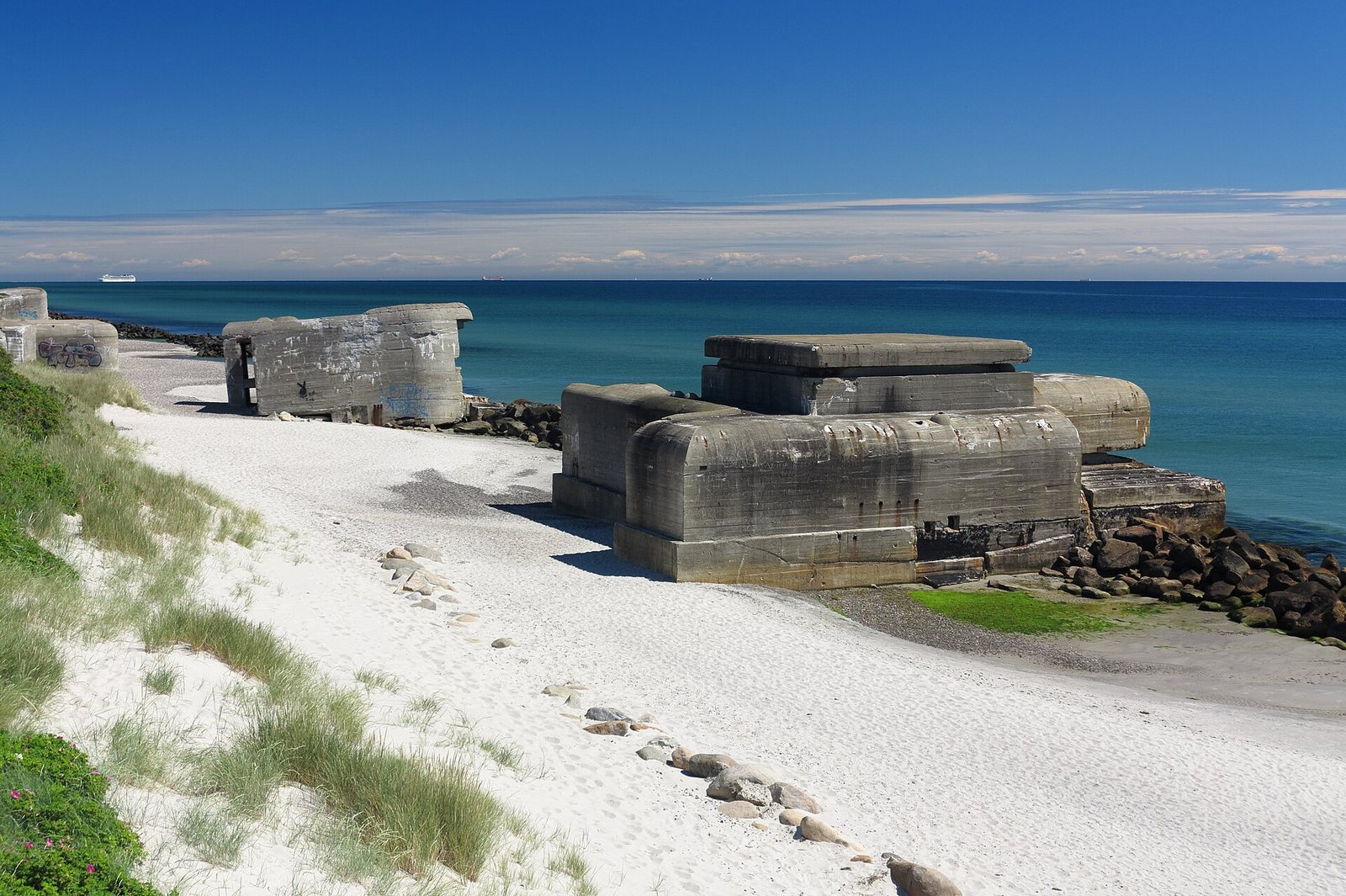
**Grenen** is the long sandbar at the very tip, about three kilometres from town. Walk along the beach to the point or ride the **Sandormen**, a tractor pulled bus, for the final stretch. You will often see seals resting on the sand. Do not swim at the point: the currents where the seas meet are dangerous, and swimming is forbidden there. The nearby **Grenen Kunstmuseum** and the old bunkers add art and history.
The Skagen Painters
From the 1870s, a group of Scandinavian artists including **P.S. Krøyer**, **Anna Ancher** and **Michael Ancher** settled here to paint fishermen, beaches and the famous blue hour. **Skagens Museum** holds their work in the town centre, and **Anchers Hus**, the Anchers' home, is preserved as it was. **Brøndums Hotel**, where the painters met, still stands. Seeing the paintings and then walking out to the same beaches is a special experience.
Dunes and the buried church
South of town, **Råbjerg Mile** is the largest moving dune in northern Europe, a small desert that shifts east every year. Climb it barefoot for big views. **Den Tilsandede Kirke**, the sand buried church, was swallowed by drifting sand in the 1700s and only its white tower remains above the dunes. Both are reachable by bike on flat, signed paths.
Food and drink
Skagen is about seafood. Head to the **harbour** for fresh shrimp, fish cakes and smoked fish at the fish restaurants and smokehouses along the quay. Skagen fish soup is a local speciality. In summer, the harbour bars stay lively late, and the **Skagen Festival** brings folk music in early July.
Where to stay
Choose the town centre for restaurants and the museum, **Gammel Skagen** on the west coast for sunsets and grand old beach hotels, or a holiday cottage among the dunes. Summer books out early, so reserve months ahead for July.
Getting around
Trains run from Aalborg to Frederikshavn, where you change to the local line to Skagen. The whole journey from Copenhagen takes about five to six hours. Once there, bikes are the best way to get around, and rentals are easy to find. Local buses cover Gammel Skagen and Råbjerg Mile in season.
Good to know
Skagen is very busy in July, when Danish families arrive for their summer holidays, and parking and restaurants fill quickly. Bring a windproof layer even in summer, as the tip can be breezy and cool. Many restaurants and shops shorten their hours or close from late autumn to spring. Shops and cafés in the centre keep longer hours in summer, and the town is calm and safe to walk at night.
Questions about Skagen
Can you swim where the two seas meet?
No. Swimming at the tip of Grenen is forbidden because the currents are strong and dangerous. Paddle only, and swim at the lifeguarded beaches nearby in summer.
How do I get to Skagen by public transport?
Take the train to Aalborg, then on to Frederikshavn, and change for the local train to Skagen. Check times on Rejseplanen or DSB.
When is the best time to visit Skagen?
June to August for beach weather and long evenings. May and September are quieter and still bright, and winter suits travellers who love wild weather.
How long should I stay in Skagen?
Two nights lets you see Grenen, the museum, Råbjerg Mile and the harbour without rushing. Three suits a beach holiday.
Facts checked . Fees, schedules and entry rules change, so always confirm the latest with the official source.