At a glance
- Best for
- Design, food, history, cycling and harbour life
- Airport
- Copenhagen Airport (CPH), about fifteen minutes from the centre by metro
- Time needed
- Three to four days
- Best season
- May to September, plus late November to December for Christmas markets
- Getting around
- Walking, bikes, the metro, S-trains, buses and harbour buses
- Good base for
- Louisiana, Kronborg Castle, Roskilde and Malmö in Sweden
Why go
Few capitals feel as calm and human as Copenhagen. Half the city cycles to work, the harbour is clean enough to swim in, and parks and lakes are never far away. In a single day you can watch the changing of the guard at Amalienborg, eat smørrebrød for lunch, ride a roller coaster in Tivoli and end the evening with a glass of natural wine on a canal side. It is also a city of design: furniture, lighting and architecture are everywhere, from the Royal Library's Black Diamond to the ski slope on the roof of the CopenHill power plant.
The main sights
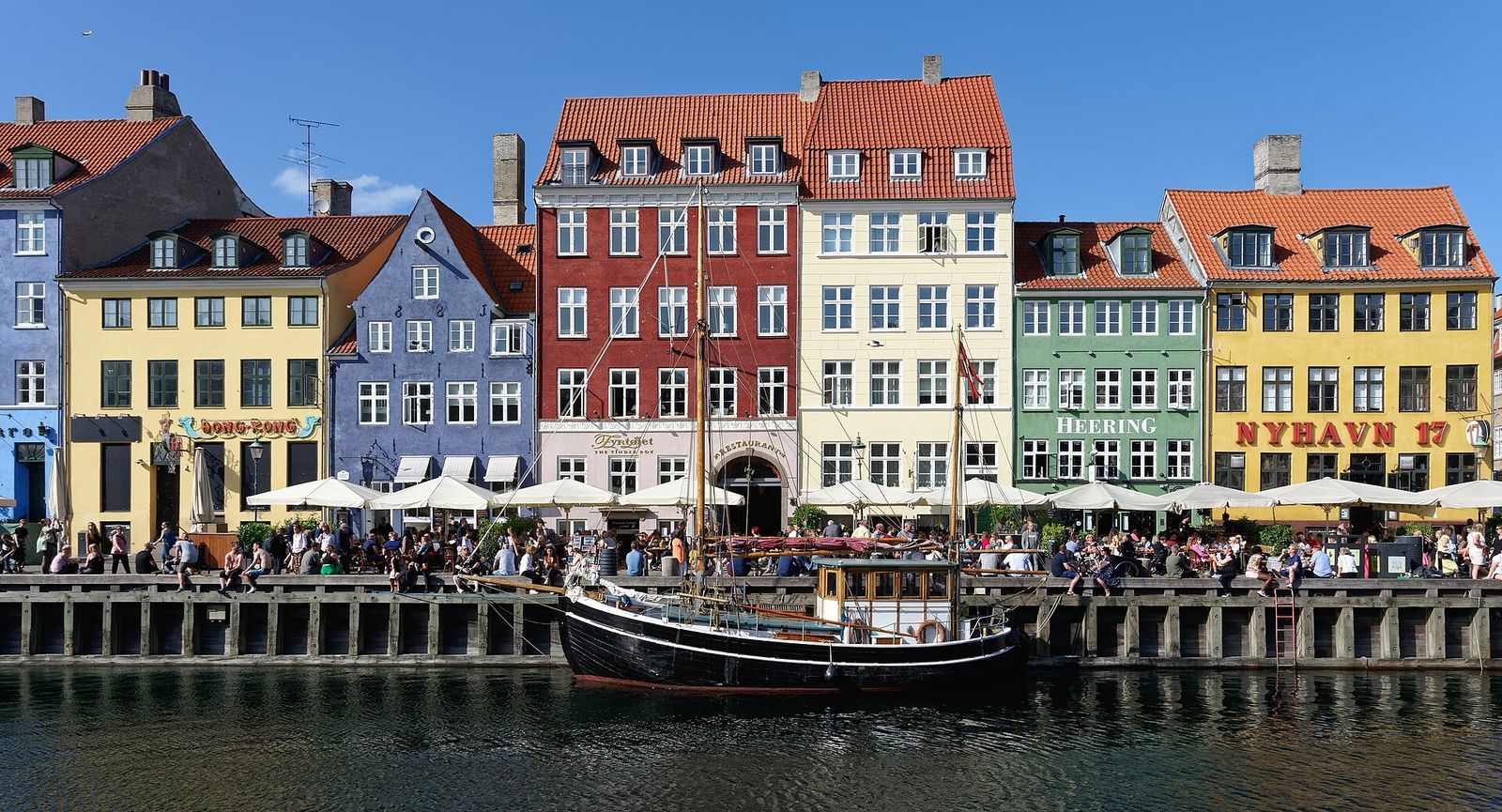
**Nyhavn** is the postcard canal of painted gabled houses and old wooden ships. Come early in the morning for photos, then take a canal tour from here for the easiest overview of the city. **Tivoli Gardens**, opened in 1843, is one of the oldest amusement parks in the world, with gardens, rides and concerts, and it is magical at night and at Christmas. **Rosenborg Castle** holds the crown jewels, **Amalienborg** is the home of the royal family, and **Christiansborg Palace** houses parliament, with a free tower view. The **National Museum** and the **Ny Carlsberg Glyptotek** are the two big museums, and the **Little Mermaid** statue is small but still a classic stop on the harbour walk.
Neighbourhoods
**Indre By**, the old centre, holds Strøget, the long pedestrian shopping street, and the squares and lanes around it. **Christianshavn** has canals, houseboats, the spiral tower of the Church of Our Saviour and the free town of **Christiania**, a car free community with its own rules: no photos on Pusher Street and no running. **Nørrebro** is multicultural and lively, with Jægersborggade's small shops and Assistens Cemetery where Hans Christian Andersen is buried. **Vesterbro** mixes the old Meatpacking District, now full of restaurants and bars, with leafy Værnedamsvej. **Østerbro** is calm and family friendly, close to the lakes. **Refshaleøen** and **Nordhavn** are the new harbour areas for food markets, saunas and architecture.
Food and drink
Start the day with a cinnamon snail or a cardamom bun from a good bakery. At lunch, try open faced smørrebrød on dark rye: pickled herring, roast beef with remoulade and crispy onions, or egg and shrimp. Food halls such as Torvehallerne and Reffen are the best value way to eat well. Copenhagen is also famous for New Nordic cooking, with Noma and a ring of other celebrated restaurants, so book months ahead if one is on your list. Coffee culture is strong, and wine bars and craft breweries fill the evenings.
Where to stay
First timers do best in **Indre By** near Kongens Nytorv or **Vesterbro** near the Central Station for transport. **Christianshavn** is quieter and pretty, and **Nørrebro** suits travellers who want a local feel. Hotels are among the priciest in Europe, so book early for summer and look at design hostels, which often have private rooms.
Getting around
The metro runs around the clock and links the airport, the centre and the City Circle Line. S-trains reach the suburbs, and harbour buses cross the water. Use the DOT Mobilbilletter app or a Rejsekort card for tickets, and buy before you board. Bikes are everywhere: use a city bike or a rental, keep to the right, signal with your hand and never stop in the bike lane.
Day trips
Take the coastal train north to **Louisiana Museum of Modern Art** in Humlebæk and on to **Kronborg Castle** in Helsingør, the setting of Hamlet. **Roskilde** has the Viking Ship Museum and a cathedral full of royal tombs. **Malmö** in Sweden is about forty minutes away across the Øresund Bridge, so bring your passport or ID.
Questions about Copenhagen
How many days do I need in Copenhagen?
Three days covers the main sights at a comfortable pace. Add a fourth for a day trip to Louisiana and Kronborg, or to Roskilde.
Can you really swim in Copenhagen harbour?
Yes. Harbour baths such as Islands Brygge and Kalvebod Bølge are open in summer, and the water quality is monitored. Swim only at official spots and check flags or signs on the day.
Is the Copenhagen Card worth it?
It can be if you plan to visit several paid museums and use public transport a lot in a short time. Compare it with your actual plans on the official Visit Copenhagen site before buying.
Is Christiania safe to visit?
It is generally fine to visit by day. Follow the posted rules, do not take photos around Pusher Street, and keep valuables close. Check current local advice, as the area has seen police operations in recent years.
Facts checked . Fees, schedules and entry rules change, so always confirm the latest with the official source.