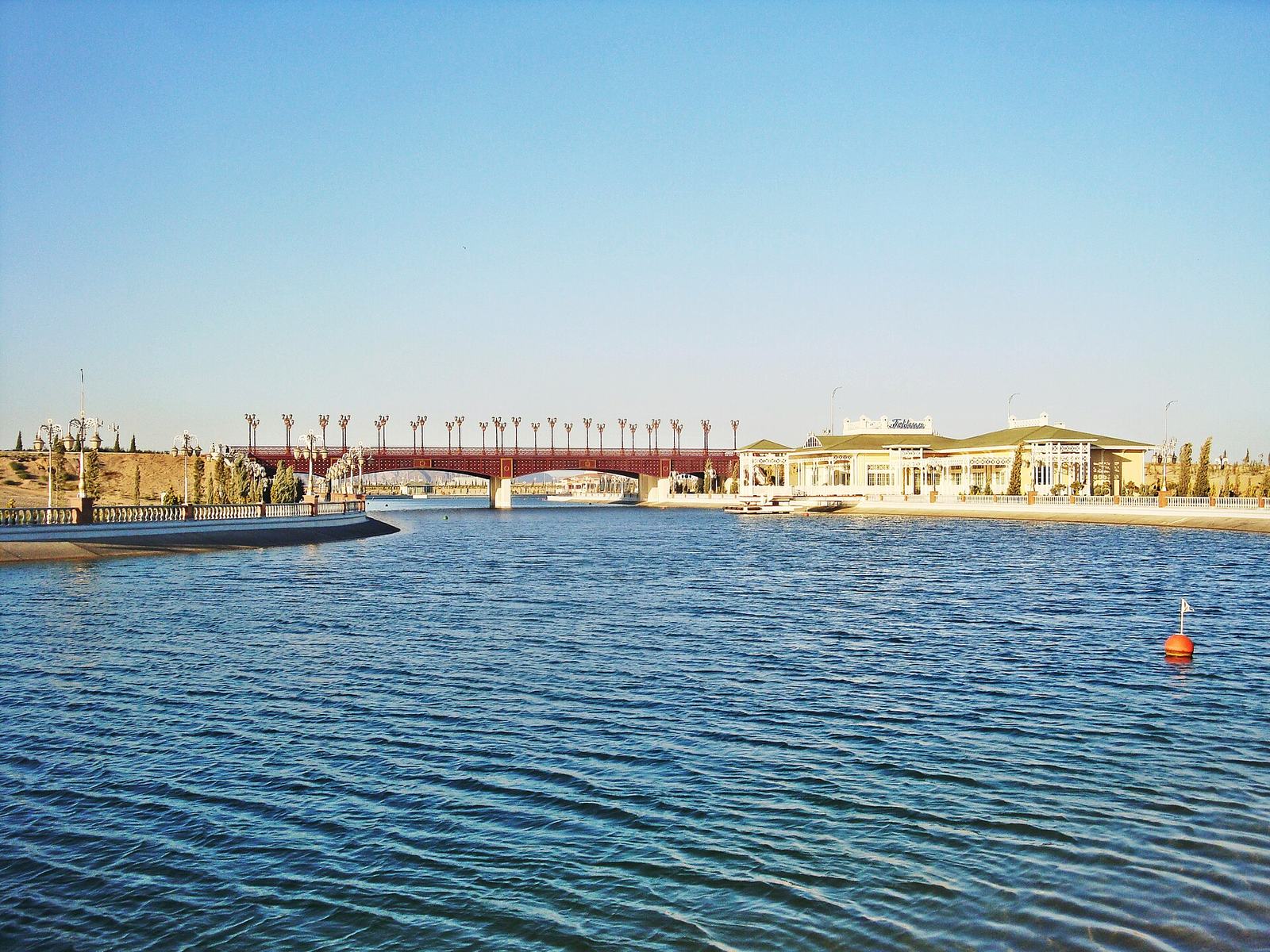
The capital
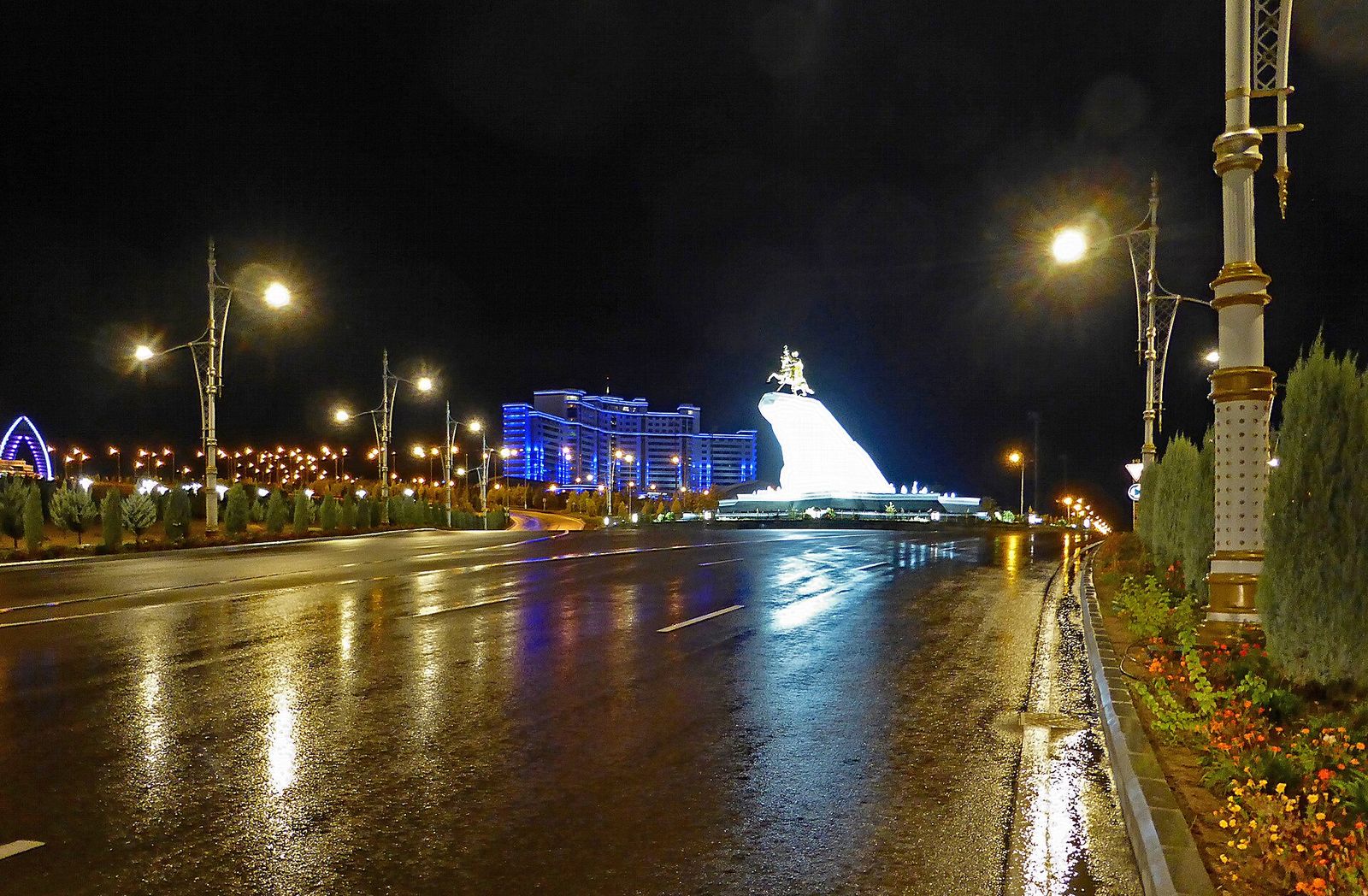
Ashgabat is where almost every trip begins. Rebuilt in white marble after independence, it is a city of vast monuments, fountains, gold domes and spotless empty boulevards, with excellent museums, the huge Tolkuchka bazaar and the ancient Parthian fortress of Nisa just outside town. Two full days is ideal, and many travellers return here at the end of a loop.
The desert
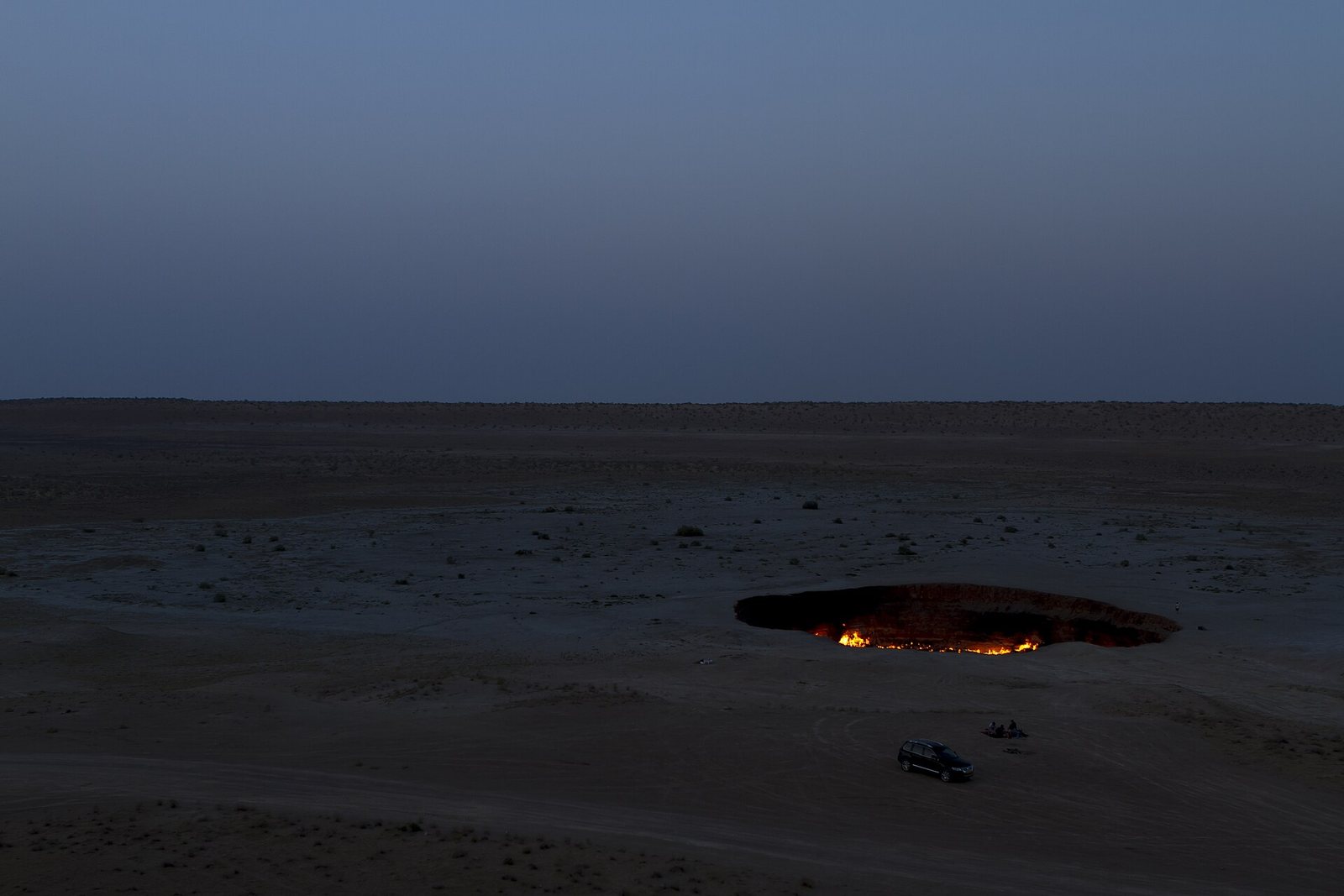
The Darvaza gas crater, often called the Door to Hell, is a burning pit in the heart of the Karakum Desert, roughly halfway between Ashgabat and the northern border. Most visitors arrive in the late afternoon, camp in a tent or yurt nearby and watch the flames after dark. It fits naturally on the road between Ashgabat and Konye-Urgench.
The Silk Road cities
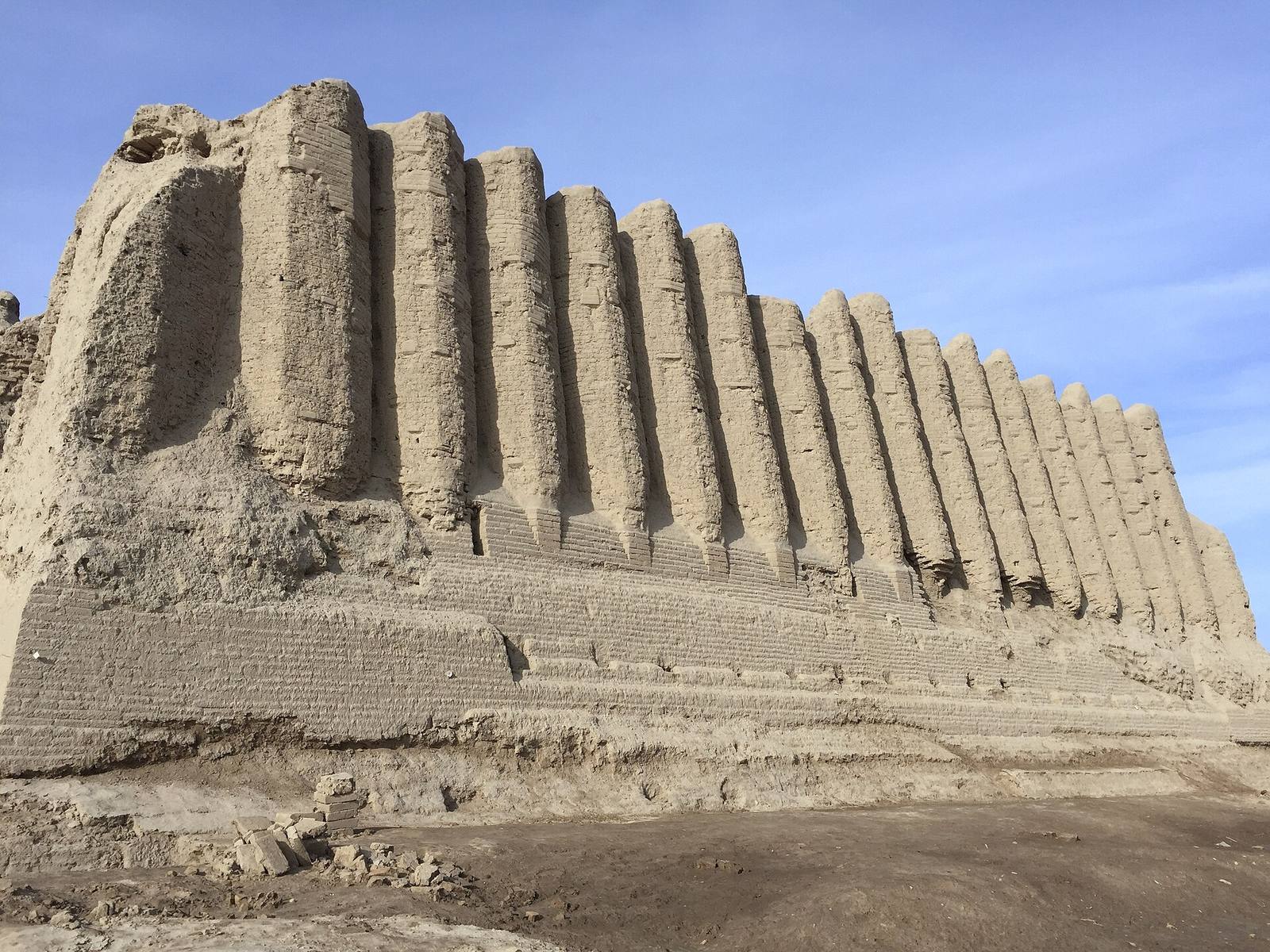
Merv and Mary in the east hold one of the great archaeological sites of Central Asia: layers of walled cities spanning more than two thousand years, crowned by the Seljuk mausoleum of Sultan Sanjar. The Bronze Age site of Gonur Depe lies deeper in the desert nearby.
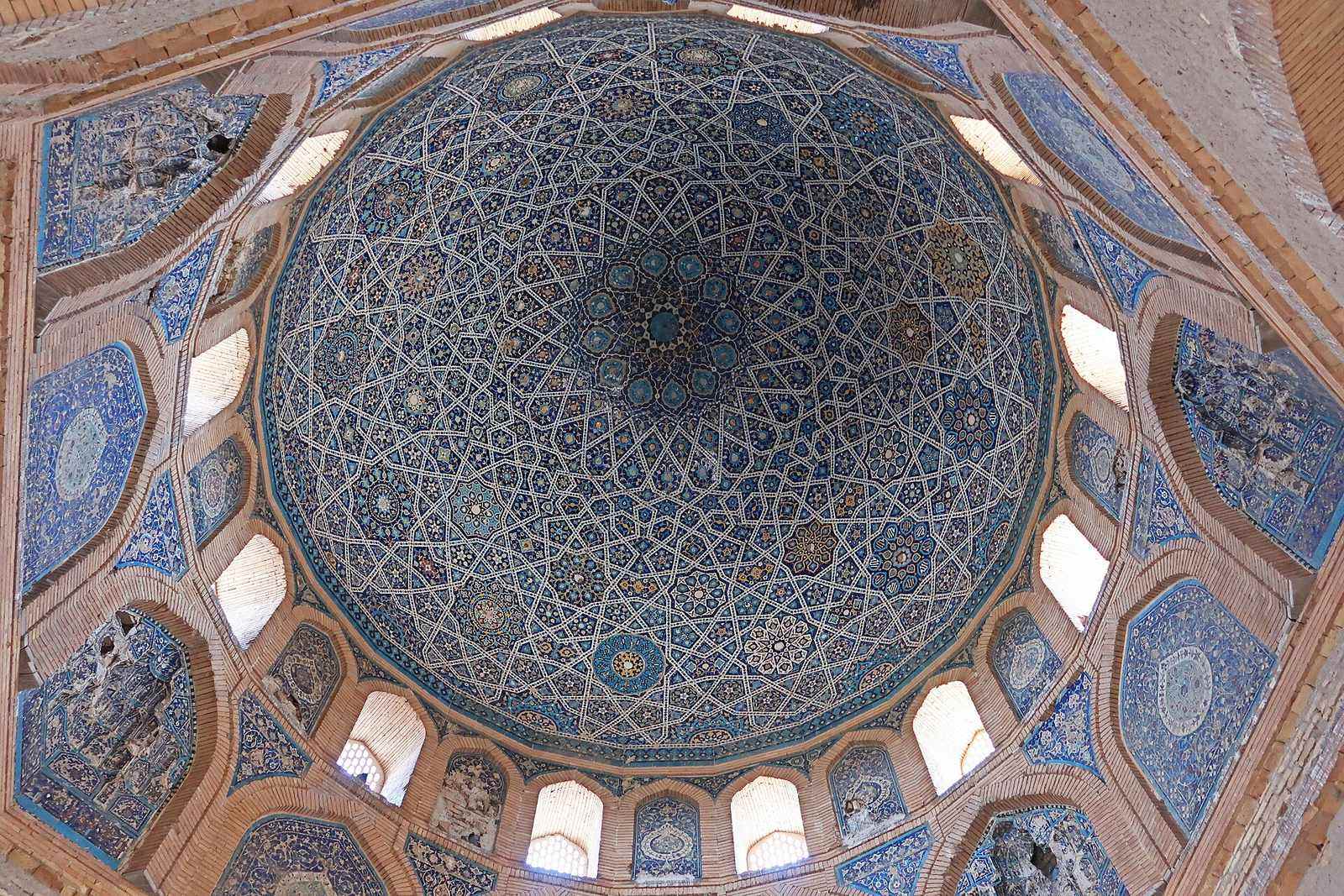
Konye-Urgench in the far north was once the capital of Khwarezm. Its minaret, mausoleums and pilgrim cemeteries make a moving stop before or after crossing into Uzbekistan for Khiva.
The coast
Avaza and the Caspian coast combine the purpose built beach resort of Avaza near the port city of Turkmenbashi with some of the country's most dramatic landscapes, including the Yangykala canyon and the old caravan city of Dehistan.
How to combine them
Distances are large and roads can be slow, so most itineraries pair Ashgabat with one direction: north through Darvaza to Konye-Urgench and on into Uzbekistan, or east to Merv and out towards Turkmenabat and Bukhara. With more time, add the west. Domestic flights and overnight trains help on longer hops, and your agency will plan the route around your visa. Use the free trip planner to shape the days, and the places to visit list for what to see in each stop.