At a glance
- Best for
- Desert camping, night photography and adventure
- Nearest airport
- Ashgabat International Airport (ASB)
- Time needed
- One night
- Best season
- April to May and September to October
- Facilities
- Basic camps and yurts, no shops
- Getting there
- Four wheel drive from the main Ashgabat to Dashoguz road
Why visit the crater
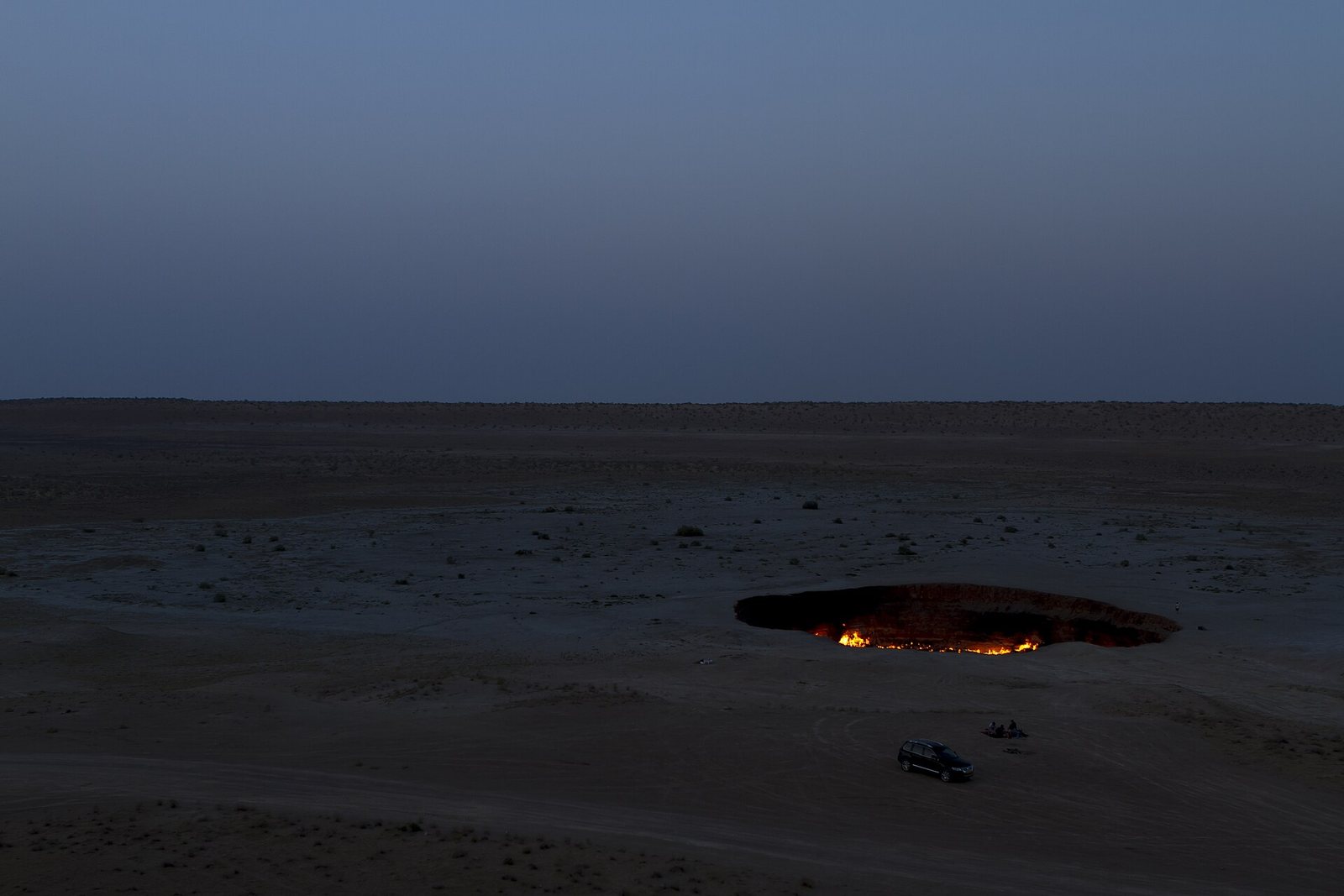
Few places on earth feel as surreal as Darvaza at night. You walk across the sand towards a growing orange light, feel the wave of heat on your face and look down into a pit of hundreds of flickering flames. The silence of the desert around it, with a sky full of stars, makes the scene even stranger. In recent years the government has spoken about reducing the fire, and visitors have reported smaller flames than in the past, so check recent reports before you build a trip around it.
Getting there
The crater lies a short way off the main road from Ashgabat to Dashoguz, a drive of around four hours from the capital on a road that can be rough in places. The final stretch crosses soft sand and needs a four wheel drive vehicle with an experienced driver, so almost everyone arrives on an agency tour. The nearest village is Erbent, a small settlement of herders, and the old village of Darvaza itself was cleared decades ago.
Most trips leave Ashgabat in the late morning, stop at Erbent for tea and to see traditional desert life, then visit the other craters before reaching camp in the late afternoon.
The other craters
Two smaller craters nearby are part of the same story. The **water crater** is filled with blue green water, and the **mud crater** bubbles with grey mud and gas. Neither burns like the main crater, but both show how unstable the ground here is and make good stops on the way.
Camping beside the flames
Agencies run simple campsites of tents or yurts at a respectful distance from the rim. Expect a camp mat or bed, blankets, a campfire dinner of shashlik and salads, tea and a very basic toilet. Bring a warm layer even in spring and autumn, because desert nights get cold quickly. Watch the crater at sunset, again after full dark, and once more at dawn when the light changes.
Staying safe
There are no fences around much of the rim, and the edges are made of loose sand and rock. Stay well back from the lip, keep children close and never climb down. Do not throw anything into the pit. Wind can push hot air and fumes suddenly, so stand upwind. The desert is hot during the day for much of the year, so carry plenty of water and sun protection.
When to go
Spring and autumn are best, with warm days and cool nights. In summer daytime heat in the Karakum is extreme, although nights at the crater can still be pleasant. In winter nights fall well below freezing, and some camps may not operate.
Combining Darvaza with your route
Darvaza fits neatly between Ashgabat and the north. Many itineraries continue the next morning to Dashoguz and Konye-Urgench, then cross into Uzbekistan for Khiva. Others return to Ashgabat for a flight east to Mary. Ask your agency to plan the timing so you arrive with daylight to set up camp.
Questions about the Darvaza gas crater
Is the Darvaza crater still burning?
Yes, it was still burning in recent reports, though the government has spoken of reducing the fire and some visitors describe smaller flames. Check recent traveller reports and ask your agency before you go.
Can I visit Darvaza without a tour?
In practice almost no visitors do. The final approach needs a four wheel drive, and tourist visas usually require an agency itinerary and guide outside Ashgabat.
Is it safe to camp at the crater?
Yes, if you stay well back from the edge and follow your guide. Camps sit at a safe distance from the rim and the main risks are the loose edge and the desert heat.
What should I bring for a night at Darvaza?
A warm layer, a torch, sunscreen, a hat, water, wet wipes and a power bank. Camps provide dinner, bedding and tea.
Can I see the crater in daylight?
You can, but it is far more impressive after dark. Arrive in the late afternoon to see both.
Facts checked . Fees, schedules and entry rules change, so always confirm the latest with the official source.