At a glance
- Best for
- History, souks, food and city life
- Airport
- Tunis-Carthage International Airport (TUN)
- Time needed
- Two to three days, plus a day for Carthage
- Best season
- March to June and September to November
- Languages
- Tunisian Arabic and French
- Getting around
- Taxis, tram, the TGM light railway and walking
Why visit Tunis
Tunis is a working capital rather than a resort, which is exactly its charm. You can spend a morning lost in covered souks, an afternoon with Roman mosaics and an evening on a café terrace on the Avenue Habib Bourguiba, all without getting in a car. It has the main airport, the widest range of hotels and the best transport links, and it is the natural base for Carthage and Sidi Bou Said.
The medina
The medina of Tunis is a UNESCO World Heritage Site with hundreds of monuments packed into its lanes. At its heart is the Zitouna Mosque, the Great Mosque of Tunis, founded in the eighth century. Non-Muslims cannot enter the prayer hall, but the courtyard view from the entrance is impressive. Around it the souks are arranged by trade: perfume sellers in Souk el Attarine, chechia caps in Souk ech Chaouachiya, gold in Souk el Berka. Look for the restored palaces and houses such as Dar Ben Abdallah and Dar Lasram, the Tourbet el Bey mausoleum and the rooftop terraces of carpet shops, which offer views over green tiled minarets. Be aware that some rooftop invitations are a polite lead in to a sales pitch.
The Ville Nouvelle
Outside Bab el Bahr, the French built new town runs east along Avenue Habib Bourguiba, a broad tree lined boulevard with the Cathedral of St Vincent de Paul, the Municipal Theatre and endless cafés. The Central Market on Rue Charles de Gaulle is a lively place to see fish, olives, spices and harissa. Look up at the faded Art Nouveau and Art Deco facades on the side streets.
The Bardo Museum
The Bardo National Museum, in a former beylical palace west of the centre, holds one of the largest collections of Roman mosaics in the world, including the famous portrait of Virgil with the muses. Check before you go, since opening has been interrupted in recent years.
Neighbourhoods to know
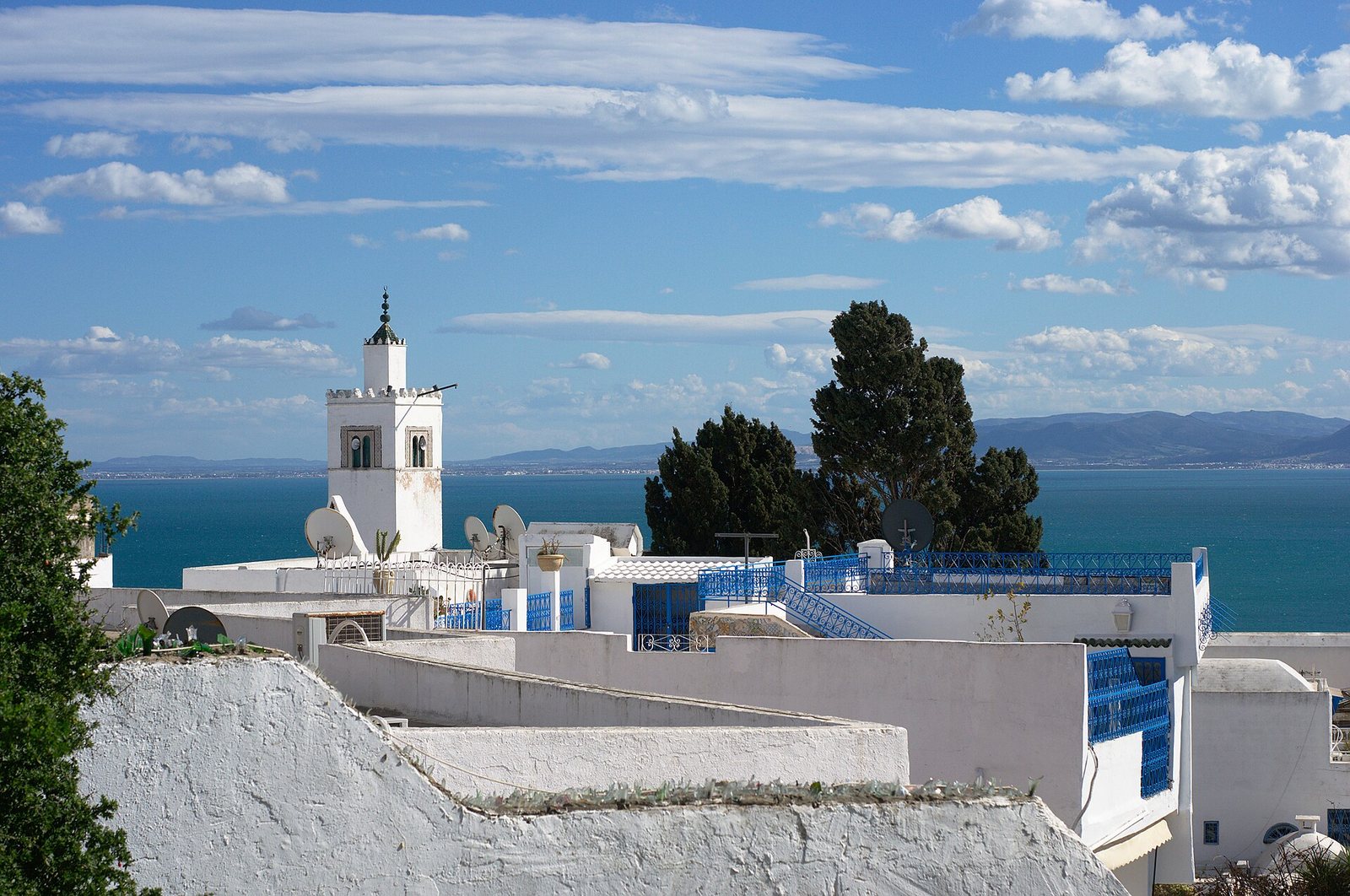
Most visitors stay in the centre near Avenue Habib Bourguiba, in a restored dar in the medina, or by the sea in La Marsa, Gammarth or Sidi Bou Said, which are quieter and linked by the TGM light railway. Les Berges du Lac, a modern district by the lagoon, has newer hotels, malls and restaurants popular with Tunisian families. El Menzah and Ennasr are residential suburbs with good local eating.
Food
Try lablabi, a chickpea soup with bread and harissa that is a classic cheap breakfast, brik, a crisp pastry with egg and tuna, and couscous with fish or lamb. In the medina, small restaurants serve set lunches to workers, and Dar El Jeld is the famous formal choice in a restored mansion. Finish with bambalouni doughnuts in Sidi Bou Said or pine nut tea in any café.
Getting around
Petit taxis are yellow and cheap by European standards: insist on the meter. The metro léger is a tram network that is useful but crowded. The TGM light railway runs from Tunis Marine station to Carthage, Sidi Bou Said and La Marsa. The medina is best on foot.
Safety tips
Tunis is generally safe for visitors who take normal city care. Watch for pickpockets in the souks and on crowded trams, and be wary of friendly strangers who offer to show you a special festival or the tannery and then steer you into a shop. The medina is quieter after the shops close, so take a taxi back after dark. Demonstrations sometimes happen around Avenue Habib Bourguiba: avoid them.
Planning your visit
Give Tunis two full days and add a third for Carthage and Sidi Bou Said. Most museums close on Mondays, and the souks are quiet on Friday lunchtime and Sundays. Spring and autumn are the most comfortable seasons, while July and August are hot. Use the free trip planner to fit Tunis into a wider route, and see our places to visit for food and stays.
Questions about Tunis
Is the medina of Tunis safe to visit?
Yes, in daytime it is busy and safe with normal care for your bag. It gets very quiet once the shops close in the evening, so most visitors leave by dusk or take a taxi.
How do I get from Tunis-Carthage Airport to the city?
The airport is only a few kilometres from the centre. Official yellow taxis wait outside arrivals: agree that the meter will run before you get in, or book a transfer through your hotel.
Is the Bardo Museum open?
The Bardo has had long closures in recent years. Check the museum's current status with your hotel or the National Heritage Institute before planning your day around it.
Should I stay in Tunis or Sidi Bou Said?
Stay in central Tunis or the medina for souks and museums, or in Sidi Bou Said, La Marsa or Gammarth for a calmer seaside base. The TGM light railway links them.
Facts checked . Fees, schedules and entry rules change, so always confirm the latest with the official source.