At a glance
- Best for
- Turtle watching, Indigenous culture and river journeys
- Nearest airport
- Johan Adolf Pengel International, then road and boat
- Time needed
- Two to three days
- Best time
- Turtle nesting season, roughly March to July
- Getting around
- Organised tours from Paramaribo with road and boat transfers
- Good to know
- Turtle viewing must follow strict rules to avoid disturbing them
Why visit
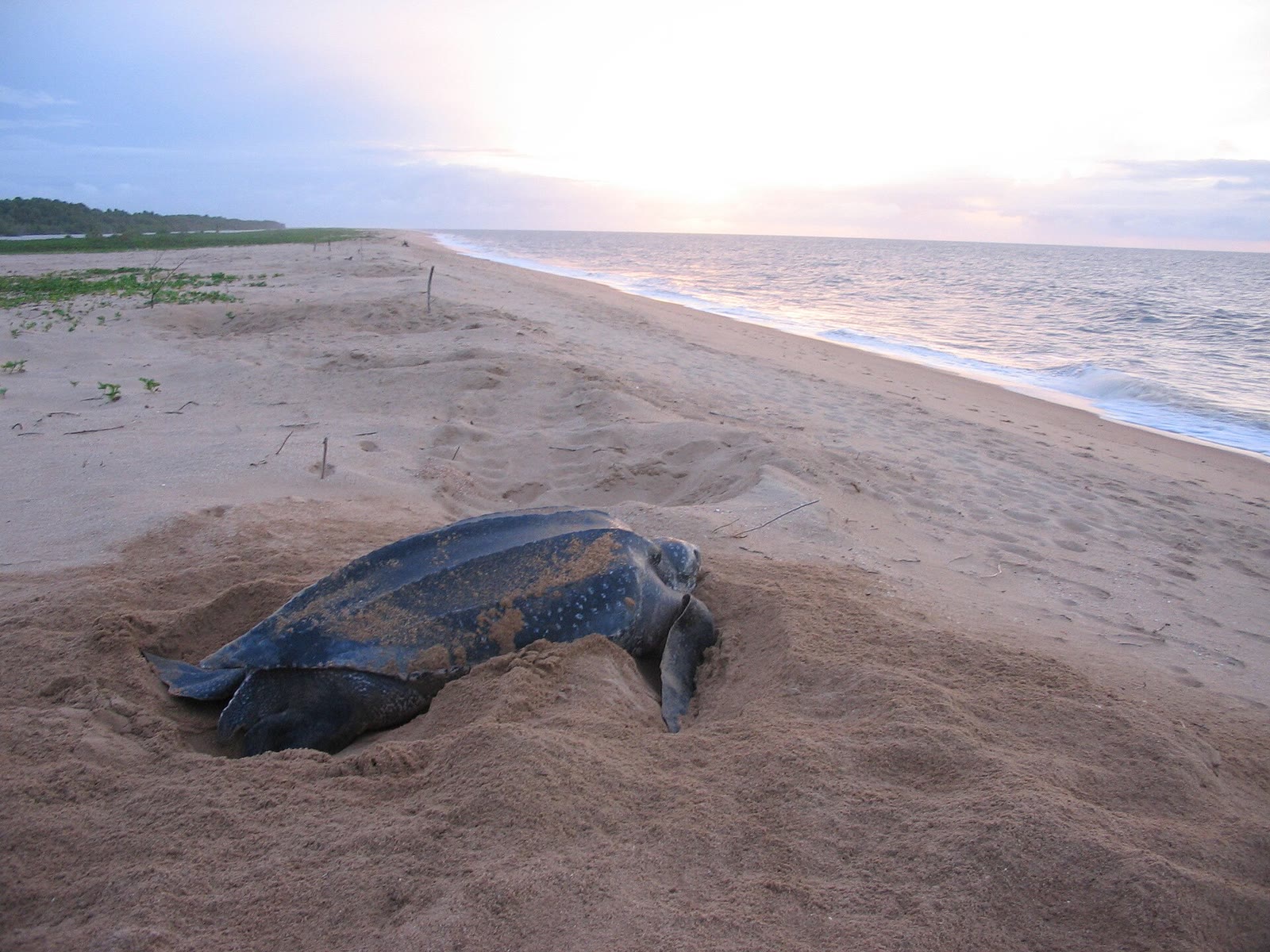
Watching a leatherback turtle, the largest turtle on Earth, haul itself up a dark beach, dig a nest and lay its eggs is unforgettable. Galibi and nearby beaches also see green turtles and olive ridleys. The area is part of a protected nature reserve, and much of the turtle tourism is run with the Kaliña communities of **Christiaankondre** and **Langamankondre**, whose people have lived on this coast for centuries.
Turtle season
Leatherbacks nest mainly from around March to July, with a peak in May and June. Green turtles nest a little later, often into August. Hatchlings emerge around two months after nesting, so July and August can be good for seeing tiny turtles head for the sea. Beaches shift with the tides and mud banks of this coast, so sites change from year to year; go with an operator or local guide who knows where the turtles are.
Watching turtles responsibly
No flash photography and no bright white lights on the beach: they disorient turtles and hatchlings. Keep behind the turtle, keep your distance, stay quiet and follow your guide. Never touch nests, eggs or hatchlings. These rules protect species that are under real pressure.
Kaliña villages
Christiaankondre and Langamankondre are welcoming villages with simple guesthouses, crafts such as pottery and woven goods, and a strong sense of community. Visiting with a local guide helps you understand Kaliña life, fishing and the role of the turtles in their culture. Be respectful, ask before photographing people and buy crafts directly from makers.
Albina and the border
**Albina** is the border town on the Marowijne River, opposite Saint Laurent du Maroni in French Guiana. Boats cross the river all day, and Albina is the usual starting point for boat trips to Galibi. The town was badly damaged in the interior war of the late 1980s and is modest today, so most visitors pass through.
Moengo
Inland, **Moengo** is a former bauxite mining town that has become an unexpected centre for contemporary art. The Tembe Art Studio and the Moengo Festival of Visual Arts bring artists from Suriname and abroad, and murals and sculptures fill the town.
Getting there
The East West Link road runs from Paramaribo to Albina, about two to three hours by road. From Albina, boats run down the Marowijne to Galibi in around an hour or more depending on the tide. Most travellers join an organised trip that includes transport, a guide and a simple overnight stay, which makes logistics much easier.
Other turtle beaches
Closer to the capital, **Matapica** in Commewijne also has turtle nesting in season, reached by boat through mangrove creeks.
A suggested trip
Most visits take two days. Leave Paramaribo in the morning, stop in Moengo to see the art, then continue to Albina and take the boat down the river to Galibi in the afternoon. After dinner in the village, walk the beach with a guide to watch nesting turtles. The next morning you can visit the village, buy crafts and return upriver to Albina and the capital.
What to bring
Pack a red light torch, insect repellent, long sleeves for the sandflies and mosquitoes on the beach at night, and cash for guides and crafts.
Questions about Galibi and Marowijne
When can I see turtles in Suriname?
Leatherbacks nest mainly from around March to July, with the peak in May and June. Hatchlings appear from around July into the autumn.
How do I get to Galibi?
Drive or take a tour bus to Albina, then a boat down the Marowijne River to the Kaliña villages and beaches. Organised trips are the easiest way.
Can I cross into French Guiana from Albina?
Yes, boats cross to Saint Laurent du Maroni. Make sure you meet French entry rules and get your passport stamped on both sides.
What should I not do when watching turtles?
Do not use flash or white light, do not touch the turtles, nests or hatchlings, and stay behind the turtle and follow your guide's instructions.
Facts checked . Fees, schedules and entry rules change, so always confirm the latest with the official source.