At a glance
- Best for
- History, beaches, food and city life
- Airport
- Freetown International Airport (FNA), across the estuary at Lungi
- Time needed
- Three to four days
- Best season
- November to April
- Languages
- Krio and English
- Getting around
- Taxis, kekeh tricycles and okada motorbikes
Why visit Freetown
Freetown is where Sierra Leone's story makes sense. Its streets carry the names of abolitionists, its wooden board houses echo the American South and the Caribbean, and its people speak Krio, an English based language shaped by every group that settled here. It is also the gateway to everything else: the beaches of the peninsula are under two hours away and the main hotels, restaurants and services are all here.
The historic centre
Start in the centre, where the great Cotton Tree stood for centuries until a storm brought it down in 2023. The spot is still the symbolic heart of the city. Nearby, the small National Museum holds masks of the Sande and Poro societies and items linked to Bai Bureh, who led the 1898 Hut Tax War. Walk down to the Old Wharf Steps, sometimes called the Portuguese Steps, where new arrivals once came ashore, and find King's Yard Gate, where liberated Africans were received. St John's Maroon Church and St George's Cathedral add more chapters.
Bunce Island
A boat trip up the Sierra Leone River takes you to Bunce Island, the ruined British fort through which tens of thousands of captives were shipped across the Atlantic, many to rice plantations in South Carolina and Georgia. It is a powerful place, especially for African American visitors with Gullah roots. Go with a guide who knows the history, and allow most of a day.
Neighbourhoods
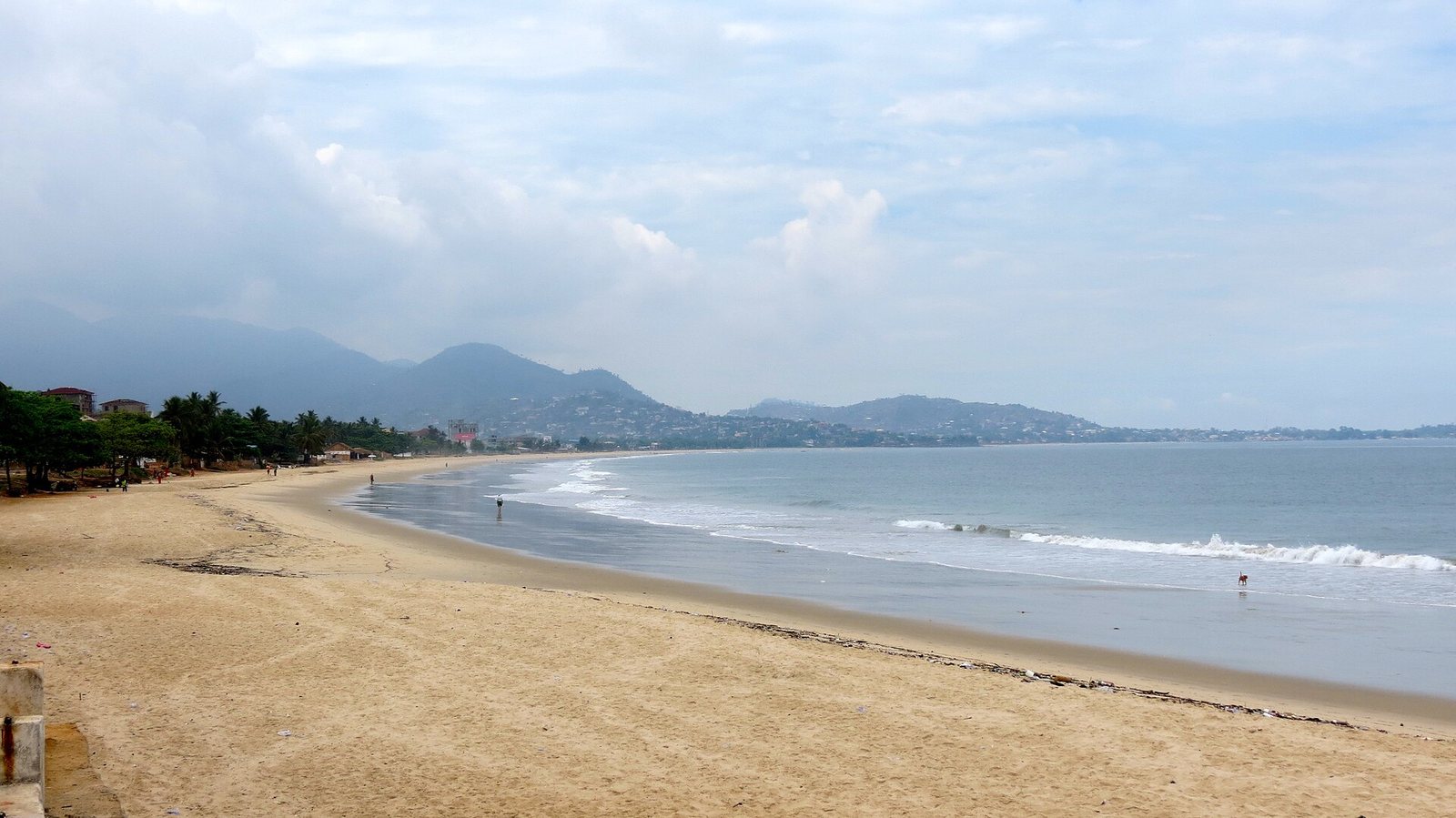
Central Freetown is busy, commercial and historic. The East End, around Kissy Road, is the most crowded part of the city. Aberdeen and Lumley in the west hold most hotels, bars and restaurants, with Lumley Beach running for several kilometres along the Atlantic. Hill Station and Wilberforce, up in the hills, are quieter and cooler, with views over the harbour.
Food and nightlife
Try cassava leaf, potato leaf and groundnut stew over rice in a local cookery shop, fresh grilled fish on Lumley Beach, and street snacks such as kanya, roast corn and ginger beer. Evenings centre on Aberdeen and Lumley, where beach bars and open air clubs fill up on Friday and Saturday nights.
Nature on the doorstep
The mountains behind the city belong to the Western Area Peninsula National Park. Tacugama Chimpanzee Sanctuary, near Regent, cares for rescued chimpanzees and runs guided visits that are one of the highlights of any trip. Charlotte Falls and the walk up Leicester Peak are other easy escapes.
Getting around
Traffic is heavy, especially on weekday mornings and evenings. Shared taxis and kekeh tricycles cover set routes cheaply; a private taxi arranged through your hotel is more comfortable. Okada motorbikes are fast but have a poor safety record. Agree fares before you set off and plan around the traffic.
Safety
Freetown is generally friendly, but pickpocketing and bag snatching happen, especially in markets and after dark. Keep valuables out of sight, use taxis at night and do not swim alone, as currents off Lumley Beach can be strong. Check current government travel advice before you go.
Questions about Freetown
How do I get from Lungi airport to Freetown?
The airport sits across the estuary from the city. Most travellers take a water taxi or the ferry, while the road around takes several hours. Check current water taxi services before landing, and arrange your transfer in advance if you arrive late.
Where should first-timers stay in Freetown?
Aberdeen and Lumley are the easiest bases, close to the beach, restaurants and most international hotels. Hill Station suits people who want quiet and cooler air.
Is Bunce Island worth the trip?
Yes, especially if you have an interest in the transatlantic slave trade or Gullah heritage. It takes most of a day by boat, so plan for calm weather in the dry season.
How many days do I need in Freetown?
Three to four days covers the centre, Bunce Island, Tacugama and Lumley Beach, before heading down the peninsula.
Facts checked . Fees, schedules and entry rules change, so always confirm the latest with the official source.