At a glance
- Best for
- Temples, stupas, history, food and shopping
- Airport
- Tribhuvan International Airport (KTM)
- Time needed
- Three to four days for the valley
- Best season
- October to November and March to April
- Altitude
- Around 1,400 metres
- Main bases
- Thamel, Patan and Boudha
Why go
The Kathmandu Valley is where Nepal's culture is richest. The Newar people who built its cities were master carvers, metalworkers and builders, and their pagoda temples, carved windows and stone water spouts still fill the old quarters. Life here is lived in public: morning offerings at street shrines, festivals that close whole neighbourhoods and markets that have traded in the same lanes for centuries. Even if you came for the mountains, give the valley a few days.
What to see
**Kathmandu Durbar Square** is the old royal palace square, with the Hanuman Dhoka palace and the Kumari Ghar, home of the living goddess. Some buildings are still being restored after the 2015 earthquake, but the square is busy and beautiful. A ticket is required for foreign visitors.
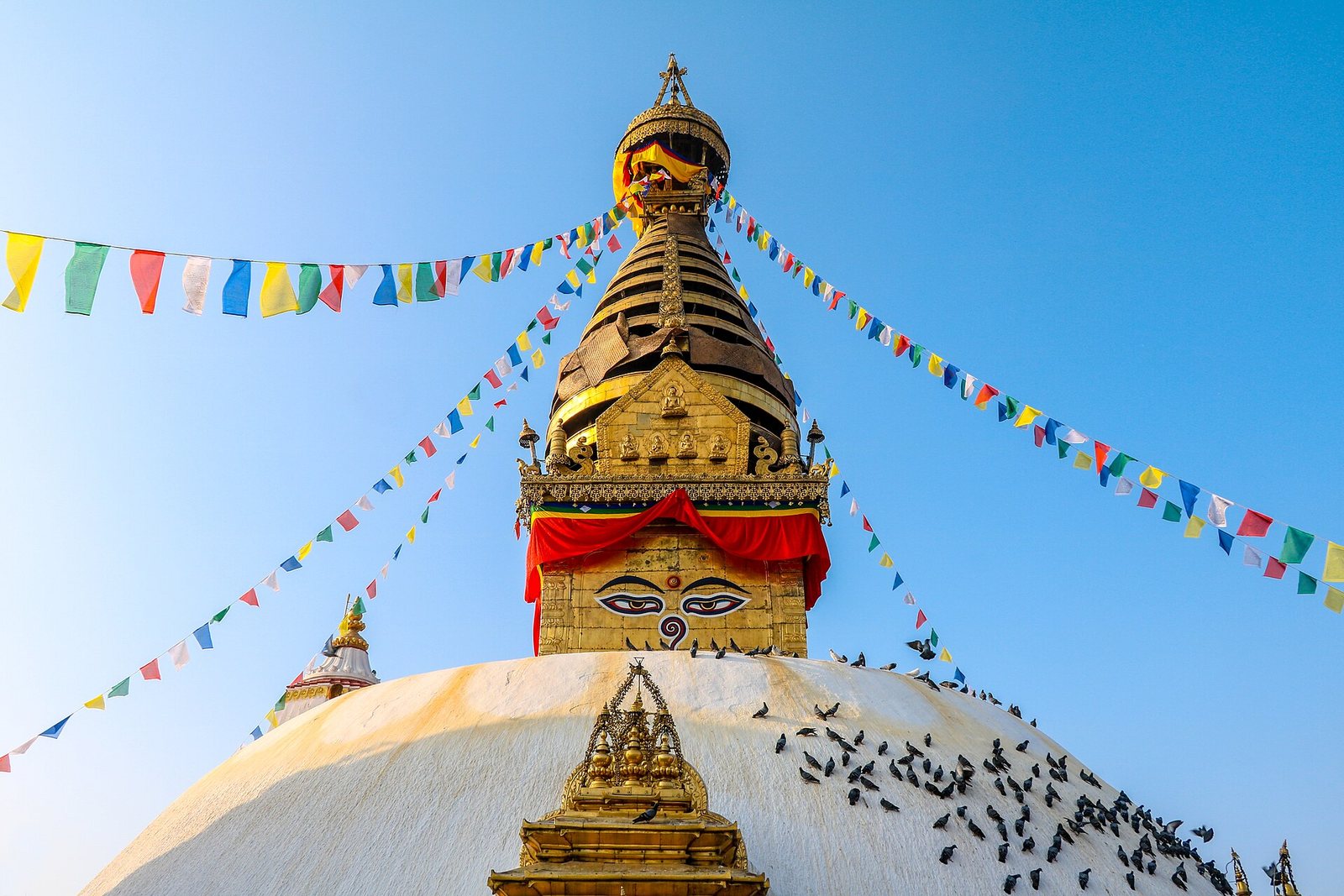
**Swayambhunath**, the Monkey Temple, sits on a hill west of the centre with views across the city. Climb the long stone staircase from the east side for the classic approach, and watch the monkeys around your bags.
**Boudhanath**, one of the largest stupas in the world, is the centre of Tibetan Buddhism in Nepal. Come in the late afternoon, when pilgrims walk clockwise around it spinning prayer wheels, and stay for dinner on a rooftop as the lamps are lit.
**Pashupatinath** is Nepal's most sacred Hindu temple, on the banks of the Bagmati river. Non-Hindus cannot enter the main temple, but you can watch from across the river, where open air cremations take place on the ghats. Be respectful and do not photograph grieving families up close. The evening aarti ceremony is moving.
**Patan**, across the river in Lalitpur, has the finest Durbar Square in the valley and the excellent Patan Museum, the best introduction to Nepali art. Its courtyards, Golden Temple and metalwork shops make it a calmer base than Thamel.
**Bhaktapur**, half an hour east, is the best preserved of the three royal cities, with car free squares, the five tiered Nyatapola temple, a potters' square and the famous juju dhau, king curd. Many travellers stay a night to see it after the day visitors leave.
Where to stay
**Thamel** is the traveller district: lively, convenient for trekking shops and agencies, and full of guesthouses and restaurants at every level. It is also loud, so ask for a room away from the street. **Patan** suits those who want heritage hotels and a slower pace. **Boudha** has quiet guesthouses around the stupa, and **Bhaktapur** is lovely for a night or two.
Food
This is the best place in Nepal to eat. Try momos, the steamed dumplings that are a national obsession, dal bhat, Newari feasts with beaten rice, buffalo choila and bara lentil cakes, and Tibetan thukpa in Boudha. Thamel and Jhamsikhel in Patan have international cafés and restaurants.
Getting around
Taxis and ride hailing apps such as Pathao and inDrive are the easiest way to get around. Walking is the best way to see old quarters, though pavements are uneven and traffic is heavy. Dust and air pollution can be bad in the dry season, so a mask helps.
Practical tips
Carry small notes for entrance tickets and offerings, dress modestly at temples, walk clockwise around stupas and remove shoes where asked. Plan a buffer day here before international flights, since mountain flights and roads can be delayed.
Questions about Kathmandu
How many days do I need in Kathmandu?
Three to four days covers the main sights of the valley: Kathmandu Durbar Square, Swayambhunath, Boudhanath, Pashupatinath, Patan and Bhaktapur, at a comfortable pace.
Is Thamel the best place to stay?
Thamel is the most convenient for first-timers and trekkers, with everything in walking distance. If you want somewhere quieter and more traditional, stay in Patan, Boudha or Bhaktapur.
Do I need tickets for the temple squares?
Yes. Foreign visitors pay entrance fees at the Durbar Squares of Kathmandu, Patan and Bhaktapur and at several other sites. Keep your ticket, as it may be checked again.
Is Kathmandu safe at night?
Central areas like Thamel are busy and generally safe in the evening. Watch for pickpockets in crowds, avoid unlit side streets late at night and use registered taxis or ride hailing apps.
Facts checked . Fees, schedules and entry rules change, so always confirm the latest with the official source.