At a glance
- Best for
- Wildlife, birdwatching and village life
- Nearest airport
- Bharatpur, with short flights from Kathmandu
- Getting there
- Five to seven hours by road from Kathmandu or Pokhara
- Time needed
- Two to three nights
- Best season
- October to March, and April to May for sightings in short grass
- Main base
- Sauraha village
Why go
Chitwan is a conservation success story. Rhinos were nearly wiped out here in the twentieth century; today the park holds one of the largest populations in the world, and sightings on a jeep or canoe safari are common. Tigers are far harder to see, but their numbers have grown strongly. Add the culture of the Tharu people, who have lived in these forests for generations, and Chitwan becomes much more than a wildlife stop.
Safaris
**Jeep safaris** are the main way to explore, with half day and full day options deep into the park. Full day trips reach more remote waterholes and give the best chance of seeing big animals. **Canoe trips** on the Rapti or Budhi Rapti rivers drift past mugger and gharial crocodiles and wading birds, often followed by a short walk back. **Jungle walks** with licensed naturalists are thrilling but carry real risk around rhinos and bears, so follow your guides exactly.
The **Elephant Breeding Centre** and the **gharial breeding centre** at Kasara show conservation in action. Many visitors now choose not to ride elephants for welfare reasons, and several lodges have stopped offering rides; watching elephants bathe or walk with them is a gentler option.
Tharu culture
Visit a Tharu village near Sauraha to see traditional mud houses painted with designs, and catch an evening **Tharu stick dance** performance, held most nights in Sauraha. The small **Tharu Cultural Museum** explains their history.
Birdwatching
Chitwan is excellent for birds, especially in winter when migrants arrive. Kingfishers, hornbills, storks, peafowl and the rare Bengal florican all live here. **Bis Hajar Tal**, the twenty thousand lakes wetland, is a good area for keen birders.
Where to stay
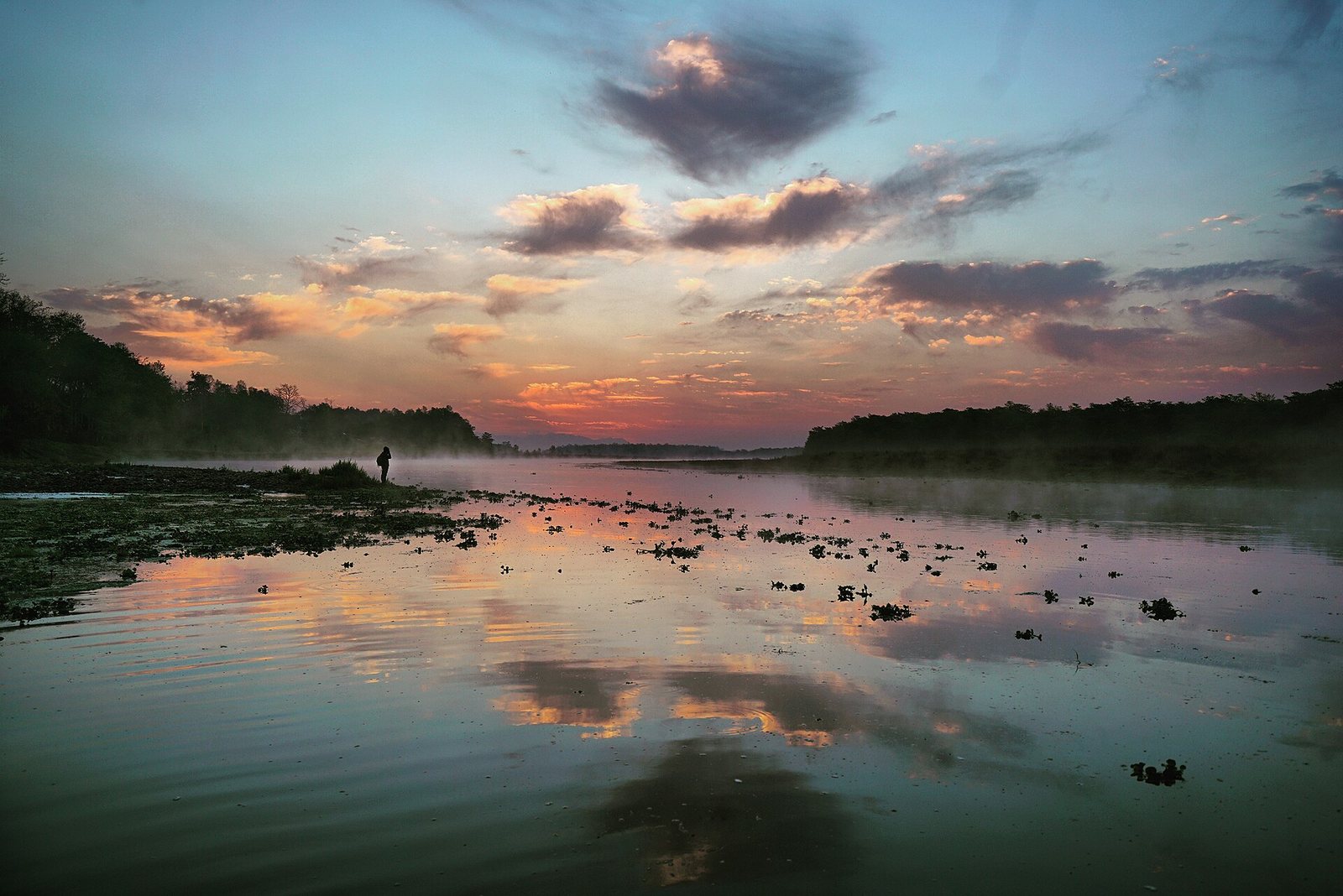
**Sauraha**, on the park's northern edge, is the main base with lodges from simple to comfortable and easy access to the river at sunset. For a quieter, more remote stay, look at lodges in the buffer zone near **Meghauli** or **Barauli** in the west, or community homestays at **Amaltari** in neighbouring areas.
When to go
October to March is pleasant and cool, with misty winter mornings. From late February the grass is cut and burned, making animals easier to spot, though April and May are hot. The monsoon brings heat, heavy rain and leeches, and some areas close.
Practical tips
Park entry and safari permits are required. Wear neutral coloured clothes, bring insect repellent, binoculars and a hat, and take malaria and dengue advice from a travel health clinic before you go. Never approach wildlife on your own, even on the edge of the village: rhinos wander into Sauraha regularly.
Combining Chitwan with the rest of Nepal
Chitwan sits neatly between Kathmandu, Pokhara and Lumbini, so it fits into most routes without backtracking. Many travellers go Kathmandu, Chitwan, Lumbini and Pokhara in a loop. Allow a full day of travel each way, and set off early to arrive in time for an afternoon canoe trip or sunset by the river.
Questions about Chitwan
Will I see a tiger in Chitwan?
Possibly, but not reliably. Tigers are shy and spread across a large area. Rhinos, deer, crocodiles and many birds are seen on most safaris, and a full day jeep trip gives the best chance of something special.
How many nights should I spend in Chitwan?
Two to three nights is ideal. That allows a jeep safari, a canoe trip, a jungle walk or village visit and a sunset by the river.
Is it safe to do a walking safari?
Walking safaris carry real risk from rhinos, elephants and sloth bears. Go only with experienced licensed naturalists, stay in a small group and follow every instruction.
How do I get from Chitwan to Pokhara?
Tourist buses run daily from Sauraha to Pokhara and Kathmandu, taking most of a day. You can also fly from Bharatpur to Kathmandu.
Facts checked . Fees, schedules and entry rules change, so always confirm the latest with the official source.