At a glance
- Best for
- Trekking, mountain views and Sherpa culture
- Gateway
- Lukla airstrip, by short flight from Kathmandu or Ramechhap
- Time needed
- Twelve to fourteen days for Base Camp
- Best season
- October to November and March to May
- Highest point on classic trek
- Kala Patthar, around 5,600 metres
- Permits
- Sagarmatha National Park entry and a local area permit
Why go
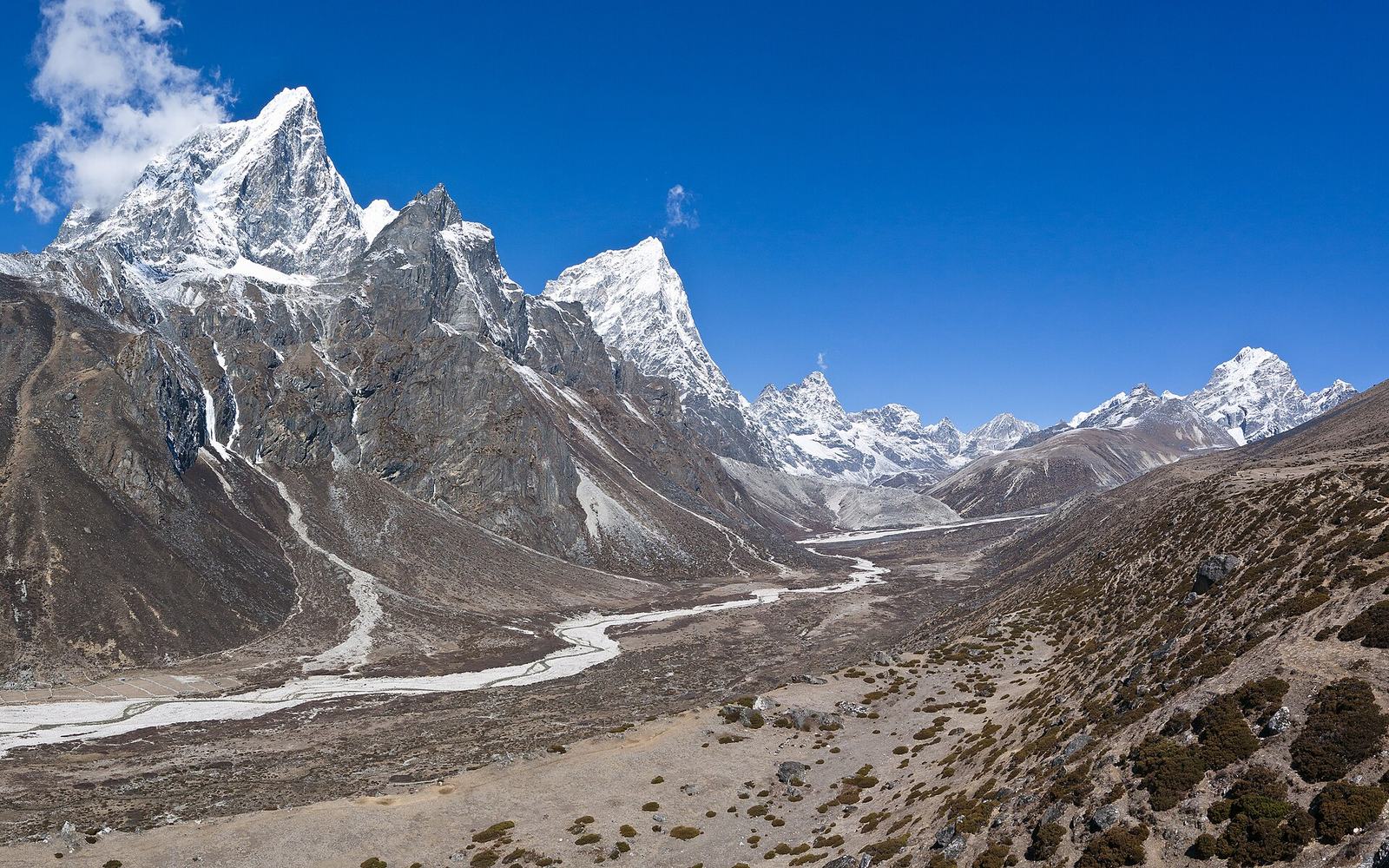
Walking into the Khumbu is one of the great journeys on Earth. The scenery grows more dramatic every day, from pine forests and rhododendrons in the lower valleys to glaciers and moraines above the tree line. Along the way, Sherpa teahouses offer warm stoves, dal bhat and friendship, and monasteries such as Tengboche bring a sense of peace to the high valleys.
Getting there
Most trekkers fly to **Lukla**, a famously short airstrip on a mountainside. In busy seasons many flights now leave from **Ramechhap (Manthali)**, several hours by road from Kathmandu, rather than from Kathmandu itself. Flights depend on clear weather and delays of a day or more are common, so build at least two spare days into your trip. Some people walk in from Jiri or Phaplu, as the early expeditions did, adding about a week.
Classic routes
**Everest Base Camp** is the best known trek, usually twelve to fourteen days return from Lukla. The route passes **Phakding**, the trading town of **Namche Bazaar**, **Tengboche monastery**, **Dingboche** and **Lobuche** to **Gorak Shep**. From there you visit Base Camp itself and climb **Kala Patthar** at sunrise for the best view of Everest, which cannot be seen well from Base Camp.
The **Gokyo Lakes** trek leads to a chain of turquoise lakes and the viewpoint of Gokyo Ri, often with fewer people. Strong trekkers combine both via the Cho La pass, or take on the **Three Passes** route.
For a shorter taste, the **Everest View Trek** goes to Namche, Khumjung and the Everest View Hotel in about a week, reaching enough height to see the summit.
Altitude
Altitude is the real challenge. Follow the rule of not sleeping more than a few hundred metres higher each night above 3,000 metres, take rest days in Namche and Dingboche, drink plenty of water and descend at once if you have worsening headache, vomiting, breathlessness at rest or confusion. Make sure your travel insurance covers trekking to the height you plan and helicopter evacuation.
Permits and guides
You need a **Sagarmatha National Park** entry permit and the **Khumbu Pasang Lhamu Rural Municipality** local permit, both available in the region. The Everest region has its own rules on guides, which have changed in recent years. Check the current position with the Nepal Tourism Board before you book.
Teahouses and costs
Teahouses offer simple rooms and meals all the way to Gorak Shep. Prices rise with altitude because everything is carried up by porters and yaks. Charging devices, hot showers and wifi cost extra higher up. Carry enough cash in rupees from Kathmandu, as ATMs end at Namche and do not always work.
Respect the mountains
Walk to the left of mani stones and chortens, ask before photographing people and carry out your rubbish. Use refillable bottles with purification tablets rather than buying plastic.
Questions about the Everest Region
Do I need to be very fit to trek to Everest Base Camp?
You need good stamina for several days of walking five to seven hours, but no technical skills. Training with long hill walks beforehand makes a real difference. Altitude, not fitness, is usually the hardest part.
When is the best time to trek in the Everest Region?
October and November give the clearest skies, followed by March to May, when rhododendrons bloom and the climbing season is under way. Winter is very cold and the monsoon brings cloud and flight delays.
Why are Lukla flights often delayed?
Flights to Lukla need clear visibility, and mountain weather changes quickly. Delays of a day or more are common, so always leave spare days before your international flight home.
Can I see Everest without trekking?
Yes. Mountain sightseeing flights leave Kathmandu early in the morning in clear weather and fly along the range. Helicopter tours to the Khumbu are another option.
Facts checked . Fees, schedules and entry rules change, so always confirm the latest with the official source.