At a glance
- Best for
- Treks of every length, villages and mountain views
- Gateway
- Pokhara
- Time needed
- Four days to three weeks
- Best season
- October to November and March to May
- Highest point
- Thorong La pass, around 5,400 metres
- Permits
- Annapurna Conservation Area Permit, with special permits for Upper Mustang
Why go
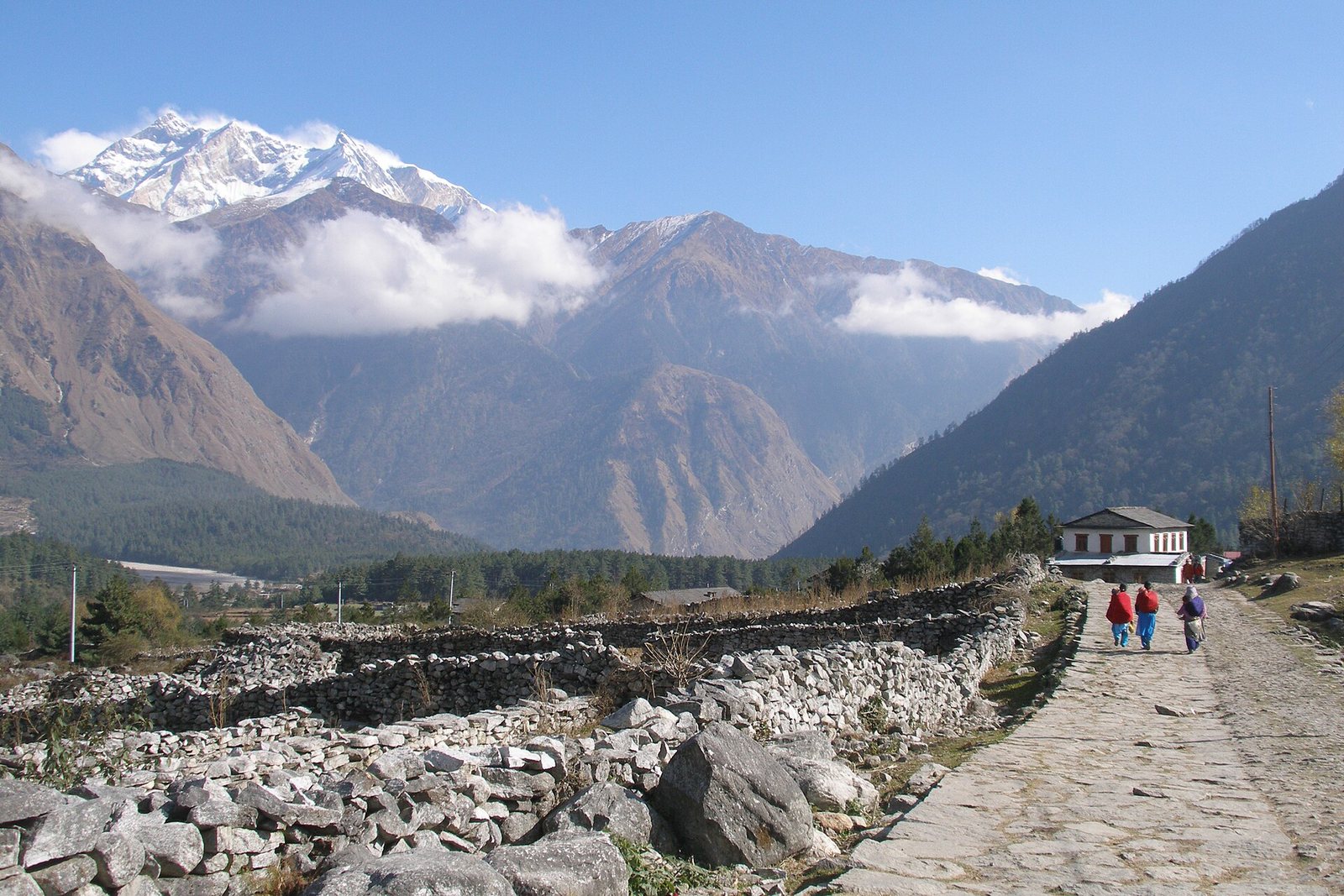
The Annapurna Conservation Area covers jungle valleys, terraced hills, rhododendron forests, high passes and, beyond the mountains, the arid landscapes of Manang and Mustang that feel like Tibet. Because trailheads are only a few hours from Pokhara, it is easy to fit a trek into a shorter holiday, and the variety means there is a route for every fitness level.
Popular treks
**Ghorepani and Poon Hill**: usually four or five days from Nayapul or Ulleri, with thousands of stone steps, rhododendron forests and a famous sunrise view over Dhaulagiri and Annapurna South. It stays below about 3,200 metres, so altitude is rarely a problem. A good first trek.
**Annapurna Base Camp (ABC)**: around seven to ten days through the Gurung village of **Ghandruk** and **Chhomrong**, up the Modi Khola valley into the Annapurna Sanctuary, a ring of peaks around a glacier basin. Avalanche risk on the upper trail can close sections after heavy snow, so follow local advice.
**Annapurna Circuit**: the classic long trek, now often started by jeep in the Marsyangdi valley and finished in **Jomsom** or **Muktinath**. It crosses the **Thorong La** pass at around 5,400 metres and passes through Manang, a good place for acclimatisation days. Roads now reach many parts of the circuit, but trekkers use alternative trails marked as the New Annapurna Trekking Trails to avoid traffic.
**Mardi Himal**: a quieter four to six day route up a ridge to close views of Machhapuchhre.
**Upper Mustang**: the former kingdom of Lo, with cave dwellings, red cliffs and the walled town of **Lo Manthang**. It needs a special restricted area permit, a licensed guide and at least two travellers.
Permits and guides
All treks need the **Annapurna Conservation Area Permit (ACAP)**, issued in Kathmandu and Pokhara. Since 2023 foreign trekkers have been required to hire a licensed guide in most conservation areas, and the TIMS card rules have changed. Check current rules with the Nepal Tourism Board before you go.
Altitude and safety
On the Circuit and ABC, ascend slowly, take acclimatisation days and know the signs of altitude sickness. Weather can close Thorong La at any time of year; start the crossing before dawn and turn back in storms. Trekkers have died here in sudden snow, so never cross alone.
Teahouses
Teahouses offer rooms and meals across the region. Thakali dal bhat in Jomsom and Marpha, and apple pies and cider from Marpha's orchards, are highlights. Carry cash, as cards and ATMs are rare beyond the trailheads.
Getting there
All routes start from Pokhara by bus, jeep or taxi. Jomsom has a small airport with morning flights from Pokhara in good weather, useful for finishing the Circuit or reaching Mustang.
Packing
Bring layers for cold nights, a down jacket, a sleeping bag, water purification, a headtorch and sturdy broken in boots. Gear can be rented or bought in Pokhara and Kathmandu. Porters can be hired through agencies to carry heavy bags, which makes the walking much more enjoyable and supports local families.
Questions about the Annapurna Region
Which Annapurna trek is best for beginners?
Ghorepani and Poon Hill is the most popular first trek: short, not too high and with a superb sunrise view. Mardi Himal is a good next step.
How long does the Annapurna Circuit take?
Most people take twelve to eighteen days depending on where they start and finish and how many acclimatisation days they take.
Do I need a permit for the Annapurna Region?
Yes, all trekkers need the Annapurna Conservation Area Permit, and Upper Mustang and Nar Phu need extra restricted area permits. Check current permit and guide rules with the Nepal Tourism Board.
Is the Thorong La pass dangerous?
It is high and exposed, and weather can turn quickly. With good acclimatisation, an early start, warm gear, a guide and a willingness to turn back, most trekkers cross safely.
Facts checked . Fees, schedules and entry rules change, so always confirm the latest with the official source.