At a glance
- Best for
- Oases, desert treks, rock art and dunes
- Gateway
- Atar International Airport (ATR) or the road from Nouakchott
- Time needed
- Four to eight nights for the region
- Best season
- November to March
- From Nouakchott
- A long day by road
- Getting around
- Four wheel drive with a licensed guide
Why the Adrar is worth your time
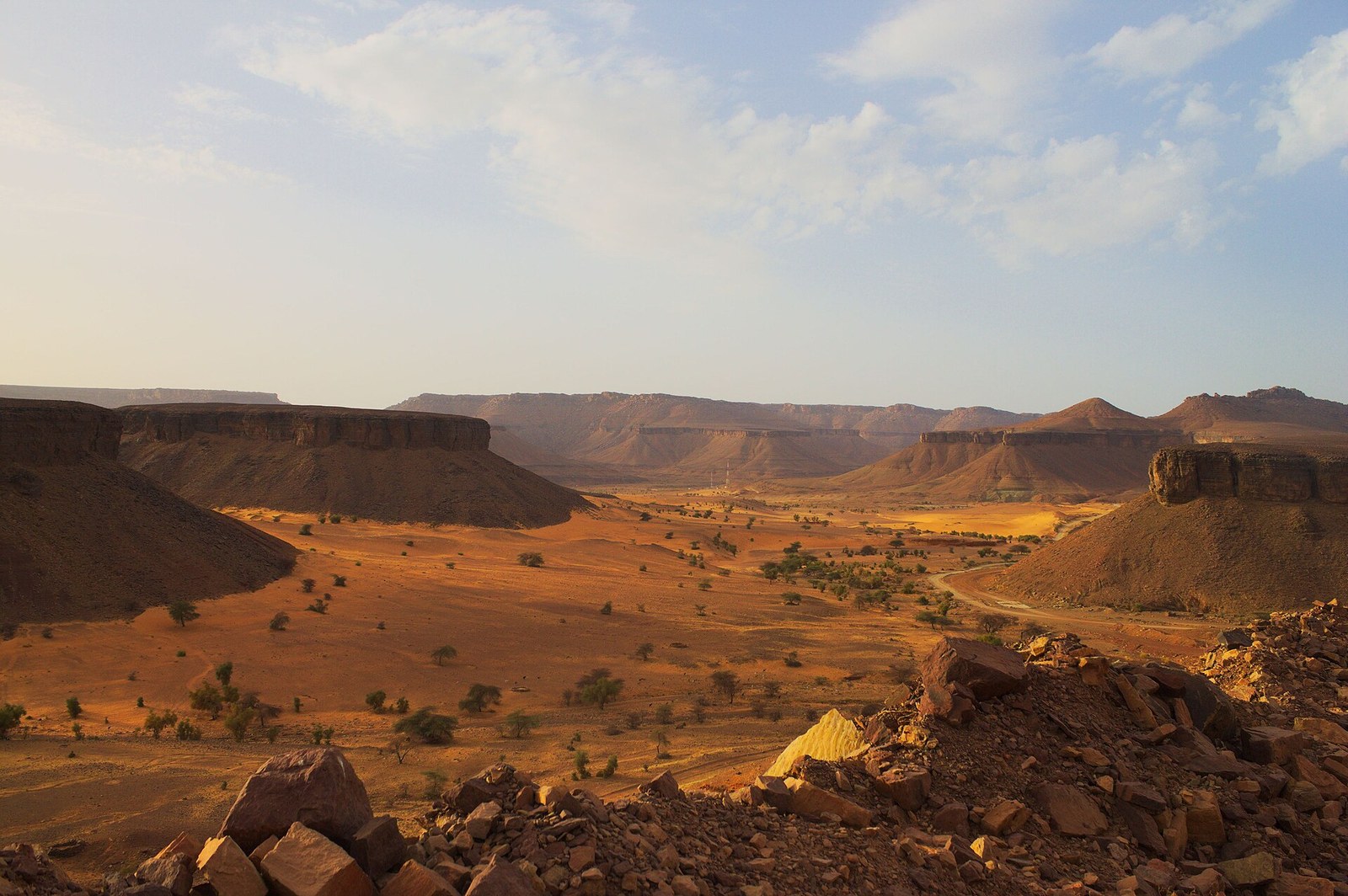
The Adrar is the Sahara many travellers dream of: sandstone escarpments, deep canyons, palm groves fed by springs and great seas of golden dunes. For centuries it was a crossroads of caravans carrying salt, gold and books, and its towns and oases still feel connected to that history. Atar makes a practical base, with markets, guesthouses and guides.
Atar town
Atar's market is the place to stock up before heading into the desert: dates from the Adrar oases, blankets, silver, tea sets and supplies. The old ksar quarter shows how the town grew around its caravan trade. It is a relaxed, friendly town, and a good place to meet guides and fellow travellers.
Terjit oasis
About an hour south of Atar, Terjit is a narrow gorge shaded by palms, with springs of warm and cool water running between the rocks. It is a classic stop for a swim, a rest and lunch in the shade, and simple camps let you stay overnight to enjoy it before day visitors arrive.
The Amogjar pass and rock art
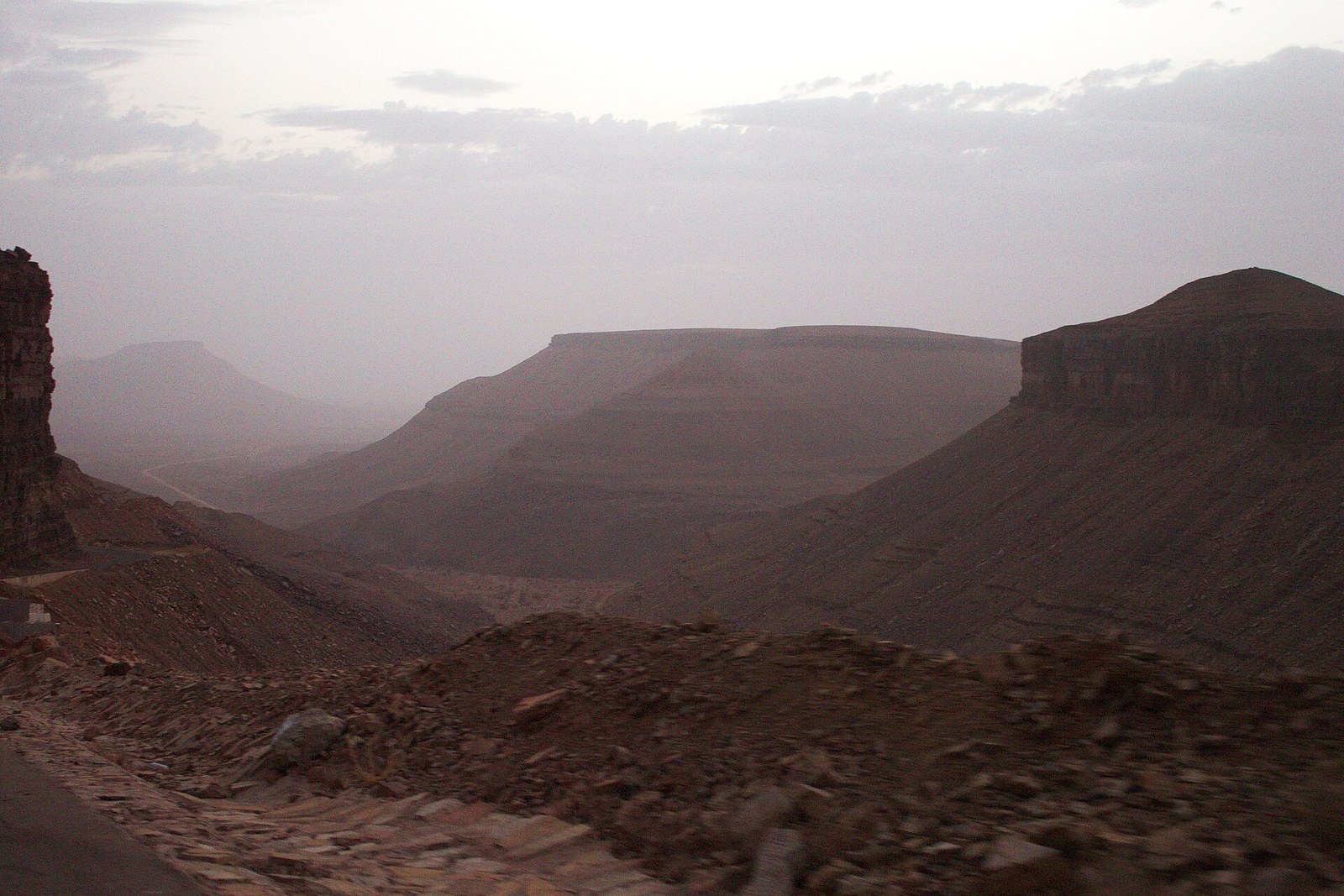
The road from Atar to Chinguetti climbs through the Amogjar pass, with sweeping views over the plateau. Nearby, rock shelters hold prehistoric paintings of cattle and people, a reminder that the Sahara was once green. A guide will help you find them and explain what you are seeing.
Azougui
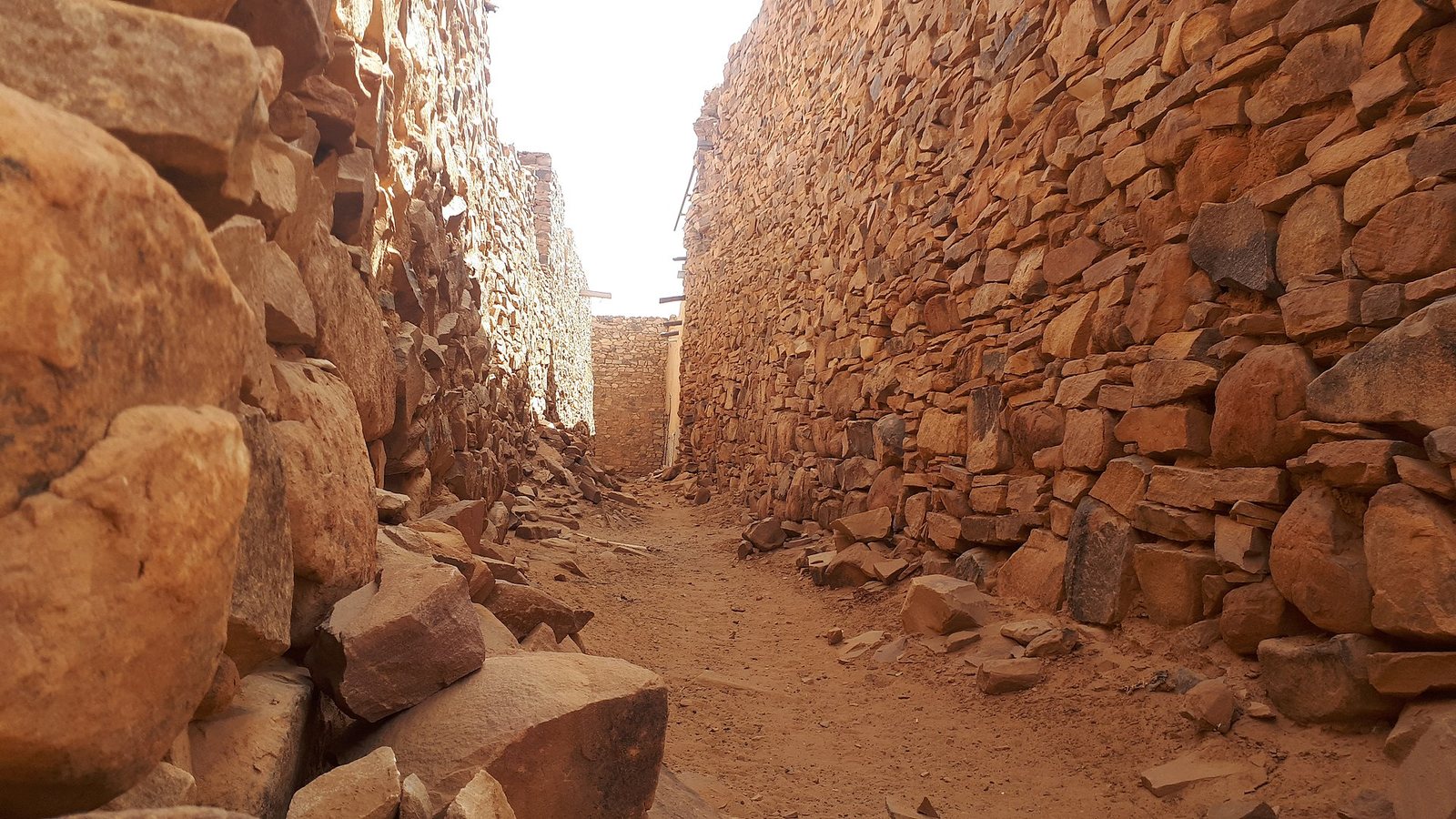
Just outside Atar, the palm village of Azougui holds the remains of an eleventh century Almoravid stronghold. The Almoravids, a dynasty born in this part of the Sahara, went on to rule Morocco and much of Spain. The ruins are modest, but the story is extraordinary.
Camel treks and dunes
The Adrar is ideal for treks of a few days to a week, on foot with camels carrying the baggage, or by four wheel drive. Routes link oases, canyons and the dunes of the Erg Ouarane, with nights in camps under brilliant stars. Licensed local guides arrange camels, cooks and permits.
When to go and how to get there
November to March brings warm days and cold nights; summer is fiercely hot. In the cool season, some charter flights from France have flown direct to Atar; check what is running. Otherwise, a paved road links Nouakchott with Atar via Akjoujt, a long day's drive. Government travel advice for the Adrar has changed over the years, so check the latest guidance before you book, and travel with a licensed guide.
Choosing a guide and a route
A good guide makes the Adrar. Ask your guesthouse or a recognised local agency for a licensed guide, agree the route, vehicle, meals and nights in writing before you leave, and check that the vehicle carries spare tyres, extra fuel and plenty of water. A typical loop runs from Atar to Terjit, over the Amogjar pass to Chinguetti, across to Ouadane and back, with nights in oases and dunes. Leave a copy of your plans with your hotel, and keep your passport and copies handy for police checkpoints along the way.
Where to stay
Atar has simple hotels and traveller guesthouses, and the oases and dunes have campements with tents or stone huts. Expect warm hospitality rather than luxury. Continue to Chinguetti and Ouadane, and shape your route with our free trip planner.
Questions about Atar and the Adrar
Do I need a guide in the Adrar?
Yes, a licensed local guide is strongly recommended, and often expected by the authorities, for travel off the main roads and in the dunes.
How do I get to Atar?
By road from Nouakchott, a long day's drive, or by seasonal charter flight in the cool season when they run.
Can I swim at Terjit?
Yes, the springs are a favourite place to cool off. Dress modestly, as it is also used by local families.
How many days do I need in the Adrar?
At least four nights to see Atar, Terjit and Chinguetti; a week or more lets you add Ouadane and a camel trek.
Facts checked . Fees, schedules and entry rules change, so always confirm the latest with the official source.