At a glance
- Best for
- Hiking, swimming in natural pools and dramatic scenery
- Region
- South, on the RN7
- Time needed
- Two to three nights
- Base
- Ranohira village at the park edge
- Getting around
- On foot with a licensed guide, short drives to trailheads
- Climate
- Hot days, cool nights in the dry season
Why Isalo is worth your time
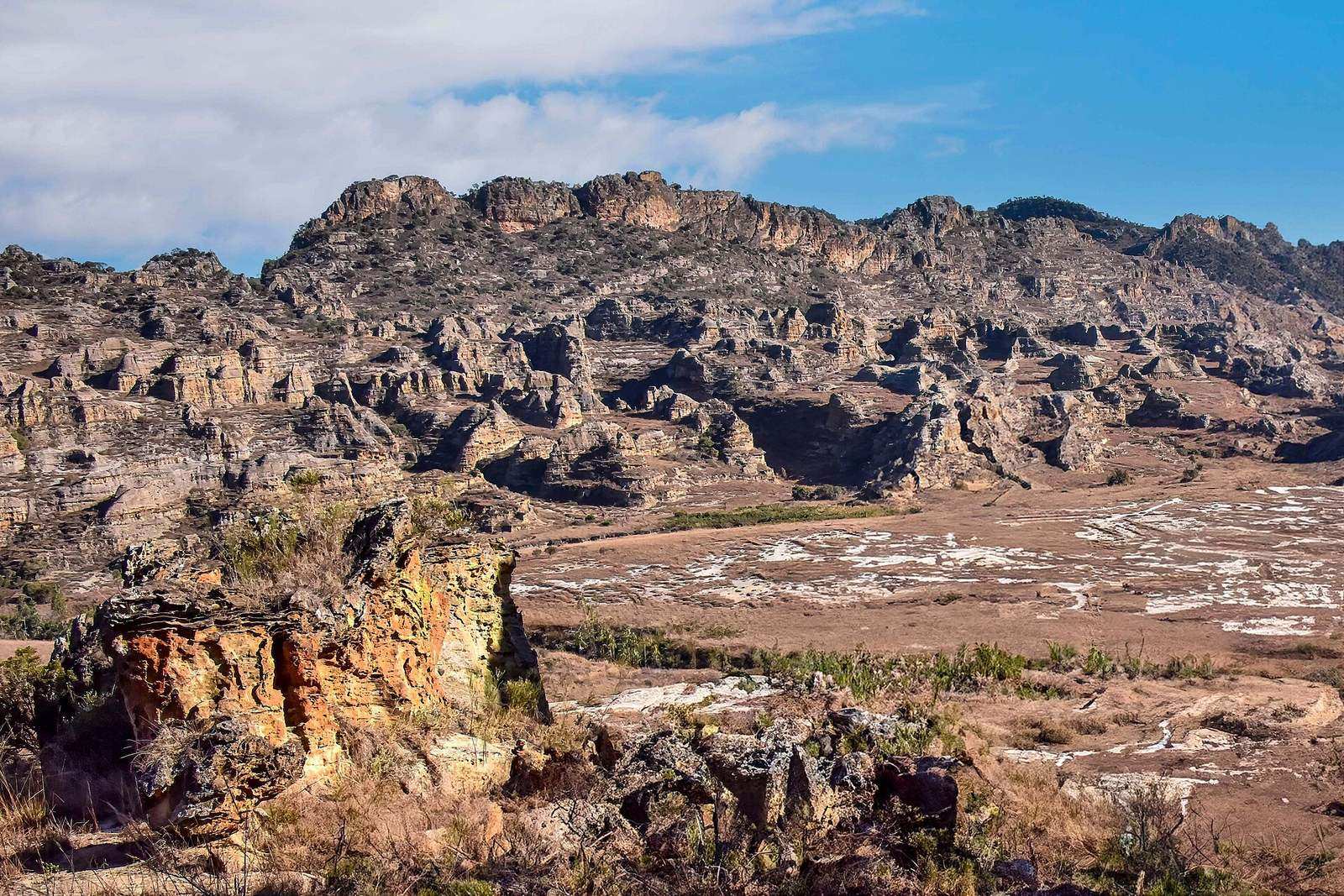
Isalo feels like a different country from the rainforests of the east. The light is golden, the sky is huge and the rock glows red and orange at sunset. Trails link swimming holes, canyons full of ferns and lookouts across the massif, and ring-tailed lemurs and Verreaux's sifakas live in the gorges. It is also culturally rich: the land belongs to the Bara people, cattle herders whose burial sites lie hidden in the cliffs.
The Piscine Naturelle
The most popular walk climbs onto the plateau and drops to the Piscine Naturelle, a clear pool fed by a small waterfall and framed by pandanus palms. It is a moderate hike with some exposed sections in the sun, so start early, carry plenty of water and wear a hat. The pool is a joy to swim in after the climb, and there is a campsite and picnic area nearby where lemurs often visit.
Canyon des Makis and Canyon des Rats
These two narrow canyons are a contrast to the open plateau: shaded, green and cool, with streams to hop across and walls rising on both sides. Ring-tailed lemurs are often seen here. Many visitors combine them with the Piscine Naturelle in a full day; your guide will suggest the best order for the season and your fitness.
Cascade des Nymphes and longer treks
Further into the park, the Cascade des Nymphes trail leads to a pair of pools known as the blue and black pools, in a shady gorge. It is a quieter option once you have seen the classics. Experienced hikers can arrange multi day treks with camping, which give a real sense of the scale and solitude of the massif.
Sunset and the Fenêtre
South of Ranohira, La Fenêtre de l'Isalo is a natural rock window through which the sun sets, and evening here has become a ritual for many travellers. Nearby rock formations, including one known as La Reine de l'Isalo, are best in the low light. The Maison de l'Isalo interpretation centre gives useful background on geology and Bara culture.
Beyond the park
West along the RN7, the town of Ilakaka grew almost overnight after sapphires were found in the late 1990s, and it still has a rough frontier feel. A little further on, Zombitse-Vohibasia National Park protects dry forest with birds found nowhere else. From there, the road continues to Toliara and the beaches of Ifaty and Anakao.
Where to stay
Ranohira, the village at the park edge, has simple guesthouses, while stylish lodges sit among the rocks to the south, some with pools facing the massif. Nights in the dry season are surprisingly cold, so bring a warm layer. Browse options on our travel page.
Getting there
Isalo is roughly two to three days' drive from Antananarivo along the RN7 if you stop in Antsirabe, Ranomafana and Ambalavao, which is how most people do it. Toliara, which has an airport with domestic flights, is a few hours' drive to the southwest. The RN7 is paved but potholed in places, and you should not drive it at night because of the risk of bandits and accidents. Licensed guides are required inside the park and are booked at the park office in Ranohira.
When to go
April to November is the best season, with dry trails and comfortable hiking. October and November get very hot, so start early. December to March brings rain and heat, and some trails and river crossings can become difficult. Find more stops nearby on our places to visit list.
Questions about Isalo
How many days do I need in Isalo?
Two nights gives you one full day for the Piscine Naturelle and canyons plus a sunset at La Fenêtre. Three nights adds a quieter trail or a longer trek.
How difficult are the hikes?
Most popular trails are moderate, with some climbing and long stretches in the sun. Walks can be adjusted to your fitness by your guide.
Can I swim in Isalo?
Yes. The Piscine Naturelle and the pools on the Cascade des Nymphes trail are popular swimming spots. Follow your guide's advice about which pools are allowed.
Is the RN7 safe to drive?
The road is busy with travellers in daytime, but avoid driving at night because of bandit and accident risk. Check your government's current advice before you go.
Facts checked . Fees, schedules and entry rules change, so always confirm the latest with the official source.