At a glance
- Best for
- Whale watching, quiet beaches, history and slow days
- Region
- East coast
- Time needed
- Four to six nights
- Airport
- Sainte-Marie domestic airport
- Getting around
- Tuk-tuks, bicycles, scooters and walking
- Whale season
- Roughly July to September
Why Île Sainte-Marie is worth your time
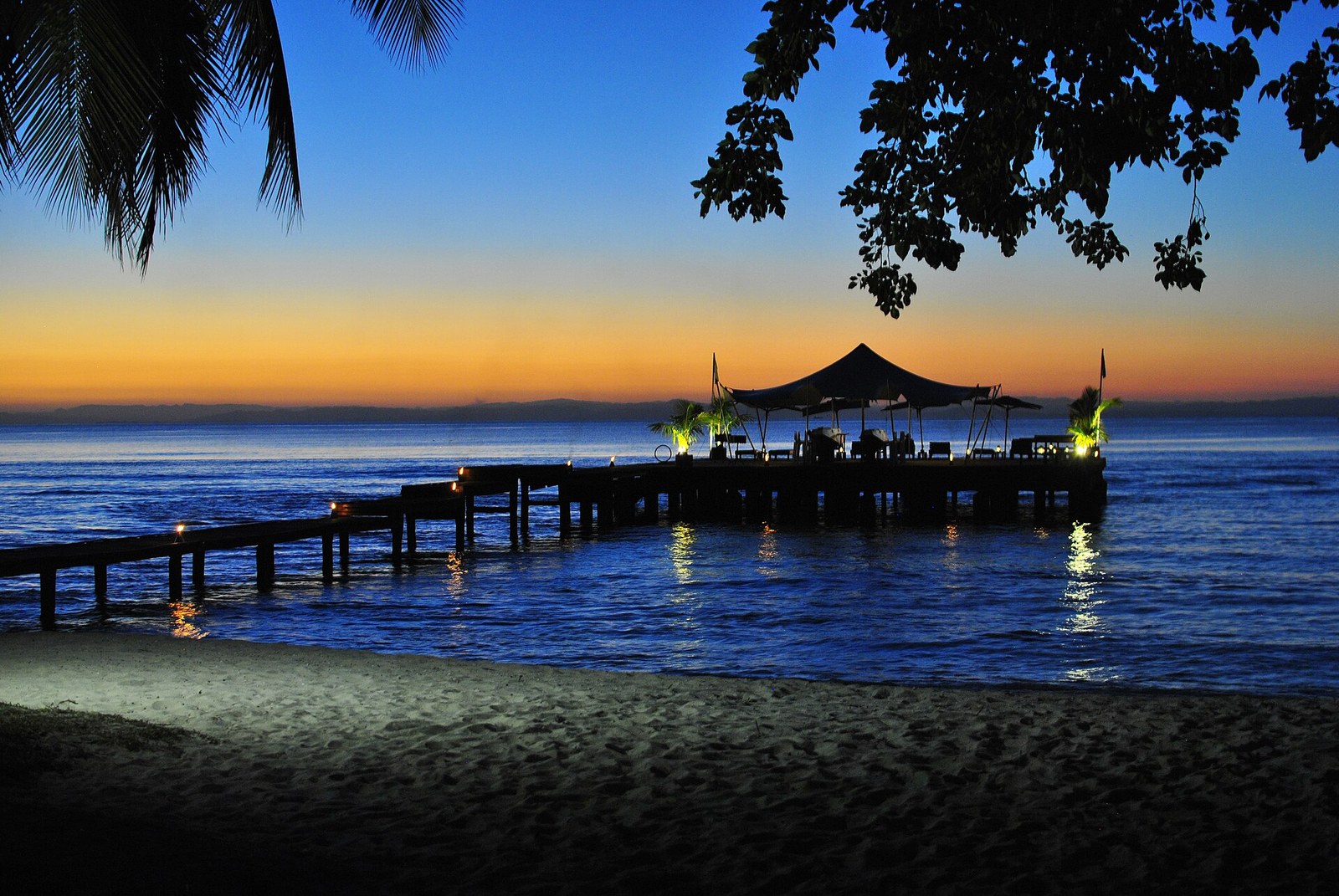
Sainte-Marie is the place to slow down. There are no big resorts, roads are narrow and the main way to get around is by tuk-tuk or bicycle. The island suits travellers who like reading in a hammock, swimming in lagoons, walking between villages and eating fresh seafood. In whale season, it becomes something special, with humpbacks often visible from the beach.
Humpback whales
Each year, humpback whales travel north from Antarctic waters to the warm channel between Sainte-Marie and the mainland, where they mate and give birth. The season usually runs from about July to September. Boat trips leave from many hotels, and the local NGO Cétamada promotes responsible watching rules, such as keeping distance and limiting boat numbers and time. Choose an operator that follows them. Even without a boat, you may see whales breaching from the shore.
Pirate history
In the late 17th and early 18th centuries, Sainte-Marie's sheltered bays were a base for pirates raiding ships in the Indian Ocean. The Pirate Cemetery near Ambodifotatra, the main village, has weathered tombs overlooking the bay, including one carved with a skull and crossbones. Local guides tell the stories of the era, and the bay itself has been explored by divers searching for wrecks. Ambodifotatra also has a small church said to be the oldest Catholic church in Madagascar.
Île aux Nattes
At the southern tip, a short pirogue ride across a channel takes you to Île aux Nattes, a tiny, car free island with palm fringed beaches, a lighthouse, walking paths and a handful of guesthouses and beach restaurants. Many visitors say it is the most beautiful corner of the whole island, and staying a night or two is a treat.
Nature and the north
The north of the island is wilder and less visited. The natural rock pools at Ambodiatafana are lovely at low tide, and the Ikalalao forest has guided walks among endemic plants. Baie d'Ampanihy, on the east coast, is a mangrove bay best explored by pirogue. Cycling or riding a scooter north along the coast road, stopping in villages, is a fine day out.
Beaches and snorkelling
The west coast has calm lagoons protected by reefs, good for swimming at high tide and snorkelling in places. The east coast faces the open ocean and can be rough. Ask locally about currents before swimming, and wear reef shoes on coral.
Where to stay
Hotels are spread along the west coast, from simple bungalows to comfortable eco lodges, and Île aux Nattes has its own small guesthouses. In whale season, the island is busy, so book early. Browse options on our travel page.
Getting there and around
Sainte-Marie has a small airport with domestic flights from Antananarivo and sometimes Toamasina, but schedules are limited and change often. Many travellers come by road from Antananarivo or Toamasina to Soanierana-Ivongo and take a boat across. The crossing can be rough, especially in the windy months; use only reputable operators with life jackets and do not travel in bad weather. On the island, tuk-tuks, bicycles and scooters are easy to arrange.
When to go
The east coast is wet all year, but the driest and most popular period is roughly August to December. Whale season runs from about July to September. January to March brings the highest cyclone risk. See more ideas on our places to visit list.
Questions about Île Sainte-Marie
What is the best time to see whales at Île Sainte-Marie?
Humpback whales are usually present from about July to September, with August often the peak month.
How do I get to Île Sainte-Marie?
By domestic flight from Antananarivo, or by road to Soanierana-Ivongo and a boat across. Only use reputable boats and avoid crossings in rough weather.
Is Île Sainte-Marie better than Nosy Be?
They suit different travellers. Sainte-Marie is quieter, greener and best for whales, while Nosy Be has more beaches, islands and choice of hotels.
How many days should I stay?
Four nights is a good minimum, with a night or two on Île aux Nattes if you can.
Facts checked . Fees, schedules and entry rules change, so always confirm the latest with the official source.