At a glance
- Best for
- Roman history, architecture and photography
- Nearest town
- Al Khums
- From Tripoli
- Around two hours by road
- Time needed
- A full day
- Best season
- October to April
- UNESCO
- World Heritage Site since 1982
Why visit Leptis Magna
If you only see one thing in Libya, make it Leptis Magna. Founded by the Phoenicians, it grew into one of the richest cities of Roman Africa, and when Septimius Severus became emperor at the end of the second century he rebuilt it on a grand scale. Sand later buried much of it, which is why so much survives. Where famous Roman sites in Italy or Turkey are crowded, here you can walk the streets in near silence.
Before anything else, read your government's current travel advice for Libya. At the time of writing the UK, US, Canada and Australia all advise against all travel to the country, and many insurers will not cover you while that advice stands. The site is a UNESCO World Heritage Site on the list of sites in danger, and visits are normally arranged as a day trip from Tripoli with a licensed operator and guide.
What to see
- **The Arch of Septimius Severus**: a four way arch covered in carved scenes of the emperor's family and victories, rebuilt from its fallen pieces.
- **The Hadrianic Baths**: huge imperial baths with a swimming pool, hot and cold rooms and marble columns.
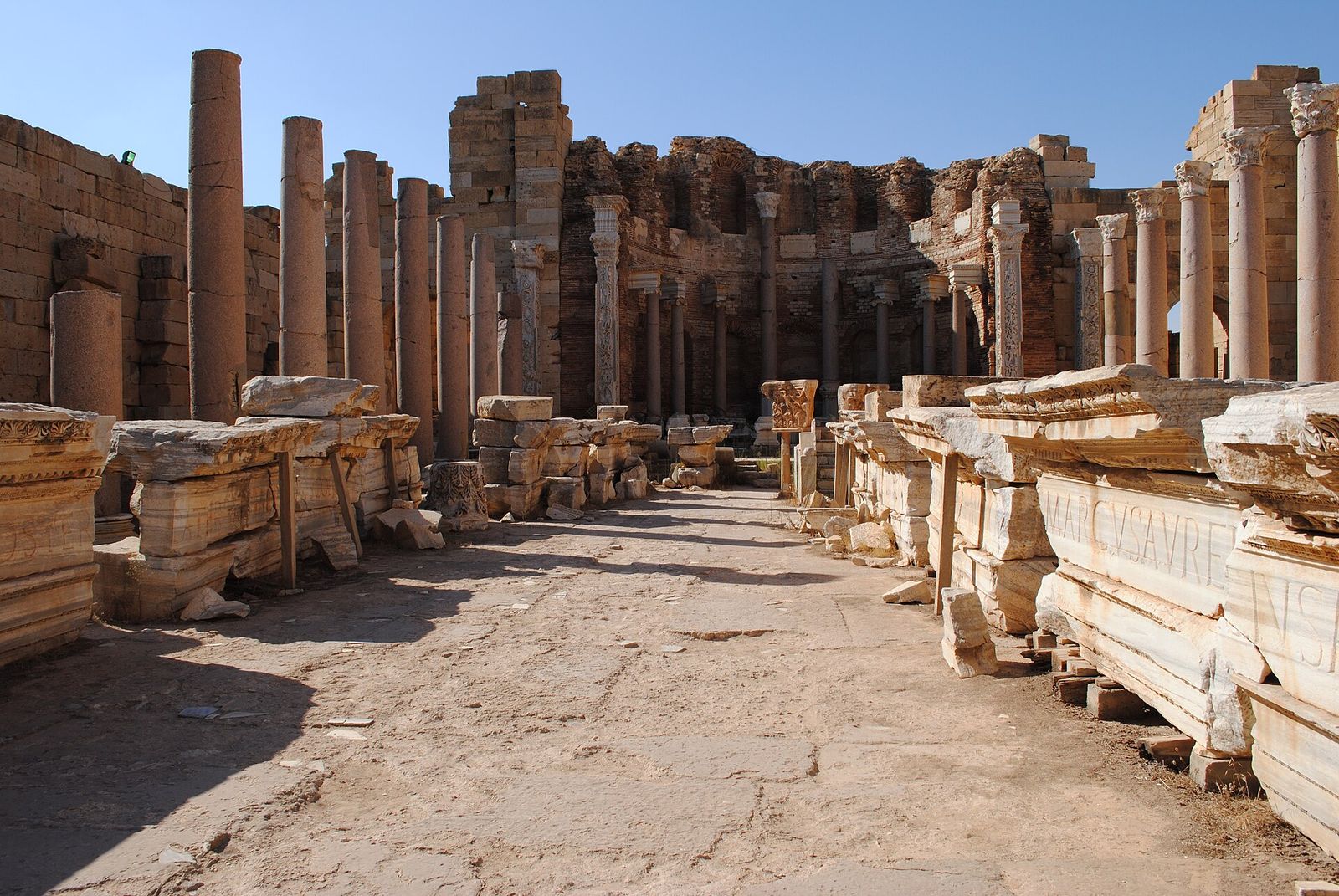
- **The Severan Forum and Basilica**: a vast colonnaded square and a basilica whose pillars are carved with vines, animals and gods.
- **The Market**: two round stalls in an open courtyard, with stone tables carved with official measures of length.
- **The Theatre**: one of the oldest stone theatres in Roman Africa, with seats facing the sea and columns behind the stage.
- **The harbour**: the silted Severan harbour still shows its quays, mooring stones and the base of its lighthouse.
- **The Amphitheatre and Circus**: a short walk or drive east, cut into a hill above the coast.
The site museum near the entrance holds statues and finds; check whether it is open when you visit.
Villa Silin
A short drive west, Villa Silin is a seaside Roman villa with some of the finest mosaics and wall paintings in North Africa, including scenes of the arena and the Nile. It needs separate permission, so ask your operator in advance.
Planning your visit
Allow a full day. Leave Tripoli early to beat the heat and arrive when the light is soft. Wear sturdy shoes, a hat and sun protection, as there is little shade, and carry plenty of water and snacks. The site is huge and paths are uneven. Late afternoon light on the arch and theatre is beautiful for photographs. Some visitors stay overnight in Al Khums to see the site at opening time.
Food nearby
The town of Al Khums has simple seafood restaurants and cafés. Many operators include a lunch of grilled fish, salad and Libyan rice, or a packed picnic. The beach beside the ruins is lovely for a swim on a hot day, where custom allows.
Respecting the site
Do not climb on fragile walls, remove stones or touch mosaics. The site has been protected by local volunteers and guards through difficult years, and your entrance and guide help support that work.
Pair this with a day at Sabratha and a stay in Tripoli, and use the free trip planner to fit it all together.
Questions about Leptis Magna
How far is Leptis Magna from Tripoli?
Around two hours by road, depending on checkpoints and traffic. Most visitors go as a day trip with a licensed operator.
Is Leptis Magna open to visitors?
It has been open to visitors in recent years, but it is a UNESCO site in danger and access can change. Confirm with your operator before you travel.
How long do I need at Leptis Magna?
A full day lets you see the arch, baths, forum, theatre, market and harbour without rushing.
Can I visit Leptis Magna without a guide?
In practice, foreign visitors arrive with a licensed operator and guide, and a guide makes the ruins far more meaningful.
Facts checked . Fees, schedules and entry rules change, so always confirm the latest with the official source.