At a glance
- Best for
- Greek ruins, mountain scenery and coast
- Nearest town
- Shahhat, with more hotels in Al Bayda
- From Benghazi
- Around three hours by road
- Time needed
- One to two days
- Best season
- March to May and September to November
- UNESCO
- World Heritage Site since 1982
Why visit Cyrene
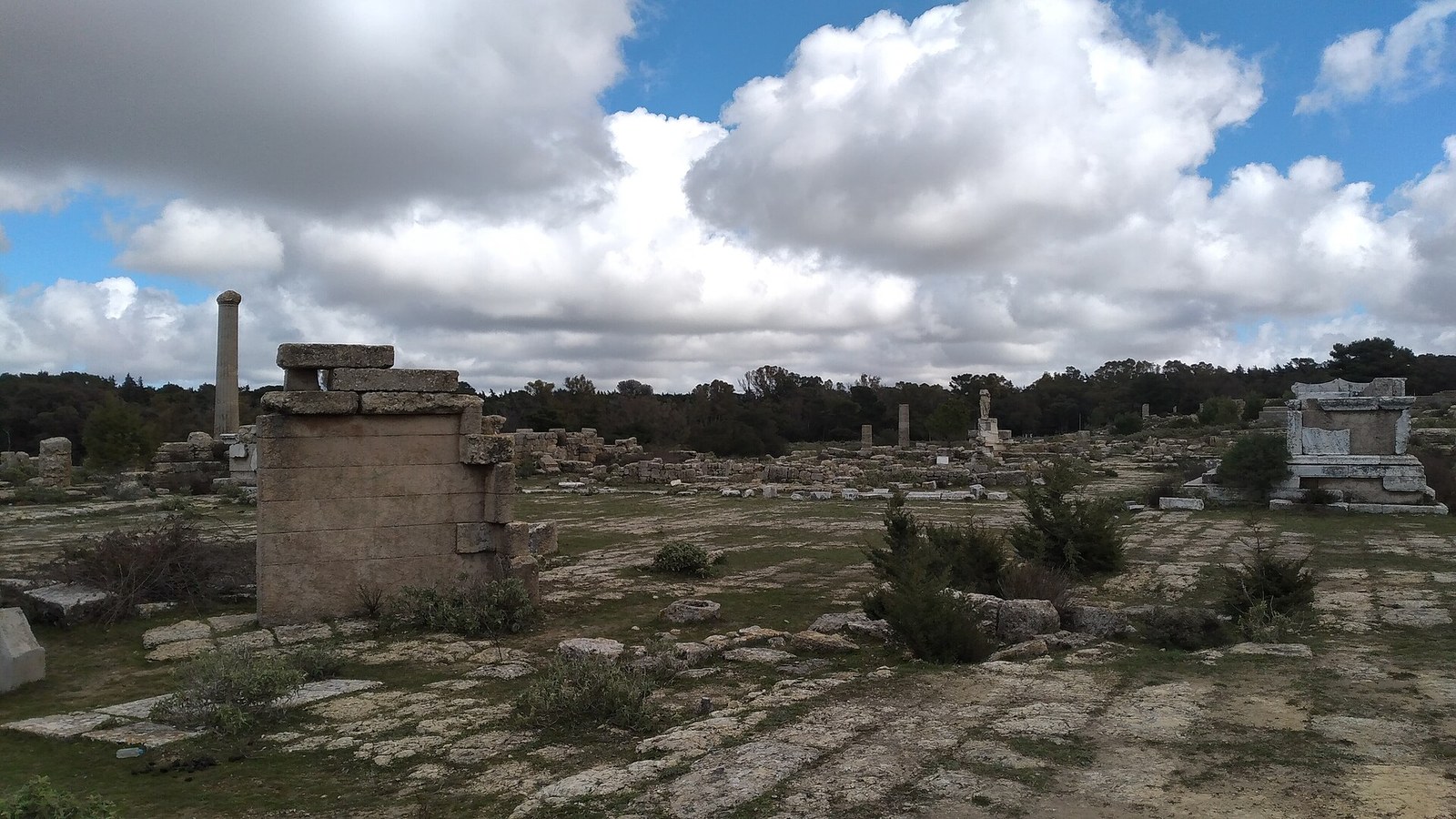
Cyrene was a Greek colony that grew rich on grain, horses and a now vanished medicinal plant called silphium. It became a centre of learning, home to philosophers and mathematicians, and later a Roman provincial city. Its setting is unlike any other ancient site in Libya: green hills, juniper and cypress, cool air and wide views over the sea.
Before anything else, read your government's current travel advice for Libya. At the time of writing the UK, US, Canada and Australia all advise against all travel to the country, and many insurers will not cover you while that advice stands. Cyrene lies in eastern Libya, under separate authorities from Tripoli, and is reached from Benghazi with a licensed operator.
What to see
- **The Sanctuary of Apollo**: the sacred heart of the city, on a terrace by the spring, with temples, altars, baths and a theatre on the edge of the slope.
- **The Fountain of Apollo**: the spring that drew the first settlers still runs from a tunnel in the rock.
- **The Temple of Zeus**: once larger than the Parthenon in Athens, now partly re-erected column by column.
- **The Agora and the upper city**: public buildings, a gymnasium and streets along the ridge.
- **The Necropolis**: thousands of tombs carved into the cliffs and scattered across the hills, one of the largest ancient cemeteries anywhere.
- **The museum**: statues and sculpture from the site; check whether it is open.
Apollonia
Below Cyrene on the coast, the port of Apollonia, today's Susa, has Byzantine churches, a theatre cut into the hillside and parts of the ancient harbour now under the sea. It is a lovely place to end the day by the water.
The Green Mountain
The Jebel Akhdar is Libya's greenest region, with farms, forests and cooler weather. Wadi al-Kuf is a deep gorge crossed by a high bridge, with caves and walks. Ras al-Hilal is a beautiful cove where the mountains meet the sea. On the way from Benghazi you can stop at the Byzantine mosaics of Qasr Libya and the strange carved sanctuary of Slonta.
Where to stay
Shahhat has a few simple options, and Al Bayda, a short drive away, has a wider choice of hotels. Many visitors spend a night in Al Bayda to see Cyrene and Apollonia without rushing.
Food
The mountain is known for honey, lamb and olive oil. Roadside grills serve lamb with salads and bread, and coastal towns have fish. Try asida, a thick sweet porridge eaten with date syrup and butter, especially around Eid and family celebrations.
Practical tips
Spring is the best season, when the hills are green and flowers are out. Wear good shoes for the steep paths. The weather can be cool and damp in winter. Carry cash, keep your documents with you for checkpoints, and do not photograph military or security posts.
Combine Cyrene with Benghazi and use the free trip planner to fit the drive times into your route.
Questions about Cyrene
How do I get to Cyrene?
Fly to Benghazi and drive around three hours east with a licensed operator. Al Bayda is the nearest town with a good choice of hotels.
How long should I spend at Cyrene?
A full day for Cyrene and Apollonia, ideally with a night nearby. Add another day for the Green Mountain and Ptolemais.
Is Cyrene a UNESCO site?
Yes. It was listed in 1982 and, like all Libyan World Heritage Sites, is on the list of sites in danger.
Are there other ancient sites near Cyrene?
Yes. Apollonia sits on the coast below, Ptolemais and Tocra lie to the west toward Benghazi, and the mosaics of Qasr Libya and the carved sanctuary of Slonta are on the mountain roads. Allow at least two days if you want to see several of them properly.
What is the best time to visit Cyrene?
Spring and autumn, when the mountain is green and walking is comfortable.
Facts checked . Fees, schedules and entry rules change, so always confirm the latest with the official source.