At a glance
- Best for
- Rainforest, birding, jaguars and canopy walks
- Getting there
- By road from Georgetown or Lethem, or by air to Annai
- Time needed
- Three to four days
- Best time
- The dry season, roughly September to April
- Where to stay
- Iwokrama River Lodge or Atta Rainforest Lodge
- Good to know
- Wildlife sightings are never guaranteed, but chances are good
Why visit Iwokrama
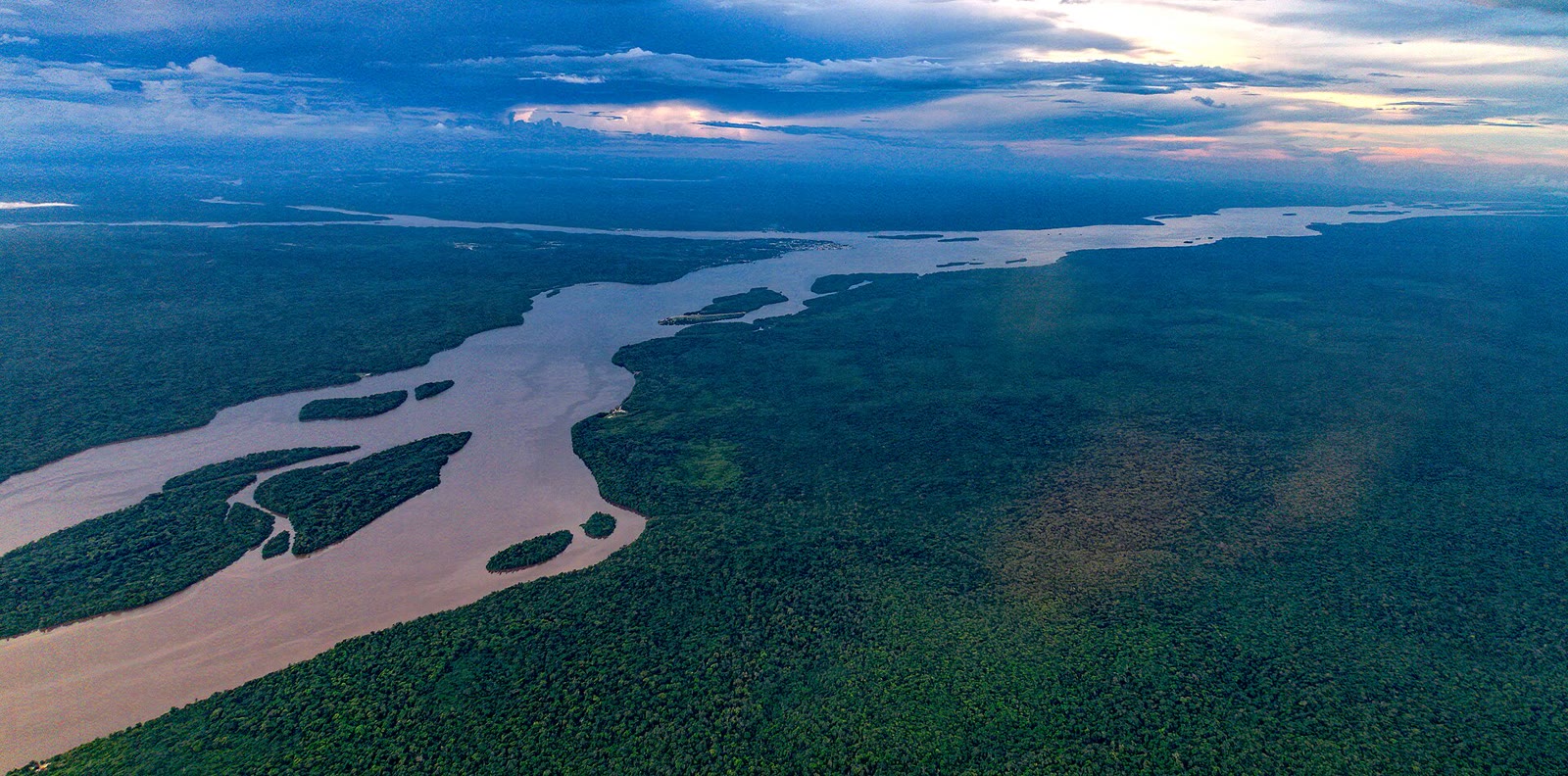
The **Iwokrama Forest** covers around a million acres of lowland rainforest, rivers and hills between the Essequibo River and the Rupununi savannah. It was set aside in the 1990s as a gift from Guyana to the world, managed by the Iwokrama International Centre for Rain Forest Conservation and Development. Part of it is fully protected and part is used for carefully managed forestry and tourism.
What makes it special is how much wildlife lives close to the road and rivers. **Jaguars** are seen more often here than almost anywhere else in South America, especially along the road at dawn and dusk. You may also see **tapirs**, **giant otters**, **black caiman**, **howler** and **spider monkeys**, **harpy eagles** and the brilliant orange **Guianan cock of the rock**.
Iwokrama River Lodge
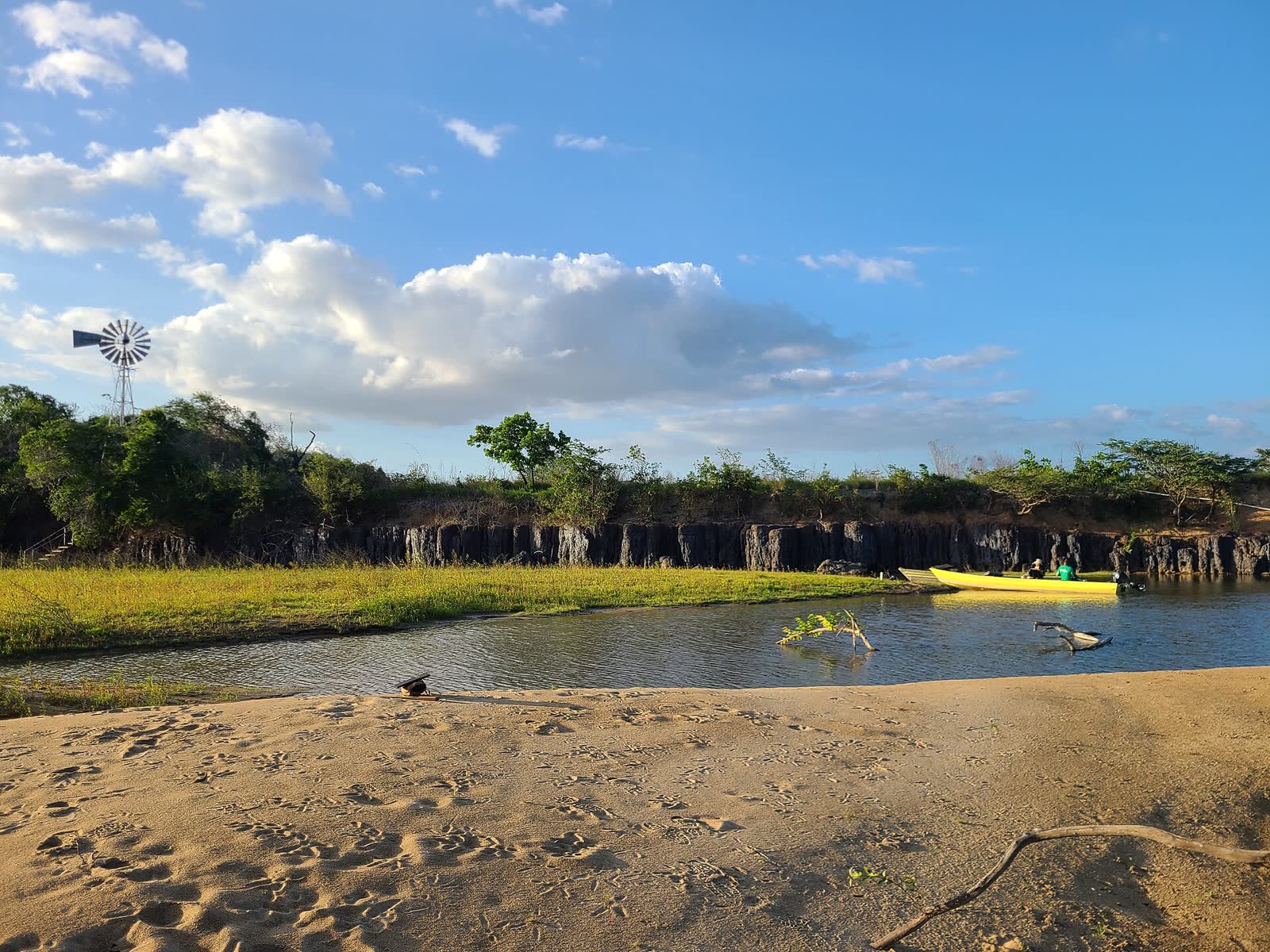
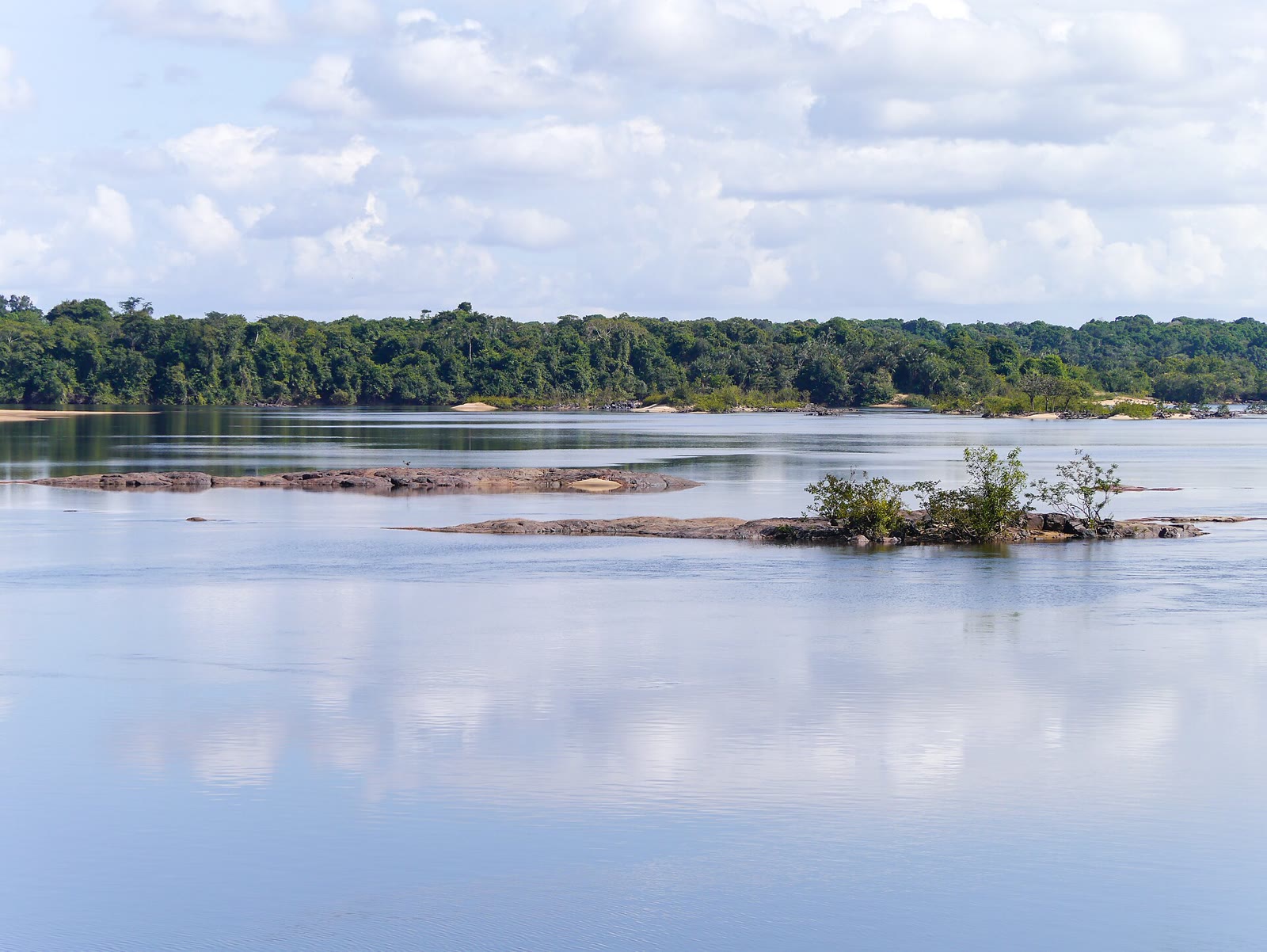
The **Iwokrama River Lodge** sits on the Essequibo River near **Kurupukari**, where the road crosses the river on a pontoon. It is the research centre's base for visitors, with cabins, a dining room overlooking the water and guides from nearby communities. From here you can take night boat trips to spot caiman, fish for peacock bass and visit the village of **Fair View**.
Turtle Mountain
A short boat trip and a steep hike lead to the summit of **Turtle Mountain**, where an unbroken sea of rainforest stretches in every direction. Go early to hear howler monkeys and watch the mist lift. It is a moderate to hard climb in the heat, so bring water and take your time.
The canopy walkway
Further south at **Atta**, the **Iwokrama Canopy Walkway** is a series of suspension bridges and platforms about thirty metres up in the treetops. At dawn the canopy comes alive with parrots, toucans, tanagers and monkeys. **Atta Rainforest Lodge** stands nearby, so you can be on the walkway at first light and walk the road at night with a guide.
Surama and the Burro Burro
Just beyond the forest, the Makushi village of **Surama** runs its own eco lodge with guided walks, paddling on the **Burro Burro River** and cultural evenings. It links Iwokrama naturally with the Rupununi.
Getting there
From Georgetown, the road south through **Linden** reaches Iwokrama in roughly a long day, depending on conditions. Lodges and tour operators arrange transfers, and many visitors combine road and air, for example driving south with a tour and flying back from **Annai** or **Lethem**. Do not attempt the road on your own in the rainy season.
Tips for your visit
Bring long sleeves, insect repellent, a torch, binoculars and quick dry clothing. Malaria and other insect borne diseases are present, so get advice from a travel clinic. Book lodges well ahead in the dry season. Most importantly, walk quietly and patiently with your guide: the forest rewards those who wait.
Who it suits
Iwokrama suits curious travellers who are happy with early starts, simple rooms and plenty of insects in exchange for real wilderness. Families with older children enjoy the canopy walkway and night boat rides, and keen photographers and birders can easily fill a week here. If you prefer comfort, pair a short stay with a few nights in a city hotel before and after, so the adventure feels like a highlight rather than a hardship.
Questions about Iwokrama
Can you see jaguars at Iwokrama?
Yes, Iwokrama is one of the best places in South America for wild jaguar sightings, especially along the road at dawn and dusk, though nothing is guaranteed.
How do I get to Iwokrama?
By road from Georgetown through Linden, usually with a lodge or tour operator, or by flying to Annai and transferring north.
How high is the Iwokrama Canopy Walkway?
The walkway is around thirty metres above the forest floor, high enough for great views without technical gear.
Do I need a guide at Iwokrama?
Yes. Activities in the forest are guided, which keeps you safe and greatly improves your chances of seeing wildlife.
Facts checked . Fees, schedules and entry rules change, so always confirm the latest with the official source.