At a glance
- Best for
- Colonial wooden architecture, markets, food and festivals
- Nearest airport
- Cheddi Jagan International, about an hour by road
- Time needed
- Two to three days, plus day trips
- Best time
- The drier months, roughly late August to November and February to April
- Getting around
- Registered taxis, plus walking in daylight in the centre
- Good to know
- Much of the city lies below sea level, protected by the seawall
Why visit Georgetown
Georgetown was laid out in the eighteenth century on reclaimed land at the mouth of the Demerara River. The Dutch dug the canals and kokers that still drain the city, and the British added the grand wooden public buildings. Today it is home to people of Indian, African, Indigenous, Chinese, Portuguese and mixed heritage, and you feel that mix in the food stalls, the temples, mosques and churches, and the music drifting from minibuses.
It is not a polished resort city. Pavements are uneven, some old buildings are crumbling and traffic is heavy as the country grows fast on its new oil income. But that is part of its character, and the people are among the warmest in the Caribbean.
The main sights
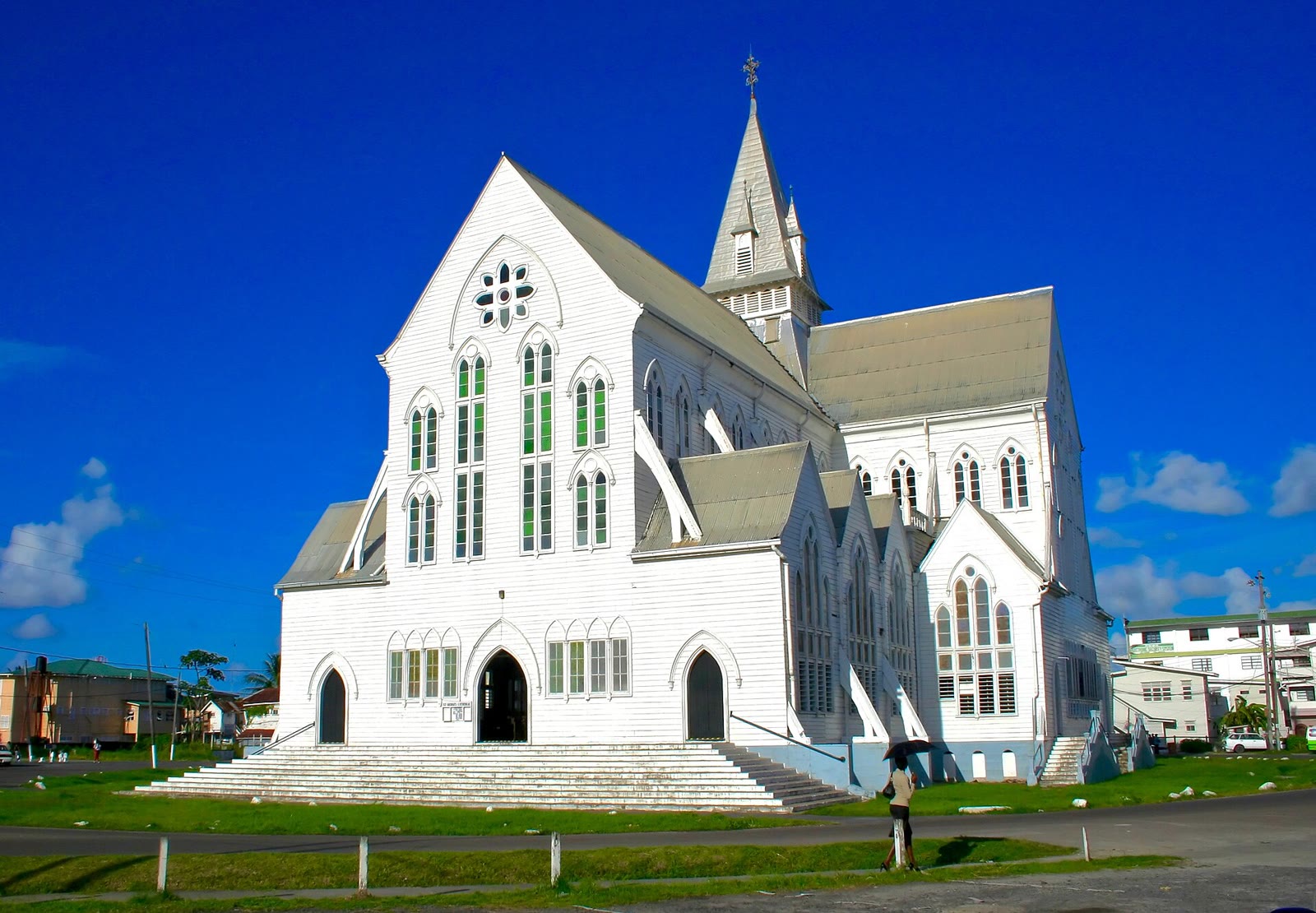
Start at **St. George's Cathedral** on North Road, one of the tallest wooden churches in the world, white outside and glowing honey coloured inside. Nearby, the **National Museum** has a charmingly old fashioned natural history collection, and the **Walter Roth Museum of Anthropology** on Main Street introduces the country's nine Indigenous nations.
Walk down the **Avenue of the Republic** past the Gothic wooden **City Hall**, the **Parliament Building** and the **Law Courts**. Then head to **Stabroek Market**, the huge iron market hall with its famous clock tower by the river. Go in the morning, keep valuables out of sight and, if you can, go with a local friend or guide.
For art, **Castellani House** is the National Art Gallery, and the thatched **Umana Yana** benab and the bold **1763 Monument** to the Berbice uprising sit close to the seawall.
Green spaces and the seawall
The **Botanical Gardens** are the city's lungs, with lily ponds, manatees you can sometimes feed with grass, kingfishers and huge trees, and the **Guyana Zoo** beside them shows harpy eagles and giant otters. The small **Promenade Gardens** on Middle Street are a calm shady break in the centre.
As the sun drops, join the city on the **seawall**, especially on Sunday evenings when families stroll, vendors sell coconut water and music plays. Easter Monday kite flying here and at the National Park is a joy to see.
Food and drink
Georgetown is one of the best places in the region to eat. Try **pepperpot**, the dark, slow cooked meat stew made with cassareep from cassava, **cook up rice** with peas and coconut milk, **metemgee**, curry with **dhal puri** or **paratha roti**, **chow mein** Guyanese Chinese style and pastries such as **pine tarts** and **cheese rolls**. Wash it down with fresh coconut water, mauby or sorrel, and an El Dorado rum in the evening. Our places to visit list has restaurants, cafés and rum shops to start with.
Day trips
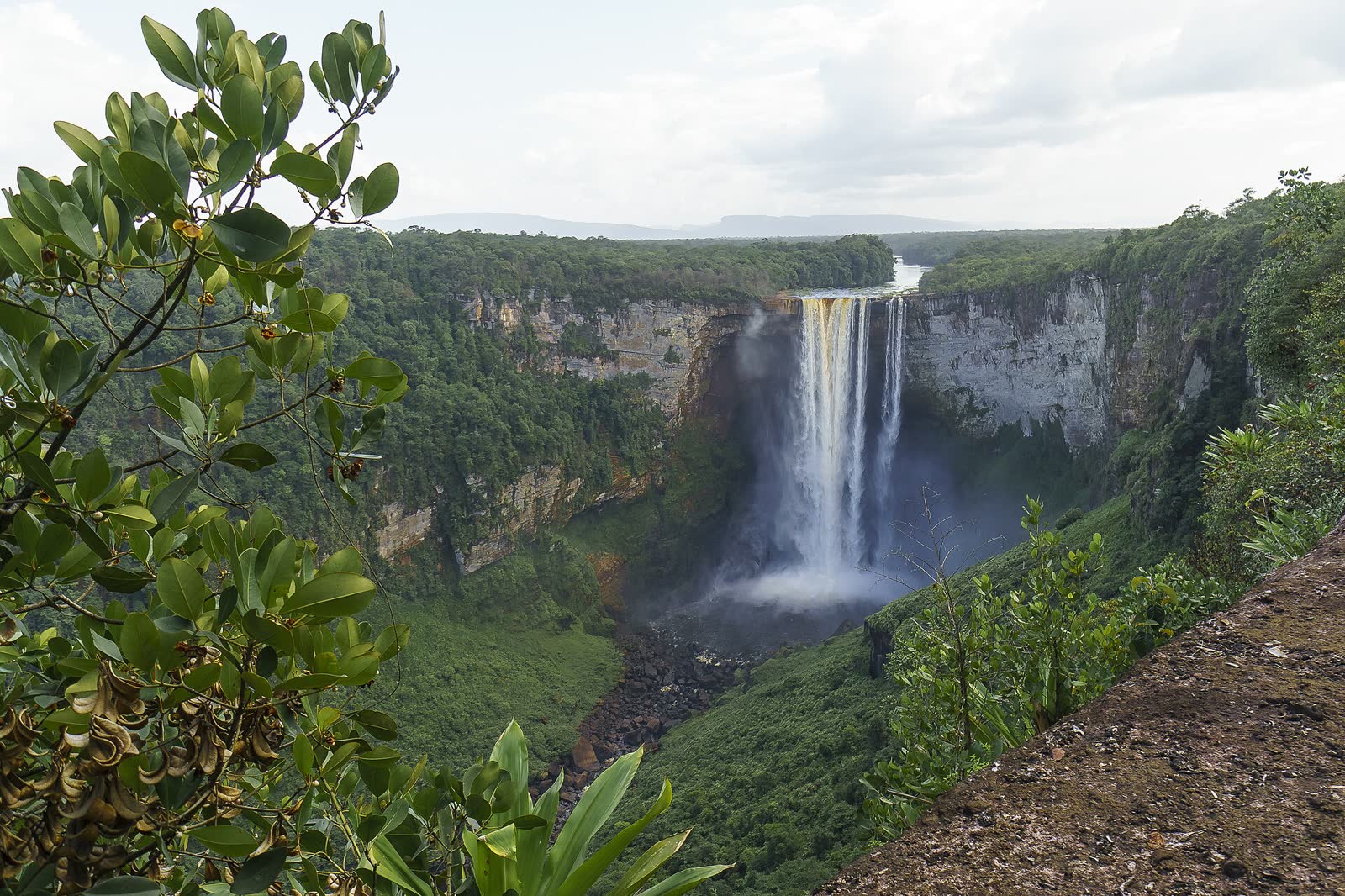
From Georgetown you can tour the **El Dorado rum distillery** at Diamond on the East Bank, take a boat on the **Mahaica River** to see the hoatzin, the national bird, cross the floating **Demerara Harbour Bridge** or spend a night at a creek lodge. The most famous day trip is a small plane flight from Ogle to Kaieteur Falls.
Where to stay
Most visitors stay in **Kingston** near the seawall, **Queenstown**, **Bel Air** or the city centre, which keep you close to restaurants. Larger hotels sit on the East Bank near **Providence** and on the East Coast near the malls. Choose somewhere with security, air conditioning and a generator, as power cuts happen.
Staying safe
Street crime, including robbery, is a real issue in Georgetown. Use registered taxis your hotel calls, especially after dark, avoid walking at night, do not wear flashy jewellery and keep your phone out of sight on the street. Areas such as Albouystown and Tiger Bay are best avoided unless you are with someone who knows them. Check your government's current advice before you travel.
Questions about Georgetown
Is Georgetown worth visiting?
Yes, for two or three days. Its wooden architecture, markets, food and festivals explain the country before you head into the interior.
Is Georgetown safe for tourists?
Most visits are trouble free, but street crime is a concern. Use registered taxis, avoid walking after dark and keep valuables hidden.
How far is the airport from Georgetown?
Cheddi Jagan International is about forty kilometres south, usually around an hour by road depending on traffic. Ogle, for domestic and regional flights, is close to the city.
What should I eat in Georgetown?
Pepperpot, cook up rice, curry with roti, Guyanese style chow mein, pine tarts and cheese rolls, with coconut water or mauby.
Facts checked . Fees, schedules and entry rules change, so always confirm the latest with the official source.