At a glance
- Best for
- Food, nightlife, Byzantine history and city breaks
- Airport
- Thessaloniki Airport (SKG), around half an hour away
- Time needed
- Two to three days
- Best season
- April to June and September to November
- Getting around
- Walking, buses, the new metro and taxis
- Good base for
- Halkidiki, Vergina, Mount Olympus and Meteora
Why go
Founded in 315 BC, Thessaloniki has been Roman, Byzantine, Ottoman and, for centuries, home to one of the largest Sephardic Jewish communities in Europe. Layers of that history sit side by side in a modern, easygoing city. Locals take eating and going out seriously, and the city is known across Greece for its pastries, meze and coffee culture.
Top things to do
Walk the **Nea Paralia**, the seafront promenade, to the **White Tower**, the city's symbol, which houses a museum on Thessaloniki's history and a rooftop view. Further along, the **Umbrellas** sculpture by George Zongolopoulos is a favourite sunset spot.
Inland, the **Rotunda**, the **Arch of Galerius** and the **Roman Forum** show the city's imperial past. The great Byzantine churches, including **Agios Dimitrios**, built over the tomb of the patron saint, **Hagia Sophia** and the tiny **Hosios David** with its rare mosaic, are part of a UNESCO World Heritage Site. The **Archaeological Museum** holds gold treasures from ancient Macedon, and the **Museum of Byzantine Culture** is among the best of its kind. The **Jewish Museum** tells the story of a community almost destroyed in the Holocaust.
Neighbourhoods
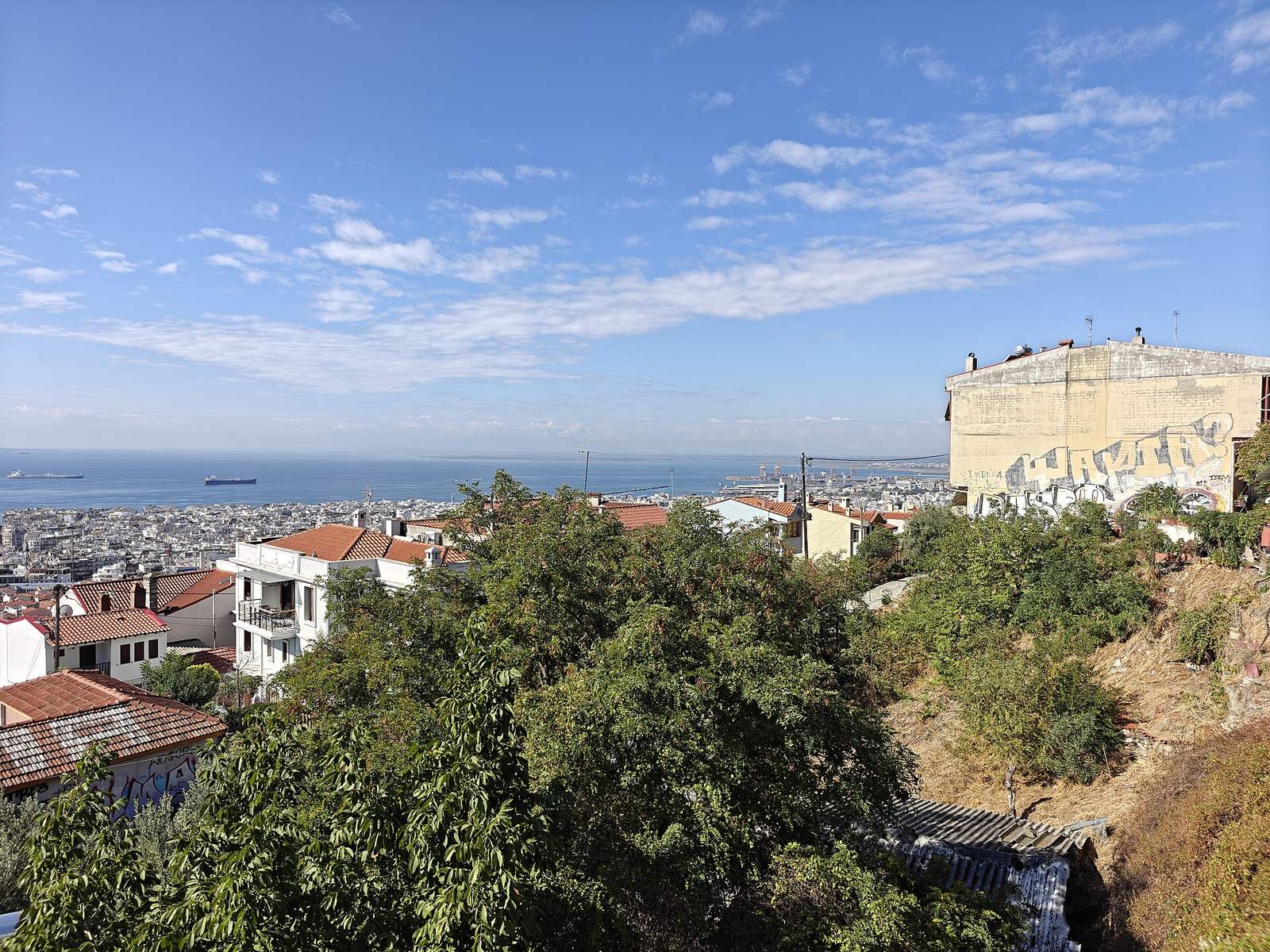
**Ano Poli**, the Upper Town, is a maze of old houses, steep lanes and cats below the Byzantine walls and the **Heptapyrgion** fortress, with wide views over the bay. **Ladadika**, by the port, is a restored warehouse district full of tavernas and bars. **Aristotelous Square** is the grand central square, and **Valaoritou** is the hub of late night bars.
Food
Breakfast is **bougatsa**, a flaky pie filled with custard or cheese, and **koulouri Thessalonikis**, a sesame bread ring. Browse the **Kapani (Vlali) Market** and **Modiano Market** for olives, spices and fish, and finish with **trigona Panoramatos**, cones of crisp pastry filled with cream. Meze tavernas serve the city's spicier dishes, a legacy of its eastern influences.
Day trips
The beaches of **Halkidiki** are one to two hours away. The royal tombs at **Vergina**, where Philip II of Macedon was buried, are spectacular. **Mount Olympus**, home of the gods, offers hiking from the village of Litochoro, and **Meteora** can be reached by bus or train.
Where to stay
Stay around Aristotelous Square, Ladadika or the seafront for easy walking. Ano Poli is quieter with views but involves steep walks.
A sample two days
On day one, start with bougatsa near Aristotelous Square, then visit the Rotunda, the Arch of Galerius and Agios Dimitrios. Browse the Kapani and Modiano markets, walk the seafront to the White Tower and the Umbrellas at sunset, and finish with meze in Ladadika. On day two, see the Archaeological Museum and the Museum of Byzantine Culture in the morning, then climb into Ano Poli for its lanes, walls and views across the bay. End the night on Valaoritou, where the city's bars stay busy late. If you have time, a third day at Vergina or a Halkidiki beach rounds the trip off well. Thessaloniki also makes an easy entry or exit point for a mainland route, with flights to many European cities.
Getting around
The centre is flat near the sea and easy to walk. The city's long awaited metro opened in late 2024 and links the railway station with the centre and the east. Buses go everywhere, including the airport, and taxis are plentiful.
Tips
Thessaloniki is a great year round city: lively in winter when students are in town and in autumn during the International Film Festival. Summer is hot and humid, and many locals head to Halkidiki in August.
Questions about Thessaloniki
Is Thessaloniki worth visiting?
Yes, especially for food, Byzantine history and nightlife. It feels more local and relaxed than Athens.
How many days do I need?
Two to three days covers the city. Add a day or two for Halkidiki, Vergina or Mount Olympus.
How do I get from Athens to Thessaloniki?
Trains take around four to five hours, and short domestic flights connect the two airports. Check Hellenic Train for current schedules.
What should I eat in Thessaloniki?
Bougatsa for breakfast, koulouri, meze with ouzo or tsipouro, and trigona Panoramatos pastries.
Facts checked . Fees, schedules and entry rules change, so always confirm the latest with the official source.