At a glance
- Best for
- Views, sunsets, couples, wine and photography
- Airport
- Santorini Airport (JTR), with ferries from Piraeus and other islands
- Time needed
- Two to three days
- Best season
- May, June, September and October
- Getting around
- Buses from Fira, taxis, quad bikes and walking
- Good base for
- Ios, Anafi and other Cycladic islands
Why go
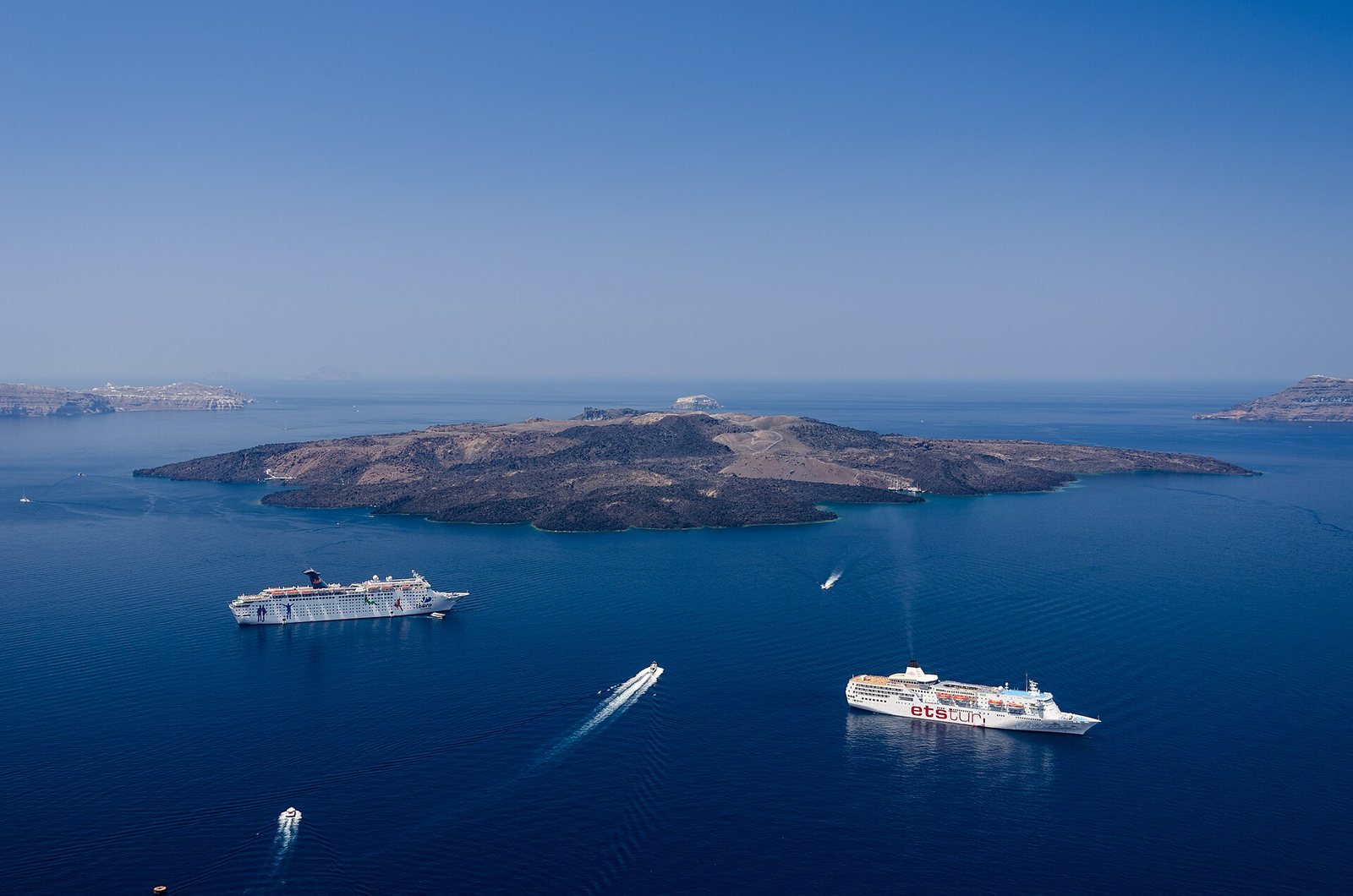
Around three and a half thousand years ago a huge eruption blew out the centre of the island, leaving a sheer crescent of cliffs around a deep sea caldera. The villages along the rim look straight down to the water and across to the volcano islands, which is why the views here are unlike anywhere else in Greece. Add Bronze Age ruins, unusual beaches and old vineyards and there is far more to do than watch the sunset.
The caldera villages
**Fira** is the main town and bus hub, busy and practical, with cliff path views and the old port below. **Firostefani** and **Imerovigli** sit just north and are quieter, with Imerovigli's Skaros Rock a fine short hike. **Oia** at the northern tip is the most famous, with its windmills and blue domes, and gets very crowded at sunset. **Pyrgos**, an inland hill village, has lanes, a castle and its own fine sunset with fewer people.
Top things to do
Walk the **Fira to Oia caldera path**, about three to four hours, early in the morning; it is one of the great walks of the Aegean. Visit **Akrotiri**, a Bronze Age town buried by the eruption and preserved under a modern roof, often called the Pompeii of the Aegean. The **Museum of Prehistoric Thira** in Fira displays its frescoes.
Take a **caldera boat trip** to the volcano island of Nea Kameni and the warm springs off Palea Kameni. Visit the beaches: **Perissa** and **Perivolos** with long black sand, **Kamari** below Ancient Thira, and the dramatic **Red Beach** near Akrotiri, though access there can be closed for rockfall, so follow the signs. Tour a **winery**: Santorini's assyrtiko grapes grow in low basket shaped vines, and the sweet vinsanto is a local speciality.
Food
Try tomatokeftedes (cherry tomato fritters), fava from the island's yellow split peas, white aubergine and fresh fish in the tavernas of **Ammoudi Bay** below Oia.
Where to stay
For views, stay on the caldera in Imerovigli, Firostefani or Oia. For value and beaches, base yourself in Kamari or Perissa on the east coast. Fira is convenient for buses and nightlife. Caldera hotels often involve many steps, so check access if you have mobility needs or heavy luggage.
A sample two days
On day one, walk the caldera path from Fira to Oia in the cool of the morning, eat a long lunch of fish at Ammoudi Bay, rest through the afternoon heat and watch the sunset from Imerovigli rather than the Oia crowds. On day two, visit Akrotiri when it opens, swim at Perissa or Kamari, tour a winery in the late afternoon and finish with dinner in Pyrgos. If you have a third day, join a caldera boat trip to the volcano and the hot springs, or climb to the ruins of Ancient Thira above Kamari for wide views over both coasts.
Getting around
The public KTEL buses radiate from Fira to most villages and beaches. Taxis are limited in summer, so book transfers ahead. Many visitors rent quad bikes; roads are narrow and busy, so only ride if experienced, and always wear a helmet.
Crowds and timing
Cruise ships can bring thousands of day visitors at once, mostly to Fira and Oia between late morning and late afternoon. Explore the caldera early, take the beaches or wineries in the middle of the day, and watch the sunset from Pyrgos, Imerovigli or a boat rather than Oia's castle if you dislike crowds. Spring and autumn are calmer and pleasantly warm. Santorini is also in an active seismic zone; follow any local guidance if tremors occur.
Questions about Santorini
How many days do I need in Santorini?
Two to three days is enough for the caldera walk, Akrotiri, a boat trip, a winery and a beach. Many visitors combine it with Naxos or Crete.
Is Santorini worth it despite the crowds?
Yes, if you plan around them. Stay overnight, explore early and late, and avoid Oia at sunset if you dislike crowds.
Which village should I stay in?
Imerovigli and Firostefani for calm caldera views, Oia for romance, Fira for convenience, and Kamari or Perissa for beaches and value.
Can I swim in Santorini?
Yes. The black sand beaches at Perissa, Perivolos and Kamari are the easiest, and boat trips stop at the warm springs. The sand gets very hot, so bring sandals.
Facts checked . Fees, schedules and entry rules change, so always confirm the latest with the official source.