At a glance
- Best for
- Monasteries, hiking, photography and history
- Nearest hub
- Kalambaka, by train from Athens or Thessaloniki
- Time needed
- One to two nights
- Best season
- April to June and September to November
- Getting around
- Walking trails, local buses, taxis and tours
- Good base for
- Kalambaka, Kastraki and the Pindus mountains
Why go
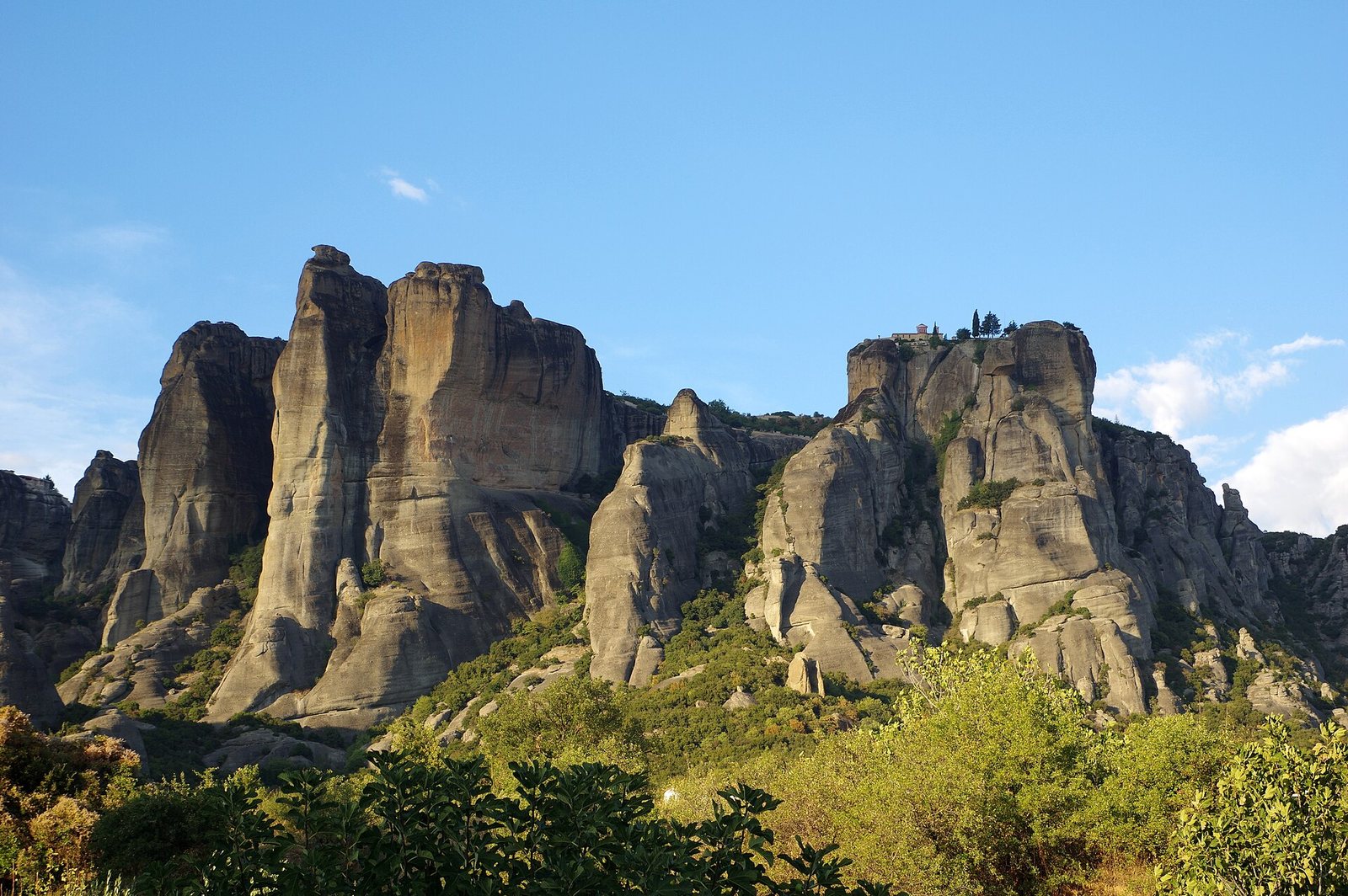
Nothing else in Greece looks like Meteora. The rock towers, some several hundred metres high, were formed over millions of years, and medieval monks built their monasteries on the summits for safety and solitude. For centuries the only way up was by ladder or a net hauled by rope. Today there are steps and roads, but the feeling of height and peace remains, especially early in the morning when mist fills the valley.
The monasteries
Six monasteries are open to visitors, each closing on a different day of the week, so check the current schedule before you plan.
- **Great Meteoron**, the largest and oldest, with a museum, old kitchen and a fine church.
- **Varlaam**, next door, with beautiful frescoes and the old rope winch tower.
- **Roussanou**, a convent built right to the edge of its rock, reached by a bridge.
- **Holy Trinity**, the most dramatic, reached by around one hundred and forty steps, and famous from a James Bond film.
- **St Stephen's**, a convent easily reached by a bridge from the road, with sunset views over Kalambaka.
- **St Nicholas Anapafsas**, small, with lovely Cretan school frescoes.
Each charges a small entry fee, paid in cash at the door; check current fees locally. A dress code applies: shoulders and knees covered, and women are asked to wear a skirt, which are often lent at the entrance.
Hiking and viewpoints
Old monk paths connect the villages with the monasteries, and walking up from **Kastraki** or **Kalambaka** takes around an hour. Guided hikes explore hermit caves and the old trails between the rocks. For sunset, the viewpoint near **Holy Trinity** and the rocks by **St Stephen's** are popular, as is the area known as Sunset Rock.
Kalambaka and Kastraki
**Kalambaka** is the town at the foot of the rocks, with hotels, tavernas, the train station and the old Byzantine church of the Dormition. **Kastraki** is a smaller village tucked right under the pillars, quieter and wonderfully atmospheric for an overnight stay.
A sample day
Arrive the evening before and stay in Kastraki. Start at Great Meteoron when its doors open, walk on to Varlaam, then follow the road to Roussanou and Holy Trinity before the midday heat. Eat lunch back in Kastraki, rest, and in the late afternoon visit St Stephen's before watching the sunset from the rocks nearby as the light turns the pillars gold. If you have a second day, join a guided hike to the hermit caves and old monk trails, or head into the Pindus mountains toward the stone villages of Zagori.
Getting there
Trains run from Athens to Kalambaka, sometimes with a change at Palaiofarsalos, and take around four to five hours; check Hellenic Train for current times. Buses run from Athens and Thessaloniki via Trikala. Many people visit on a long day tour from Athens, but staying one or two nights is far more rewarding.
Getting around
A local bus runs up to the monasteries a few times a day in season. Taxis wait in Kalambaka, and half day tours with a guide are popular and good value for understanding the history.
Tips
Go to the monasteries at opening time, before tour buses arrive from Athens. Bring cash, water and comfortable shoes for the steps. Respect silence inside the churches and ask before taking photos, which are not allowed in some chapels.
Questions about Meteora
Can I visit Meteora as a day trip from Athens?
Yes, by tour or train, but it is a very long day. One or two nights in Kalambaka or Kastraki is much better.
Which monastery is best if I only have time for one?
Great Meteoron is the largest and has the most to see. Varlaam next door is easy to add.
What should I wear to the monasteries?
Cover shoulders and knees. Women are asked to wear a skirt, and wraps are usually available at the entrance.
Are the monasteries open every day?
Each closes on one or two days a week, on a rotating schedule. Check the current days before you go so you see the ones you want.
Facts checked . Fees, schedules and entry rules change, so always confirm the latest with the official source.