At a glance
- Best for
- Waterfalls, boardwalk walks, photography and nature
- Nearest airport
- Zagreb (ZAG), about two hours by road; Zadar (ZAD) is similar
- Time needed
- One full day, ideally with a night nearby
- Best season
- May, June, September and October
- Getting there
- Intercity bus from Zagreb, Zadar or Split, or a tour
- Good to know
- Buy timed tickets online in advance in summer
Why go
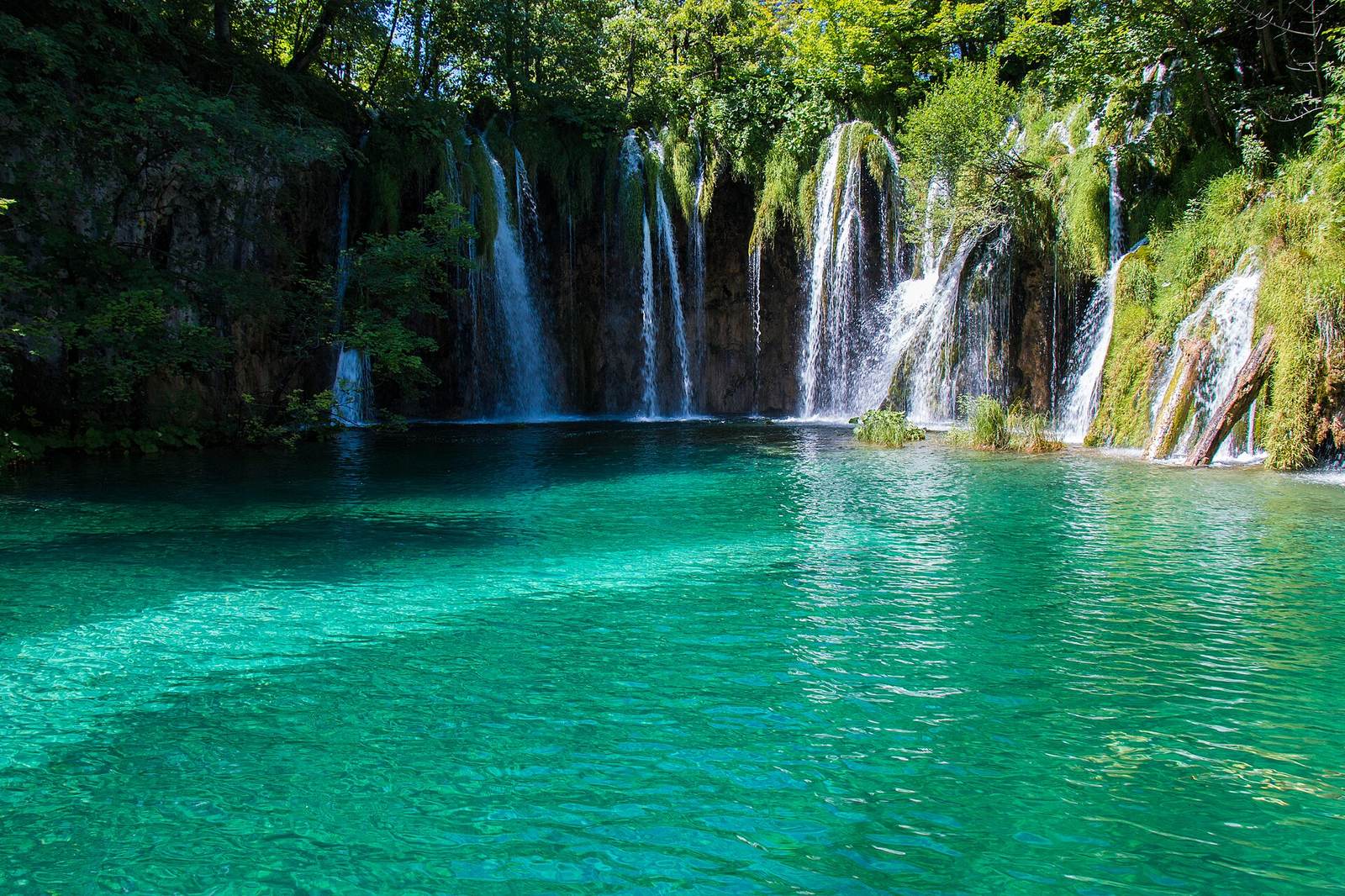
The colours are the reason. Minerals in the water and travertine barriers built up over thousands of years give the lakes shades from emerald to sky blue, changing with the light and the season. Walking the boardwalks a few centimetres above the water, with falls on every side, is unlike anywhere else in Europe.
How the park works
The park has two main entrances. **Entrance 1** is closest to the **Upper and Lower Lakes** viewpoints and the **Veliki slap**, the Great Waterfall, the tallest in Croatia. **Entrance 2** is nearer the hotels and the **Upper Lakes**. An electric boat crosses the biggest lake, **Kozjak**, and a panoramic train links points along the top of the valley; both are included in the ticket.
The park sets out lettered routes of different lengths, from a short loop of a couple of hours to a full day walk. A popular choice for first-timers covers both the Lower and Upper Lakes with the boat ride, taking around four to six hours. Signs are clear, but paths are narrow, so the pace is set by the crowds in summer.
Tickets and timing
In the busy season the park uses **timed entry**, and tickets are sold online on the official national park website. Book ahead for July and August and arrive for the earliest entry slot to enjoy quieter boardwalks. Prices change with the season, so check the official site. Swimming is not allowed anywhere in the park, and you must stay on the marked paths.
The seasons
Spring brings the fullest waterfalls after snowmelt. Summer is green and warm but busiest. Autumn turns the beech forests red and gold and is many visitors' favourite. Winter can be beautiful under snow and ice, with some routes closed and fewer services.
Nearby
**Rastoke**, a village of old watermills built over little waterfalls in Slunj, is a lovely stop to the north. The **Barać caves** are nearby, and the **Lika** region around the park is known for hearty food: lamb, trout, potatoes cooked under the iron bell called **peka**, and local cheese.
Where to stay
There are park hotels near Entrance 2 and many family guesthouses in villages such as **Mukinje**, **Jezerce** and **Rastovača**. Staying one night lets you be at the gate at opening time and walk before the day trip coaches arrive.
Getting there
Intercity buses on the Zagreb to Zadar and Split routes stop at both entrances; check the schedule and book seats in summer. Many organised day tours run from Zagreb, Split and Zadar. There is no train.
Practical tips
Wear grippy shoes, as boardwalks can be wet. Carry water and snacks, as food stops inside the park are limited. Weather in the hills is cooler and wetter than on the coast, so bring a layer.
Suggested day plan
Arrive at Entrance 1 at opening time and walk down into the canyon of the **Lower Lakes** first, while the light is soft and the boardwalks are empty, to reach the foot of **Veliki slap**. Climb back up to follow the shore of **Kozjak**, then take the electric boat across and continue into the **Upper Lakes**, where the falls are smaller but more numerous and the paths wind through beech forest. Catch the panoramic train back toward your entrance. Allow time for a picnic and photo stops, and keep at least an hour spare in summer, when queues for the boat and train can be long. Families with small children will find the shorter loops more than enough.
Questions about Plitvice Lakes
Can you swim at Plitvice Lakes?
No. Swimming is forbidden throughout the park to protect the lakes. Krka National Park, near Šibenik, is also a no swimming park today, so plan beach time elsewhere.
How long do you need at Plitvice?
Most visitors spend four to six hours on a route covering the Upper and Lower Lakes. An overnight nearby lets you start early.
Do I need to book Plitvice tickets in advance?
In summer, yes. Timed entry slots sell out, so buy on the official national park website before you go.
Which entrance is better?
Entrance 1 gives the classic view over the Lower Lakes and the Great Waterfall. Entrance 2 is closer to the hotels. Both work for the main routes.
Facts checked . Fees, schedules and entry rules change, so always confirm the latest with the official source.