At a glance
- Best for
- Food and wine, old towns, cycling and easy beaches
- Airport
- Pula (PUY); Trieste and Rijeka are also close
- Time needed
- Three to five days
- Best season
- May to June and September to October, with truffle season in autumn
- Getting around
- Buses link the main towns; the hill villages are easier on a tour
- Good base for
- Rovinj, Pula, Poreč and the inland hill towns
Why go
Istria suits travellers who want a slower, gentler Croatia: good food, wine tasting, old stone towns and swimming from rocky shores, without the island ferry logistics of Dalmatia. Distances are short, so you can base yourself in one place and explore by bus or on tours.
Rovinj
**Rovinj** is the postcard town: pastel houses rising on a former island to the hilltop **Church of St Euphemia**, whose bell tower gives the best view on the coast. Wander **Grisia** street of galleries, eat seafood along the harbour, and walk or cycle south to the pine woods and coves of **Golden Cape Forest Park (Zlatni rt)**. Sunset from the rocks below the old town is a local ritual.
Pula
**Pula**, at the southern tip, is a working port city built around one of the best preserved Roman amphitheatres in the world, the **Pula Arena**, which hosts concerts and a film festival in summer. Nearby are the **Temple of Augustus**, the **Arch of the Sergii** and Austro-Hungarian forts. South of town, the **Kamenjak** nature reserve on **Cape Premantura** has wild coves and cliff jumping spots.
Poreč and the west coast
**Poreč** is a lively resort town with a UNESCO listed treasure, the **Euphrasian Basilica**, famous for its gold sixth century mosaics. The **Lim Fjord** (Limski kanal), between Poreč and Rovinj, is a long sea inlet known for oysters and mussels.
The hill towns
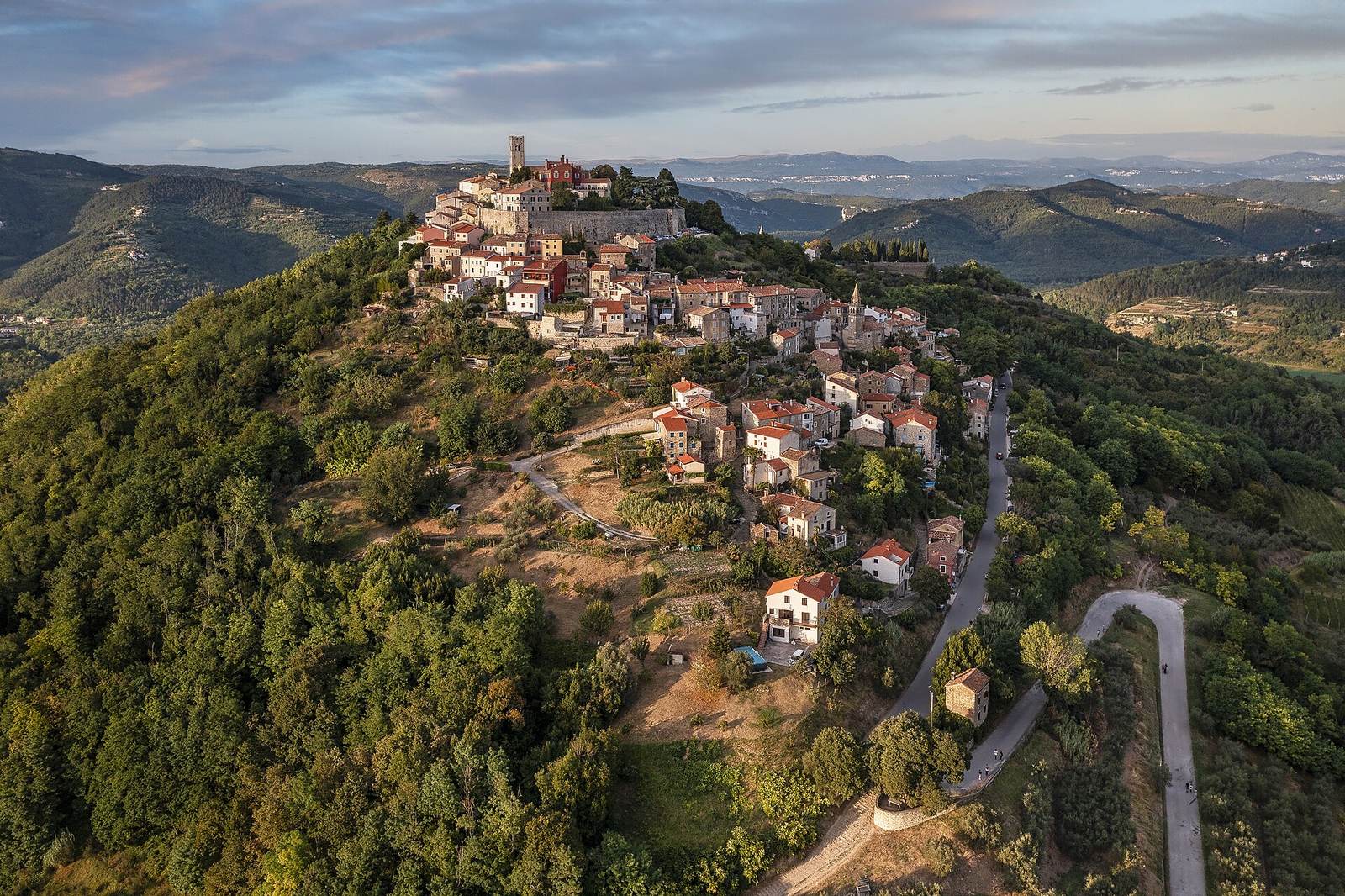
Inland, **Motovun** sits on a hill above the Mirna valley, with walls you can walk and views over the truffle forests. **Grožnjan** is a village of artists and summer music schools, full of galleries. **Hum** claims to be the smallest town in the world. **Buzet** and **Livade** are the centres of truffle hunting, and autumn brings truffle fairs. Wine producers around **Momjan** and **Poreč** make Malvazija whites and Teran reds; many welcome visitors for tastings.
Food to try
Look for **fuži** or **pljukanci** pasta with truffles, **maneštra** bean soup, Istrian **pršut** ham, olive oil from small producers and **boškarin**, the local grey ox. Konobas, the traditional taverns, serve the best home cooking.
Where to stay
Rovinj is the most atmospheric base, Pula is better for transport and value, and a farm stay or hill town guesthouse suits food lovers who want quiet evenings.
Getting there and around
Pula airport has seasonal flights from across Europe. Buses link Istria with Zagreb, Rijeka and Trieste. Between the coastal towns buses are frequent, but the hill towns have few connections, so a tour helps.
A suggested four days
Spend the first day in **Rovinj**, climbing to St Euphemia and swimming at Golden Cape. On day two, drive or take the bus to **Pula** for the Arena and the Roman forum, then head to **Kamenjak** for an afternoon swim. Day three is for the hill towns: **Motovun** in the morning, lunch with truffles in **Livade**, and sunset over the galleries of **Grožnjan**. On the last day, visit **Poreč** and its basilica, with a boat trip into the **Lim Fjord** for oysters on the way back. In autumn, swap a beach for a truffle hunt with a local family. Cyclists will love the **Parenzana**, a former narrow gauge railway turned into a trail through tunnels and over viaducts.
Questions about Istria
Is Istria better than Dalmatia?
It is different. Istria is greener, more Italian in feel and better for food and wine; Dalmatia has the islands, Split and Dubrovnik. Many trips combine both.
When is truffle season in Istria?
White truffles are found in autumn, roughly from September to December, with fairs in towns such as Livade. Black truffles are available much of the year.
What is the best base in Istria?
Rovinj for atmosphere, Pula for transport and the Roman sights, or an inland guesthouse for food and quiet.
How do I get from Istria to Split or Dubrovnik?
By bus via Rijeka or Zagreb, which is a long day, or by flying. Check seasonal flights from Pula before you plan.
Facts checked . Fees, schedules and entry rules change, so always confirm the latest with the official source.