At a glance
- Best for
- Old town history, sea views, swimming and island trips
- Airport
- Dubrovnik Airport (DBV), about half an hour south of the city
- Time needed
- Two to three days
- Best season
- May, June, September and October
- Getting around
- Walking, city buses and boats
- Good base for
- Lokrum, the Elaphite islands, Ston, Mljet and Cavtat
Why go
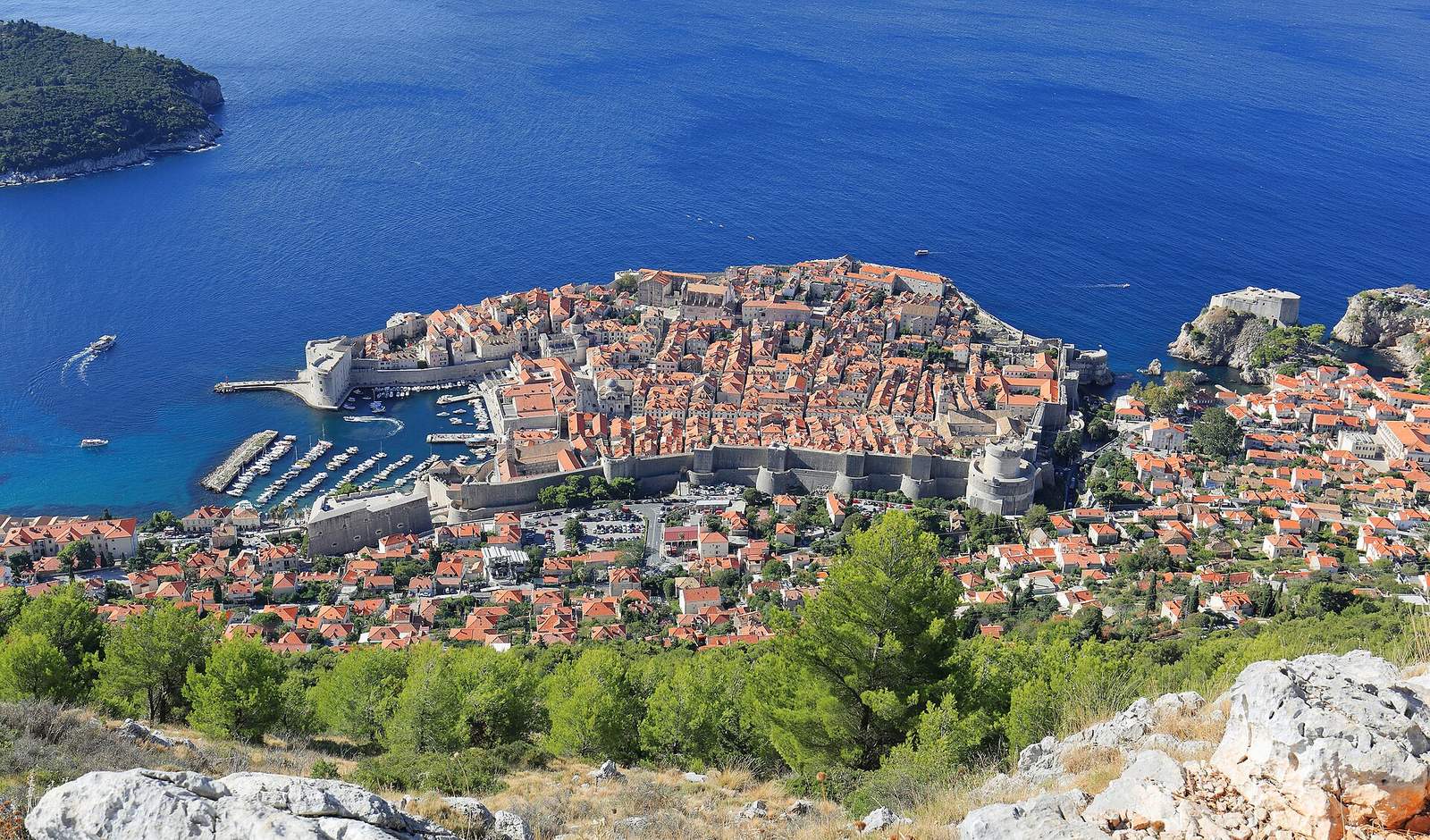
Walking Dubrovnik's walls with the Adriatic on one side and a sea of terracotta roofs on the other is one of Europe's great travel moments. The city also has excellent swimming from rocks, island day trips and a long history as a trading republic that rivalled Venice.
The old town
Enter through the **Pile Gate** and you are on **Stradun**, the polished main street. The **Onofrio Fountain**, the **Franciscan Monastery** with one of Europe's oldest working pharmacies, the **Rector's Palace**, the **Sponza Palace** and the **Cathedral** all sit along or near it. **St Blaise's Church** honours the city's patron saint, celebrated every February.
The city walls
The **walls** run about two kilometres around the old town, with towers including **Minčeta** and the **Bokar** fortress. The walk takes around two hours; go at opening time or late afternoon to avoid the heat and crowds, carry water, and check the official ticket options, as the Dubrovnik Pass bundles the walls with several museums. **Fort Lovrijenac**, on its own rock outside the walls, has great views back over the town.
Lokrum and the cable car
A short boat ride from the old harbour, **Lokrum** island is a nature reserve with a ruined monastery, botanical garden, peacocks and rocky swimming spots, including a small salt lake. There are no overnight stays. The **cable car** climbs **Mount Srđ** for a sweeping view; at the top, the **Homeland War Museum** in Fort Imperial tells the story of the 1991 to 1992 siege.
Swimming
**Banje** beach sits just outside the Ploče Gate with views of the walls. Locals swim off the rocks at **Buža**, through a hole in the walls, and at **Sveti Jakov** beach, east of town, which is quieter.
Day trips
The **Elaphite islands**, **Koločep**, **Lopud** and **Šipan**, are car free and easy by ferry. **Mljet** island has a national park with saltwater lakes and a monastery on an islet. **Ston** has long medieval walls and oysters from **Mali Ston** bay. **Cavtat** is a calmer harbour town south of the city, and **Kotor** in Montenegro is a popular cross border trip.
Where to stay
The old town is magical but involves many steps and can be noisy. **Ploče** has views and quick access to Banje beach. **Lapad** and **Babin Kuk** have hotels, beaches and buses to town. **Gruž** is near the ferry port and bus station.
Getting there and around
Dubrovnik Airport is near Cavtat, linked by an airport shuttle bus to the city and by taxis. Long distance buses use the **Gruž** terminal; the coast road to Split crosses the **Pelješac Bridge**, so there is no longer a border crossing through Bosnia and Herzegovina on that route. City buses are frequent.
Practical tips
The city limits cruise ship numbers, but midday in summer is still busy; plan sights early or late. Dress codes apply in churches, and the city discourages walking around in swimwear. The old town's limestone is slippery, so wear good shoes.
Food to try
Dubrovnik and the nearby coast are known for **oysters and mussels** from Ston, **black risotto**, buzara style shellfish in wine and garlic, and the sweet **rožata** custard. Candied orange peel, almonds and figs make good gifts. Restaurants inside the walls tend to be the most expensive; walk a few lanes back from Stradun, or eat in Gruž, Lapad or Cavtat for better value.
Questions about Dubrovnik
How long do I need in Dubrovnik?
Two days covers the walls, old town, Lokrum and the cable car. A third day allows a trip to the Elaphites, Ston or Mljet.
When is the best time to walk Dubrovnik's walls?
At opening time or in the late afternoon, when it is cooler and quieter. Check the official opening hours, which change by season.
Is Dubrovnik too crowded?
It can be at midday in July and August. Stay overnight, explore early and late, and visit in May, June, September or October for a calmer city.
Can I visit Montenegro from Dubrovnik?
Yes, Kotor is a popular day trip. You cross a border, so carry your passport and check whether you need a visa for Montenegro.
Facts checked . Fees, schedules and entry rules change, so always confirm the latest with the official source.