At a glance
- Best for
- Food, music, art and markets
- Airport
- Douala International Airport (DLA)
- Time needed
- Two to three days
- Best season
- December to February, the driest months
- Language
- French, plus Duala and Pidgin
- Getting around
- Hotel cars, trusted taxis and ride-hailing apps
Why visit Douala
Douala handles most of Cameroon's trade and much of Central Africa's, so it moves fast and rarely sleeps. It is the best place to understand modern, urban Cameroon: traders from across the region, a strong art scene led by the doual'art centre, and the music that made the country famous across Africa. Most visitors spend two or three days here before heading to the coast or the capital.
Neighbourhoods to know
**Bonanjo** is the old administrative quarter by the river, with colonial era buildings, government offices, banks and several of the better hotels. It is the easiest area for a first stay. **Akwa** is the commercial heart, with the cathedral, the main boulevards, the central market and plenty of restaurants and bars. **Bonapriso** is a leafy, quieter residential area with good restaurants and the Marché des Fleurs. **Deïdo** is home to the famous nightlife street, Rue de la Joie. **Bonabéri** lies across the Wouri bridge on the road west.
What to see
Start with **La Pagode**, the ornate 1905 palace built for the Manga Bell royal family, whose descendant Rudolf Duala Manga Bell was executed by the German colonial authorities in 1914 and is now a national hero. Nearby, the **Musée Maritime** tells the story of the river and the port. Look out for the public artworks commissioned by **doual'art** across the city, especially **La Nouvelle Liberté**, a giant figure made from scrap metal at a Deïdo roundabout. The cathedral of Saints Peter and Paul in Akwa is a calm break from the heat.
Markets
The **Marché des Fleurs** is the easiest place to shop for masks, carvings, beadwork and Bamoun brass. The **Marché Central** and **Marché Sandaga** show everyday life at full volume, with produce, fabrics and spices. **Mboppi** is the wholesale market where traders from across Central Africa buy goods. Go in the morning, carry little, and consider going with a local friend for the bigger markets.
Food and nightlife
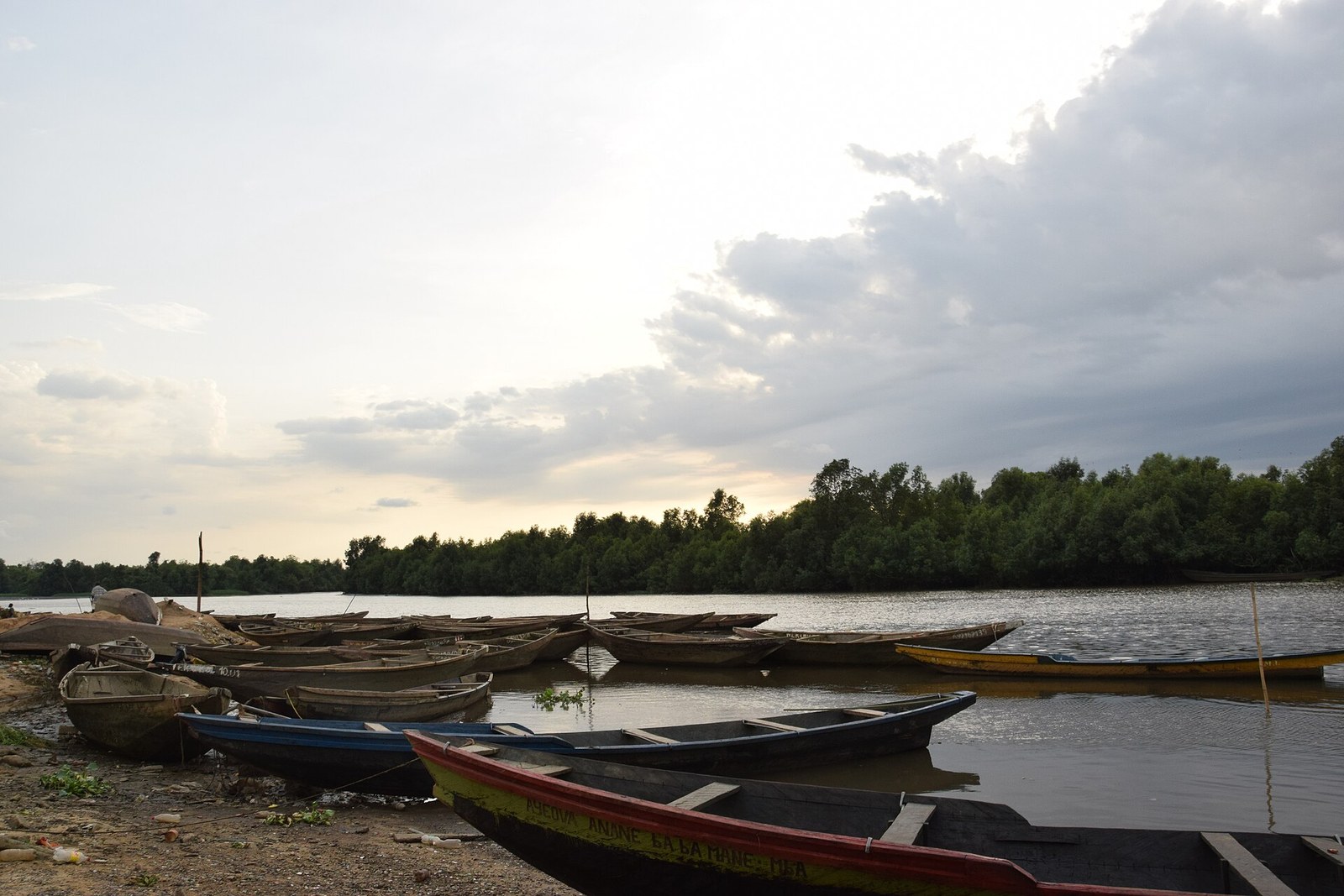
Douala is a great food city. Try **ndolé**, the national dish of bitterleaf stewed with peanuts and shrimp or beef, **poisson braisé** grilled with pepper sauce and served with plantain or miondo, and **soya**, spicy skewered beef from evening grills. The fish market at **Youpwé** lets you pick your fish from the canoes and have it grilled by the water. At night, **Rue de la Joie** in Deïdo and the terraces of Akwa fill with bars, cabarets and live makossa. Use a trusted car to get there and back.
Festivals
In late November and early December the **Ngondo** festival of the Sawa peoples brings pirogue races, traditional wrestling and a sacred ceremony on the Wouri. Every few years doual'art's **Salon Urbain de Douala** turns neighbourhoods into open air galleries.
Day trips
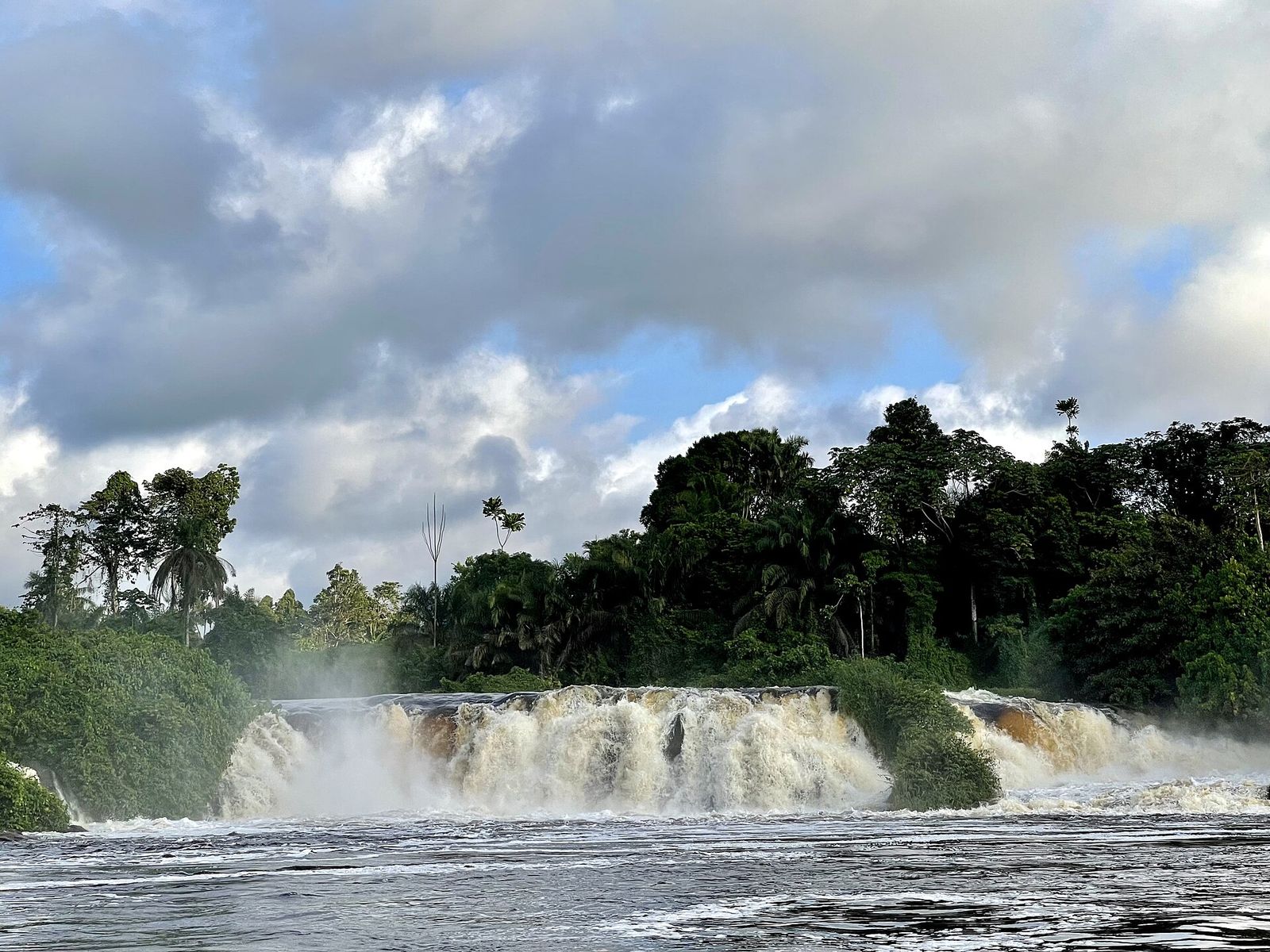
The mangroves and lagoons of **Douala Edéa National Park** lie a few hours south. The waterfalls at **Ekom Nkam**, deep in the forest near Melong, make a long but rewarding day. Kribi's beaches are about three hours by road, and Limbe is closer but subject to strict travel advice.
Staying safe
Petty crime and phone snatching are common in Douala, especially around markets, bus stations and at night. Use hotel cars or trusted drivers rather than flagging shared taxis after dark, keep your phone out of sight in traffic, and carry a copy of your passport, since police checks are frequent. Flooding during the rainy season can make roads slow, so allow extra time for the airport.
Getting around
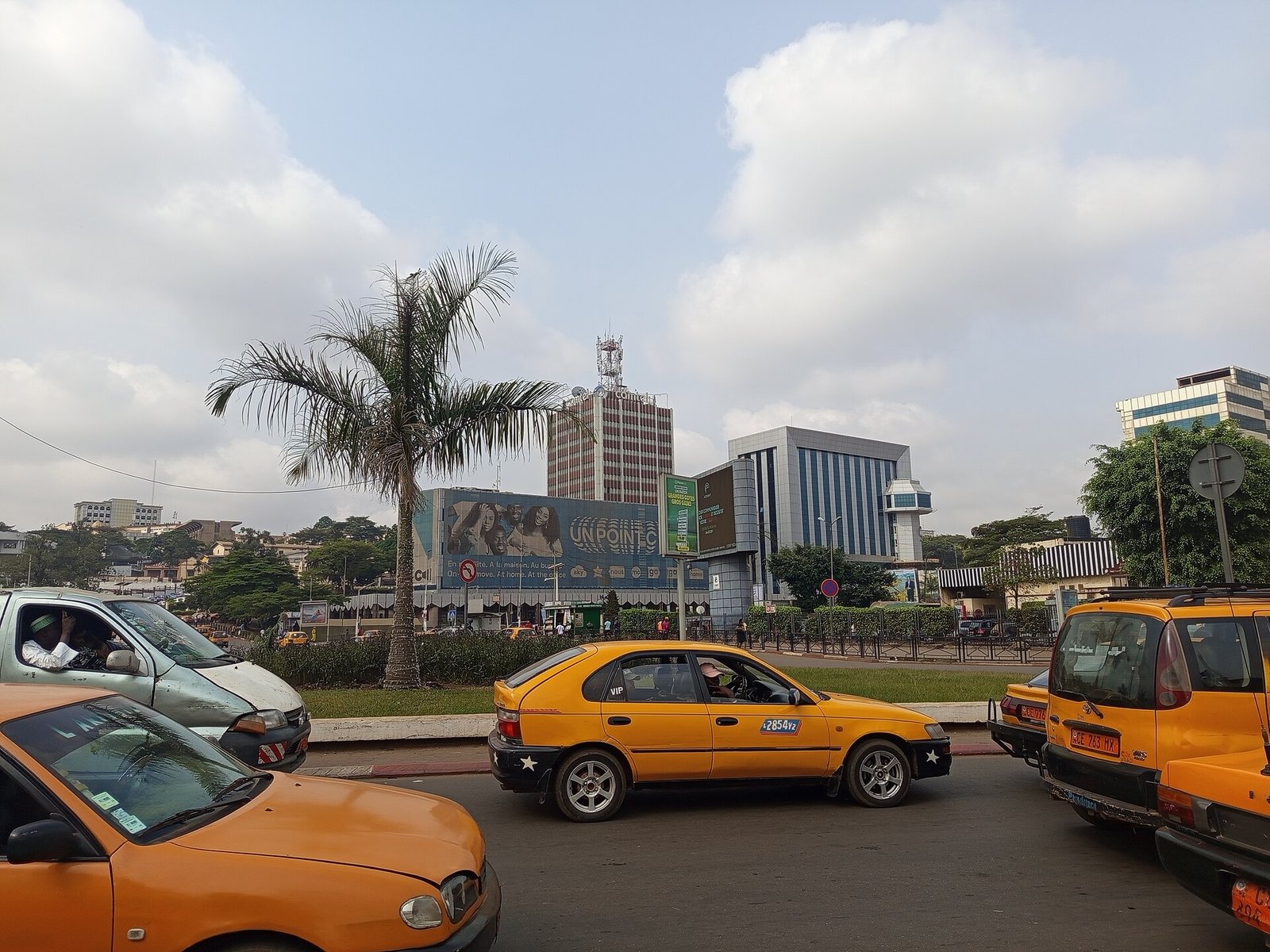
Douala's yellow shared taxis follow fixed routes and pick up other passengers, and motorbike taxis known as bend skins weave through traffic. Both are cheap, but first-timers usually prefer a hotel car, a trusted driver or a ride-hailing app where available. The airport is close to the centre, but traffic can turn a short trip into a long one.
Questions about Douala
Is Douala safe for tourists?
Douala is manageable with sensible precautions. Theft and phone snatching are common, so keep valuables hidden, avoid walking at night and use trusted transport. Bonanjo and Bonapriso are calmer bases for a first visit.
Where should first-timers stay in Douala?
Bonanjo is central, close to the river and the old town, and has several established hotels. Akwa is busier and closer to shops and nightlife, while Bonapriso is quieter and leafy.
How long should I spend in Douala?
Two or three days is enough to see the main sights, shop at the Marché des Fleurs, eat well and enjoy a night out before moving on to Kribi, Yaoundé or the West region.
What should I eat in Douala?
Try ndolé, grilled fish with plantain, soya skewers and the fresh seafood at Youpwé. Douala's street food is excellent; choose busy stalls where food is cooked in front of you.
Facts checked . Fees, schedules and entry rules change, so always confirm the latest with the official source.