At a glance
- Best for
- Photography, landscapes, stargazing and road trips
- Main airport
- Uyuni Joya Andina (UYU), with flights from La Paz
- Altitude
- About 3,650 metres on the salt, higher in the Lípez lagoons
- Time needed
- One day for the salt, three days for the full circuit
- Best season
- January to March for the mirror, May to October for dry salt and clear skies
- Getting around
- Organised 4x4 tours with a driver and guide
Why go
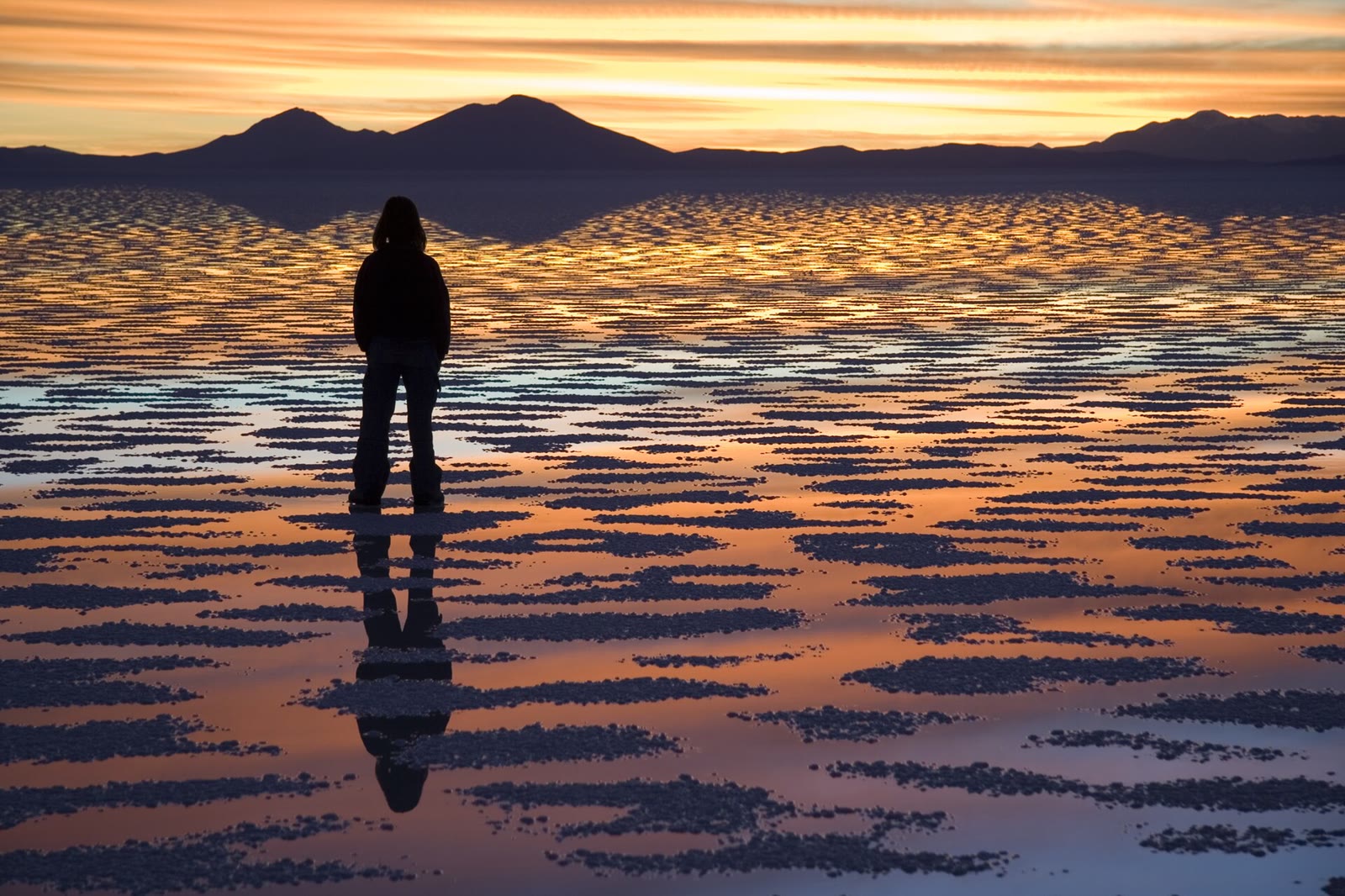
Few places feel as otherworldly. Driving across the Salar, the horizon disappears, distances become impossible to judge and travellers spend hours on the playful perspective photos the place is known for. Beyond the salt, the remote Lípez region adds red and green lagoons full of flamingos, steaming geysers, hot springs and volcano views.
The town of Uyuni
Uyuni is a small, windy town that exists mainly as a gateway. Most people arrive by overnight bus from La Paz or Potosí, by train from Oruro, or by flight from La Paz. Spend a night here, or go straight onto a tour. The **Train Cemetery** on the edge of town, where rusting locomotives lie in the desert, is usually the first stop on any tour.
Choosing your tour
There are two main options. A **one day tour** covers the train cemetery, the salt processing village of **Colchani**, the first salt hotel, the Dakar monument and the cactus covered **Isla Incahuasi** in the middle of the flat, ending with sunset. The classic **three day tour** continues south through the Lípez region to **Laguna Colorada**, coloured red by algae and dotted with flamingos, the **Sol de Mañana** geyser field, the **Polques hot springs**, the **Salvador Dalí Desert** and **Laguna Verde** at the foot of Licancabur volcano, before returning to Uyuni or crossing into Chile at San Pedro de Atacama.
Standards vary a lot between operators. Choose a well reviewed company, ask about the age of the vehicle, the driver's experience, whether there is an English speaking guide, the number of people per jeep and what happens in an emergency. Avoid the very cheapest offers, and never ride with a driver who has been drinking. Tours to the lagoons include the entry fee for the Eduardo Avaroa Andean Fauna National Reserve; check the current fee on official sites.
Mirror or dry salt?
The mirror effect needs a thin layer of water, which usually comes with rain between January and March. In this season some areas, including Incahuasi and the route south, may be closed. From May to October the salt is dry and hard, skies are clear and the full three day route is open, but nights are bitterly cold. Sunrise and starlight tours run year round when conditions allow and are spectacular.
Altitude and cold
The Salar sits at about 3,650 metres, and the Lípez route climbs to nearly 5,000 metres at the geysers. Acclimatise in La Paz or Sucre first. Nights in the basic lodges and salt hotels can fall well below freezing, so bring a warm sleeping bag or ask your operator for one, along with a hat, gloves, sunglasses, strong sunscreen and lip balm. Glare off the salt can burn eyes and skin fast.
Practical tips
Cash machines in Uyuni can run dry, so bring enough bolivianos from a larger city. Pack snacks, water and toilet paper. Mobile signal is patchy beyond town. If you plan to cross into Chile, check entry requirements and border opening hours in advance, and keep your passport handy.
Questions about the Salar de Uyuni
Is a one day or three day tour better?
If you have the time and handle altitude well, the three day tour is the full experience, adding the coloured lagoons, flamingos and geysers. A one day tour is right if you are short of time or only want the salt flat itself.
When can I see the mirror effect?
Usually between January and March, after rain leaves a thin layer of water on the salt. It depends on the year, and some routes close in this season.
Can I visit the Salar without a tour?
It is possible but not advisable. The flat has no road signs, distances are deceptive and help is far away. A licensed tour with an experienced driver is safer and usually easier.
Facts checked . Fees, schedules and entry rules change, so always confirm the latest with the official source.