At a glance
- Best for
- Walking, Inca history, sunsets and slow days
- Nearest airport
- El Alto International (LPB), about three to four hours by road
- Altitude
- About 3,810 metres at the shore
- Time needed
- Two to three days
- Best season
- April to October for dry, sunny days
- Getting around
- Buses from La Paz, a short ferry at Tiquina and public boats to the islands
Why go
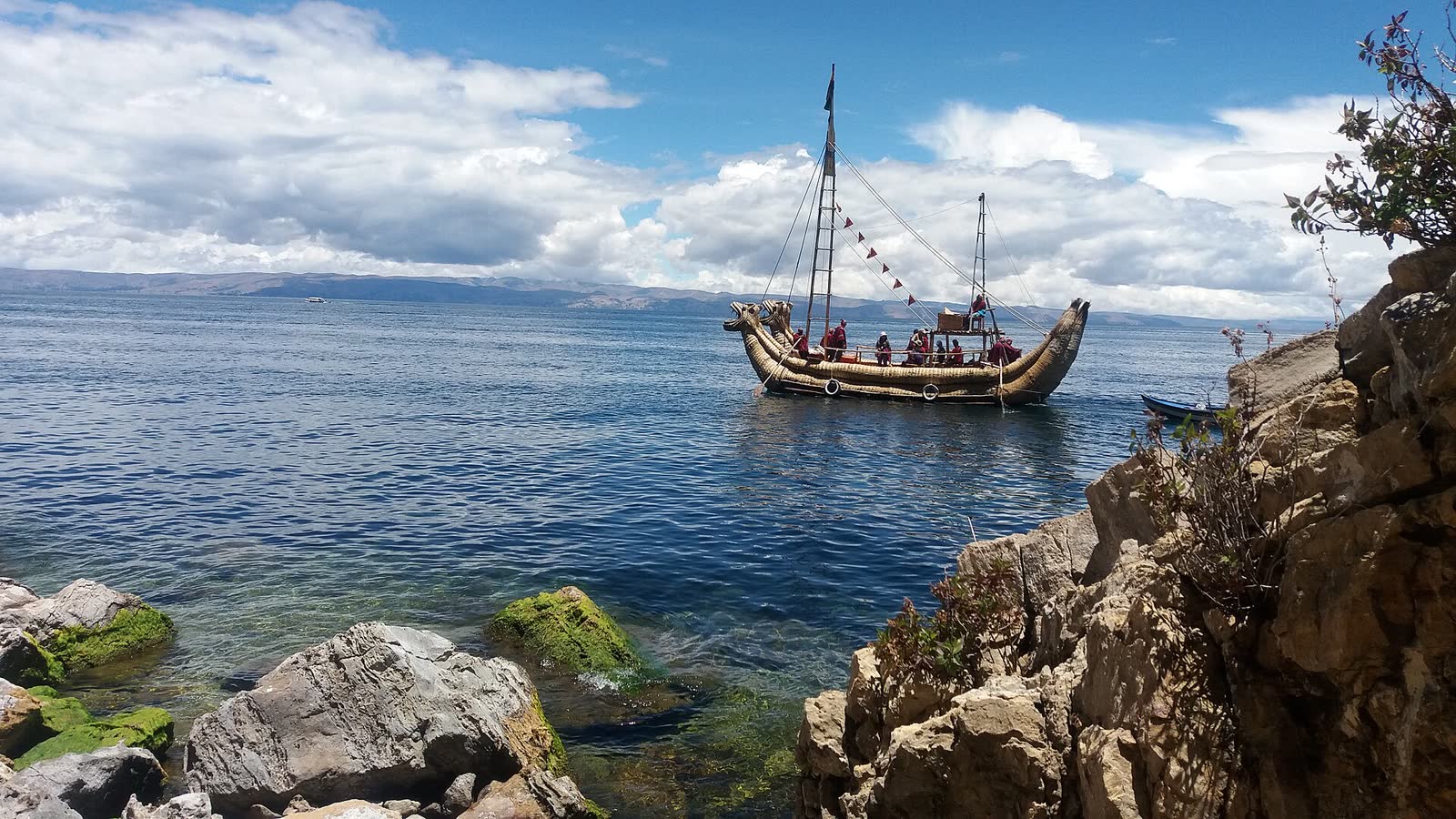
The colours are the first thing people remember: deep blue water, golden grass, white snow on the Cordillera Real across the lake and bright light at altitude. Life on the islands moves at walking pace, with donkeys, terraced fields and stone paths that have been in use for centuries. It is a place to slow down after the intensity of La Paz.
Getting there
Buses run from the cemetery area of La Paz to **Copacabana** in roughly three to four hours. On the way, passengers get off at the **Strait of Tiquina** to cross on a small passenger boat while the bus goes across on a barge. Tourist buses are more comfortable than local ones and often continue to Puno in Peru. If you plan to cross the border, check entry rules for your passport and border hours before you travel.
Copacabana
This small lakeside town is dominated by the white Moorish style **Basilica of Our Lady of Copacabana**, home of Bolivia's patron saint. On weekends and holidays, families bring new cars to be blessed with flowers and beer outside the church, a joyful sight. Climb **Cerro Calvario**, the hill above town, for sunset over the lake, but go in a group and keep valuables at your hotel. The waterfront has rows of simple restaurants serving fried or grilled **trucha**, lake trout, with potatoes, rice and salad.
Isla del Sol
Boats leave Copacabana each morning for the **Isla del Sol**, taking about one and a half to two hours. The island has no cars, only walking paths between villages, Inca ruins and eucalyptus groves. In the south, **Yumani** has the Inca stairway, a spring and most of the guesthouses. The ruins of **Pilko Kaina** sit nearby. The north of the island has the **Chincana** ruins and the sacred rock linked to the creation myth.
Access to the north has been restricted at times because of disputes between island communities, so ask locally before planning the full north to south walk. Each community charges a small visitor fee; carry small notes. Staying overnight in Yumani lets you see the sunset and sunrise, and the quiet after the day boats leave.
Isla de la Luna
The smaller **Isla de la Luna** holds the ruins of a temple to the moon and is usually visited on a half day boat trip combined with the Isla del Sol.
Altitude, sun and cold
The lake is higher than La Paz, and the steps up from the Yumani jetty are tough on the first day. Walk slowly and drink water. The sun is fierce on the water, so pack sunscreen, a hat and sunglasses. Nights are cold all year, and island guesthouses are often simple, so ask about hot water and extra blankets.
Practical tips
Copacabana has a few cash machines, but they can run out, and the islands have none. Bring enough bolivianos from La Paz. Boat timetables change with the season and demand, so confirm return times the day before.
Where to stay
In Copacabana, hillside hotels give the best views over the bay, while waterfront guesthouses are handy for early boats. On the Isla del Sol, family run lodges in Yumani range from very simple rooms to eco lodges with terraces facing the snowy peaks. Book ahead for Easter and early August, when pilgrims fill the town.
Questions about Lake Titicaca
Is the Bolivian or Peruvian side of Lake Titicaca better?
Bolivia's side is quieter and has the Isla del Sol, the lake's most important Inca site. Peru's side has the floating Uros islands and Puno. Many travellers see both on the way between La Paz and Cusco.
Should I stay overnight on the Isla del Sol?
Yes, if you can. A night in Yumani gives you sunset, sunrise and the island without day trip crowds. Pack light, as you will carry your bag up steep steps.
How do I get from La Paz to Copacabana?
Tourist and local buses leave La Paz each morning and take about three to four hours, including a short boat crossing at the Strait of Tiquina. Book tourist buses a day ahead in busy seasons.
Facts checked . Fees, schedules and entry rules change, so always confirm the latest with the official source.