At a glance
- Best for
- Rock art, dunes, trekking and desert nights
- Airport
- Djanet Tiska Airport (DJG)
- Time needed
- Five to eight days
- Best season
- October to March
- Languages
- Tamahaq (Tuareg), Arabic and French
- Getting around
- Licensed agency, 4x4 and on foot
Why visit the Tassili
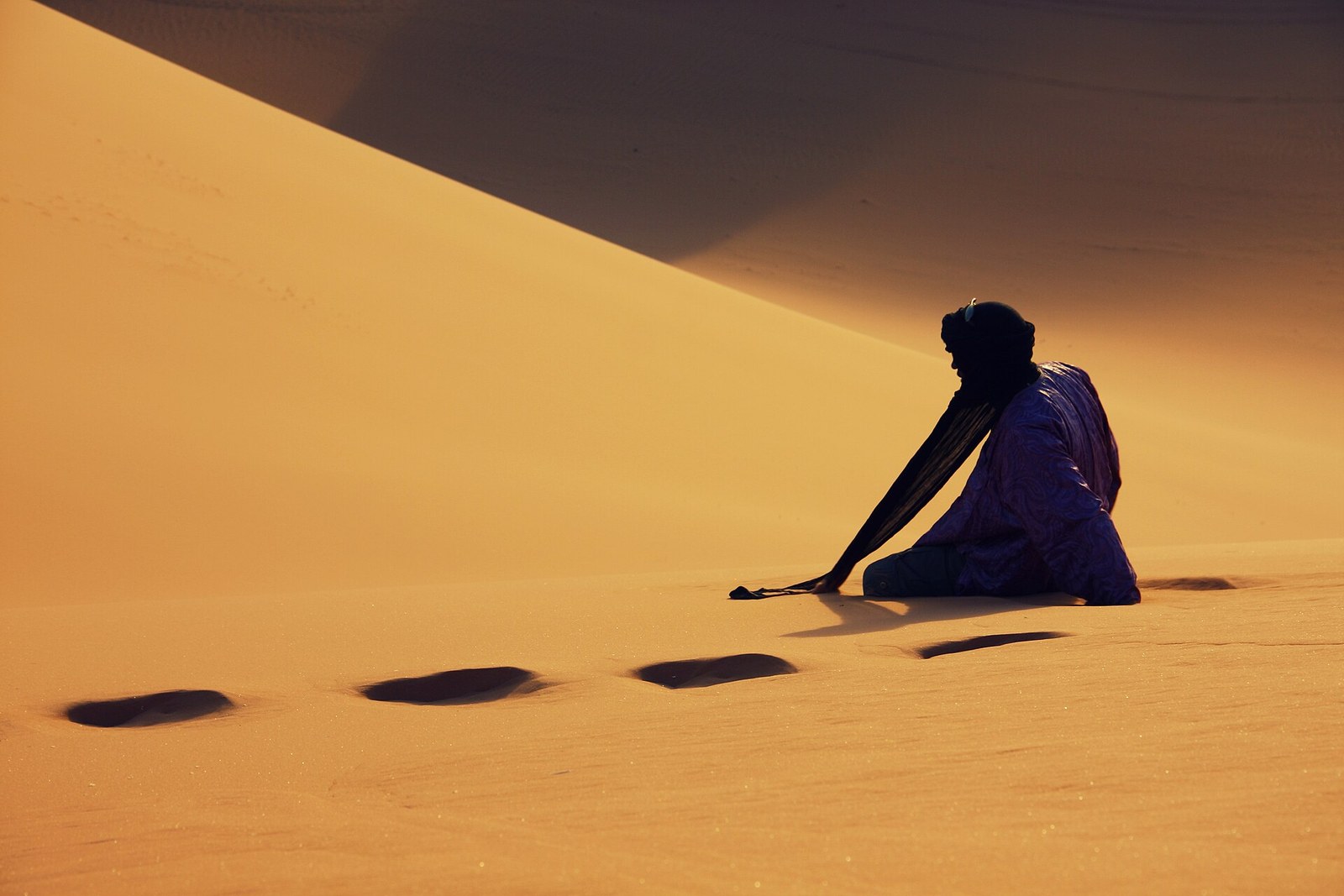
The Tassili n'Ajjer National Park is a UNESCO site for both its nature and its culture. More than fifteen thousand rock paintings and engravings record thousands of years of life in a once green Sahara: hunters, giraffes, cattle herders, dancers and strange round headed figures. The scenery is just as striking, with forests of stone, natural arches and dunes that glow at sunset.
Djanet
Djanet is a small, friendly oasis town of palm gardens and mud brick quarters, with the old ksar of El Mihan above. It has a few hotels, guesthouses and agency camps, a market and the airport. Most trips start and end here, and many visitors spend a night in town before heading out.
The main trips
The Tadrart Rouge, to the southeast, is famous for red dunes, sandstone towers and engravings such as the Crying Cows of Terarart. The plateau of the Tassili itself, including Sefar and Jabbaren, is reached on foot with donkeys carrying supplies, and rewards a few days of trekking with the finest painted shelters. Closer to Djanet, the Erg Admer dunes, the Essendilene gorge with its pools and the ancient cypresses of Tamrit make shorter outings.
How trips work
Independent travel in the deep south is not permitted for most foreign visitors. You must book with a licensed agency, which arranges your guide, 4x4, cook, camping gear and the permits and police registration required. Some agencies can also handle the special visa on arrival scheme for southern tourism, so ask about this when you book and confirm it with the official Algerian consulate pages. Life on a trip is simple: you sleep in tents or under the stars, eat freshly cooked meals and drink endless glasses of Tuareg tea.
The Sebiba festival
Each year around Ashura, Djanet hosts the Sebiba, a Tuareg ceremony of drums, song and dance listed by UNESCO as intangible heritage. If your dates line up, it is a remarkable thing to witness.
When to go and what to pack
Go between October and March. Days are warm and sunny, but desert nights can be close to freezing in December and January, so bring a warm sleeping bag or ask your agency for one. Pack a scarf against sand, sunglasses, sunscreen, sturdy shoes and a head torch. Carry cash for tips and the market.
Safety
Djanet sits near the Libyan border, and government travel advice for the far south is strict. Areas close to the borders are off limits, and your agency must follow official routing. Read your government's advice for the region before booking, as it can affect your travel insurance.
Getting there
Air Algérie flies to Djanet from Algiers, and seasonal direct flights from Europe sometimes run in winter. Tamanrasset and the Hoggar mountains, with the hermitage at Assekrem, offer a similar experience further west.
Start your trip in Algiers or pair it with Ghardaia, and use the free trip planner to plan the timing.
Who the Tassili suits
The Tassili suits travellers who are happy to camp, walk and switch off. You do not need to be an athlete for the 4x4 trips, but plateau treks involve steep climbs and long days on foot. The reward is silence, stars and some of the oldest art made by humans.
Questions about Tassili n'Ajjer
Can I visit the Tassili n'Ajjer without an agency?
For most foreign visitors, no. Trips in the deep south must be organised by a licensed Algerian agency, which handles guides, transport and permits.
How many days do I need in Djanet?
Five days allows a taste of the Tadrart or the Erg Admer. A full plateau trek to Sefar needs a week or more.
Is it cold in the Sahara?
At night in winter, yes. Days are warm, but temperatures can fall close to freezing after dark between December and February.
Can I see rock art on a short trip?
Yes. Engravings and paintings are found close to Djanet and throughout the Tadrart Rouge, so even a short trip includes some fine examples.
Facts checked . Fees, schedules and entry rules change, so always confirm the latest with the official source.