At a glance
- Best for
- Unique nature, hiking, camping and empty beaches
- Airport
- Socotra Airport (SCT), near Hadibu
- Time needed
- Seven to ten days
- Best season
- October to early May
- Languages
- Soqotri and Arabic, with little English
- Getting around
- Four wheel drive with your operator's driver
Why visit Socotra
Socotra is a UNESCO World Heritage Site and one of the most biologically distinct places on earth, often compared with the Galápagos. It split from the African and Arabian mainland millions of years ago, and its plants, reptiles and birds evolved in isolation. For travellers it offers something rare: wild landscapes, very few other visitors, clear water and nights under a sky with almost no light pollution. The island is far from the fighting on the mainland, but it is still part of Yemen and covered by the same government travel advice, which advises against all travel.
Highlights
**Dixam Plateau and Firmihin forest.** The densest stand of dragon's blood trees, named for their red resin, spreads across the high plateau. Sunrise here, with the trees in silhouette, is the image most people come for.
**Homhil Protected Area.** A rocky plateau of bottle trees, frankincense and dragon's blood trees, with a natural infinity pool looking down to the sea. A good first night's camp.
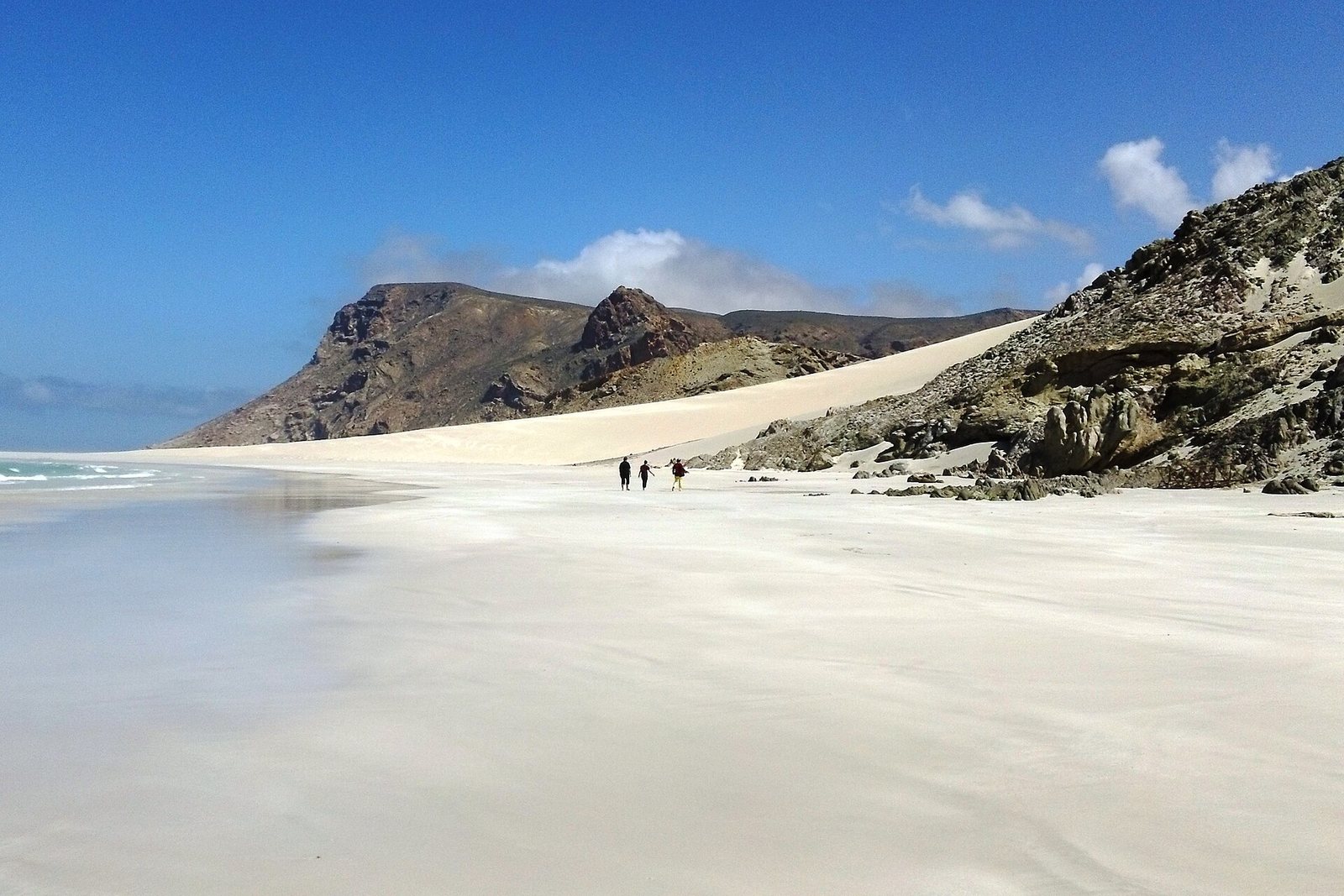
**Detwah Lagoon and Qalansiyah.** At the island's western tip, a shallow turquoise lagoon is framed by white sand and cliffs. Nearby Qalansiyah is a quiet fishing town, and boats run from here to Shuab Beach, often with dolphins on the way.
**Arher and Zahek dunes.** Tall white sand dunes pile against granite mountains on the coast. Arher also has a freshwater spring running out to the sea.
**Hoq Cave.** A long cave in the limestone above the north coast, with stalactites and ancient inscriptions. The hike up is steep and hot, so start early.
**Wadi Dirhur and Ayhaft canyon.** Green canyons with pools and fig trees, good for a cool swim.
**Dihamri Marine Protected Area.** Coral reef close to shore east of Hadibu, with good snorkelling when the sea is calm.
Where to stay
Most of a Socotra trip is spent camping in simple tents at community campsites, with your operator providing tents, mattresses and meals. Hadibu, the main town, has a handful of small, basic hotels used for the first and last nights. Expect simple rooms, unreliable power and cold water. Bring a head torch, a power bank and a light sleeping bag for the cooler plateau nights.
Food
Meals on tour are cooked by your team: fresh fish grilled on the beach, rice, goat stew, flatbread, dates and sweet tea. Socotra is a conservative island, alcohol is not sold, and vegetarians should tell the operator in advance.
Getting there and around
Flights to Socotra are few and change often. In recent years most visitors have flown on a weekly service from Abu Dhabi organised around tour groups, while Yemenia has operated some flights from the mainland. Your operator will tell you which flights are running and usually sells the seat with the permit. On the island there is no public transport for visitors: you travel in a four wheel drive with a local driver and guide.
When to go
October to early May is the season. From about June to September the southwest monsoon brings strong winds and rough seas, camps close and flights are often suspended. February and March are calm and pleasant, and the bottle trees flower pink around the start of the year.
Local etiquette
Socotri people are welcoming and conservative. Dress modestly away from remote beaches, ask before photographing people, especially women, and never take plants, seeds, resin, shells or coral off the island: it is illegal and damages a fragile ecosystem. Leave no rubbish at camps.
Before you go
Read your government's travel advice for Yemen, confirm your insurer will cover Socotra, and book only with an established licensed operator. Use the free trip planner to think about pace, and see places to visit for more on the island.
Questions about Socotra
Is Socotra safe to visit?
Socotra has been far calmer than mainland Yemen, and organised groups visit each season. Western governments still advise against all travel to Yemen, Socotra included, and insurance can be hard to find. Read the advice and decide carefully.
Do I need a visa for Socotra?
Visitors normally travel on a Socotra permit arranged by a licensed island operator rather than a standard Yemeni visa. Rules change and vary by passport, so confirm the current process with your operator and the Yemeni embassy.
How many days do I need on Socotra?
Most trips last seven to ten days, often set by the weekly flight. That is enough to see Dixam, Homhil, Detwah, the dunes and a cave.
Can I travel Socotra independently?
Not in a practical sense. Permits, flights, drivers and camps are arranged through local operators, and visitors travel with a guide.
What should I pack for Socotra?
Modest light clothes, a warm layer for the plateau, sturdy shoes, a head torch, a power bank, sun protection, reef safe sunscreen and enough cash in US dollars for the whole stay.
Facts checked . Fees, schedules and entry rules change, so always confirm the latest with the official source.