At a glance
- Best for
- Port history, colonial streets, beaches and seafood
- Airport
- Aden International Airport (ADE)
- Time needed
- Two to three days
- Best season
- November to March
- Languages
- Arabic, with some English
- Getting around
- Taxis and a driver arranged by your operator or family
Why visit Aden
For most people arriving in mainland Yemen, Aden is the first stop. It has the busiest working airport, regular flights and the main offices of the recognised government. It was a British colony until 1967 and one of the world's busiest ports, and you can still read that history in its streets, churches and clock tower. Security in Aden has improved at times but remains fragile, with assassinations, bombings and clashes between armed groups in recent years. Every major government advises against all travel to Yemen. Diaspora visitors, aid workers and business travellers who come should follow local advice closely.
The districts
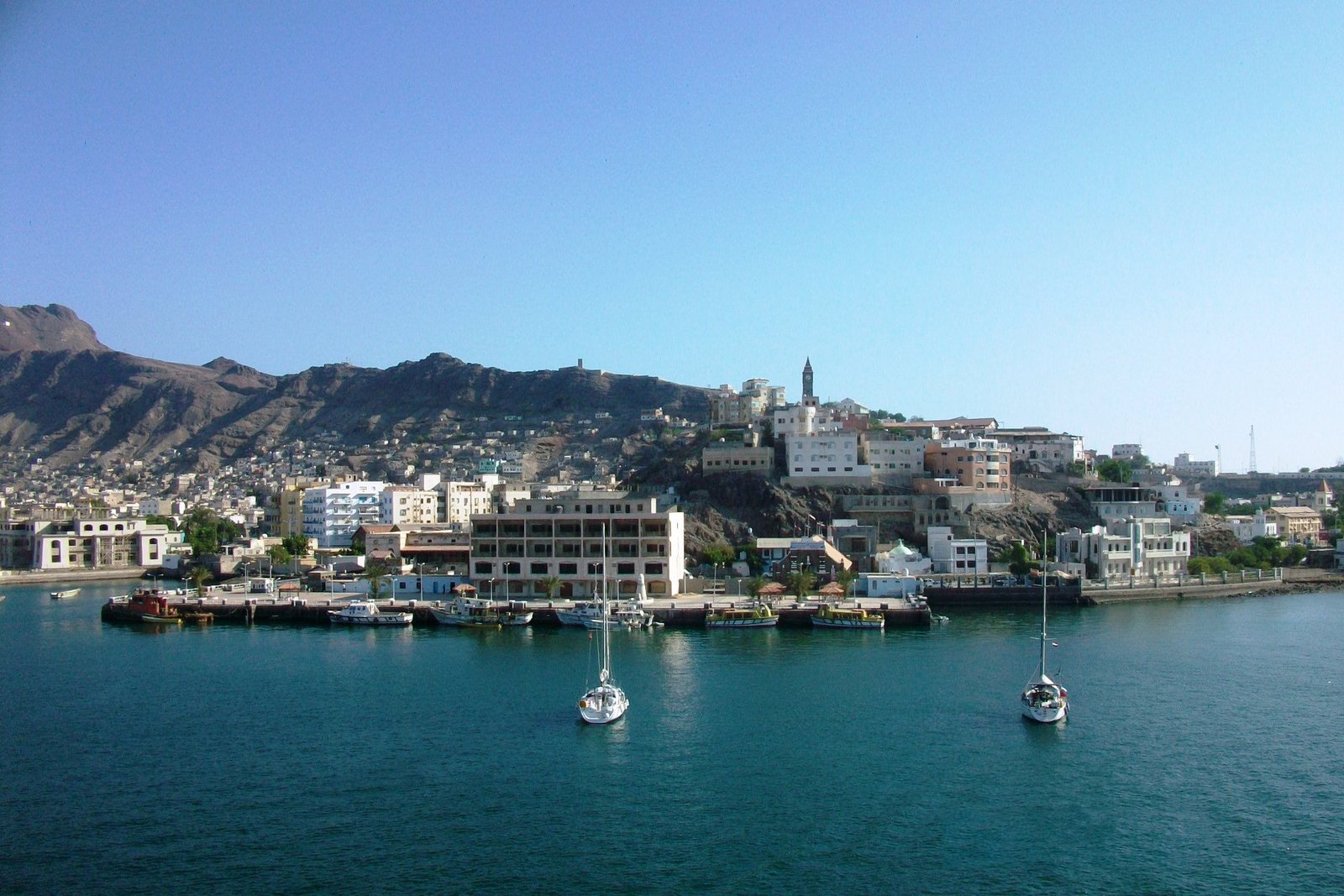
**Crater.** The old town sits inside the volcano itself, ringed by bare black peaks. It holds the main souk, the old Aden Minaret, the Aidarous Mosque and the Cisterns of Tawila. Its streets are busy, cheap and full of character.
**Tawahi (Steamer Point).** The old harbour quarter where ships once landed passengers. Look for the small clock tower known as Little Ben, the old Christ Church and the colonial era buildings along the waterfront.
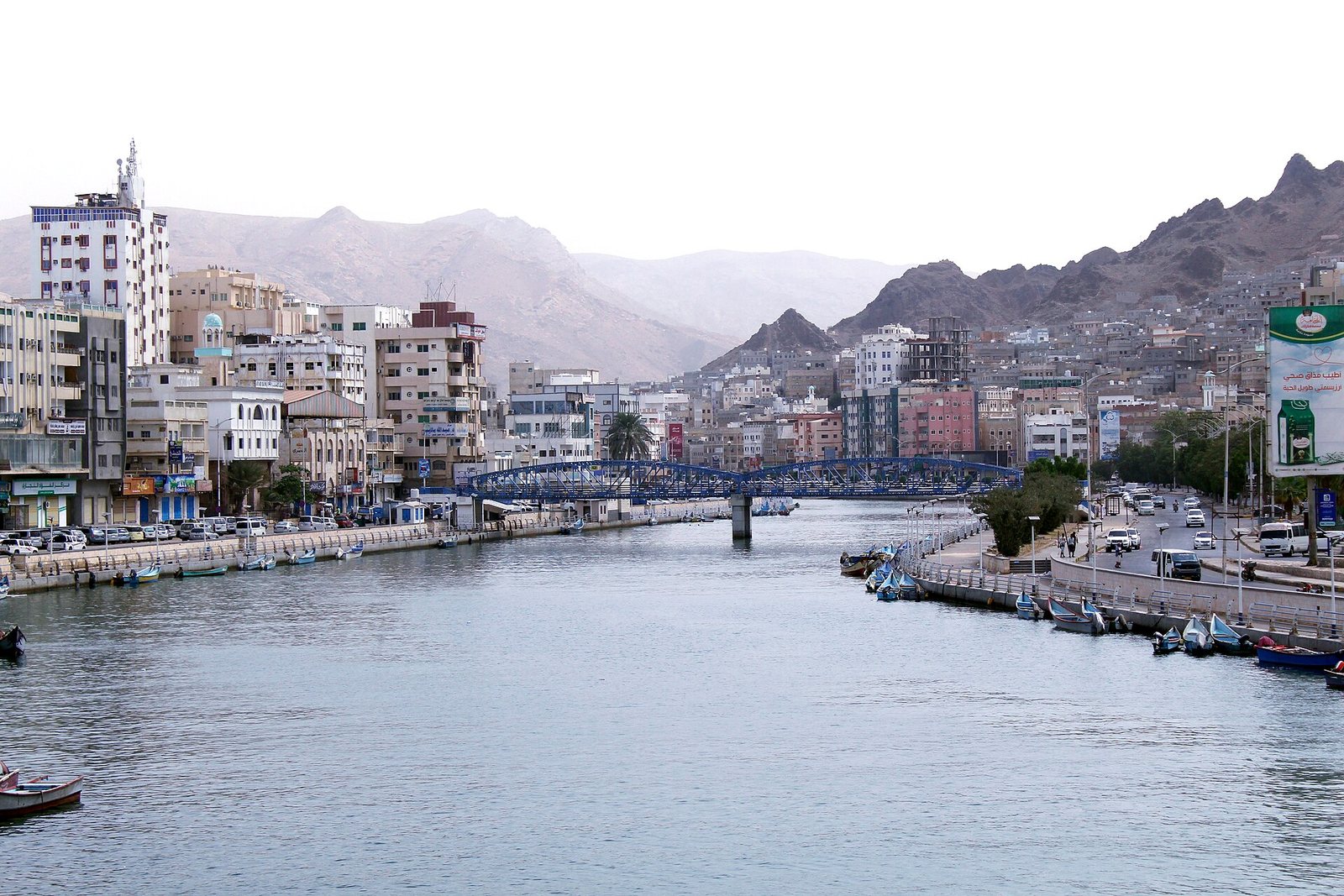
**Ma'alla.** A long main road of 1960s apartment blocks between Crater and Tawahi, lined with shops, cafés and the old dhow harbour.
**Khormaksar.** The isthmus district by the airport, with government buildings, hotels and the long seafront.
**Sheikh Othman and Mansoura.** Busy commercial districts on the mainland side, with markets and everyday city life.
Highlights
**Cisterns of Tawila (Aden Tanks).** A chain of ancient reservoirs cut into the rock at the head of a ravine in Crater, built to catch the rare floods. Their origins may go back to the early South Arabian kingdoms.
**Sira Fortress.** A fortress on a rocky island linked to Crater by a causeway, guarding the old harbour for centuries. The view over the bay is the best in the city.
**Aden Minaret.** A tall, slender minaret standing alone in Crater, among the oldest surviving structures in the city.
**Rimbaud's House.** The French poet Arthur Rimbaud lived and traded coffee in Aden in the 1880s. The building associated with him in Crater has served as a cultural centre.
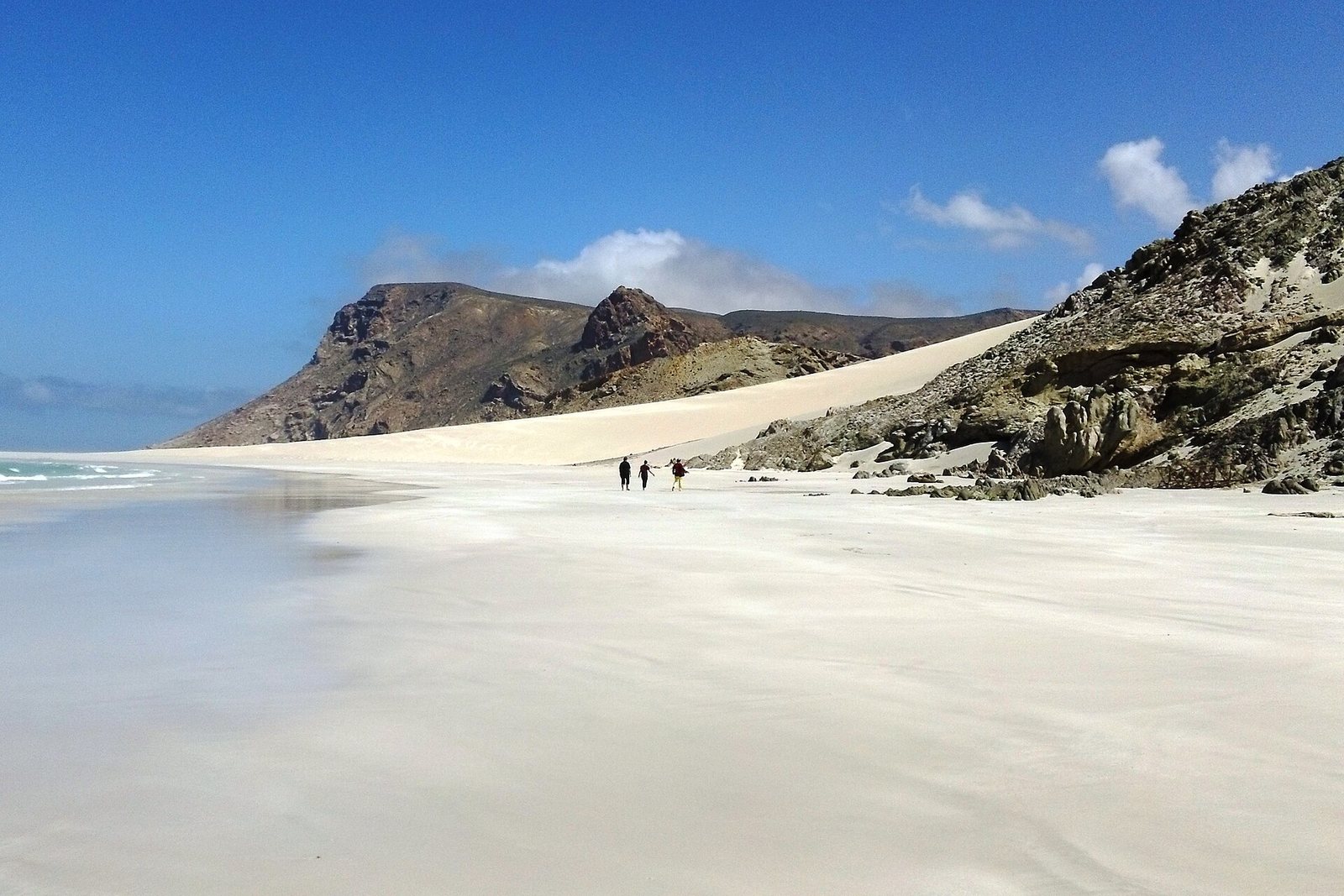
**Gold Mohur and Elephant Bay.** Sandy beaches west of Tawahi where families swim and picnic at weekends.
**The National Museum.** Collections of ancient South Arabian artefacts in Crater, open irregularly since the war.
Food
Aden's food is coastal: grilled fish baked in clay ovens and served with flatbread and spicy sahawiq salsa, fish curries showing Indian and East African influence, and sweet milky Adeni tea in roadside cafés. Zurbian, a spiced rice and meat dish linked to Aden, is a family feast. Evenings are the time to eat out, when the heat drops.
Where to stay
A handful of business hotels in Khormaksar and Tawahi host visitors, NGO staff and officials. Choose places recommended by your operator, employer or family, with guarded entrances and backup power.
Getting around
Taxis and minibuses are everywhere, but most visitors use a driver they know. Checkpoints are common, so carry your passport. Power cuts are frequent, especially in summer, when the heat and humidity are intense.
When to go
November to March is warm and bearable. From May to September the city is extremely hot and humid, and long power cuts make it hard going.
Before you go
Read current travel advice, carry cash in clean US dollars, and keep plans flexible. See places to visit for more ideas, and use the free trip planner to shape your days.
Questions about Aden
Is Aden safe for visitors?
Aden is calmer than the front lines, but there have been bombings, assassinations and armed clashes in recent years. Governments advise against all travel to Yemen. Visitors who go rely on trusted local contacts and avoid demonstrations and military sites.
What is Aden known for?
Its volcanic harbour, the Crater district, the ancient Cisterns of Tawila, Sira Fortress, its British colonial past and its seafood.
How many days do I need in Aden?
Two or three days covers Crater, the cisterns, Sira Fortress, Tawahi and an evening on the seafront.
Which banknotes are used in Aden?
Aden and the government held areas use the newer rial notes printed since 2017, which trade at a different rate from the old notes used in Sana'a. Change money at licensed exchange shops.
Facts checked . Fees, schedules and entry rules change, so always confirm the latest with the official source.