At a glance
- Best for
- Tiled monuments, history and photography
- Airport
- Samarkand International (SKD)
- Time needed
- Two to three days
- Best season
- April to May and September to October
- Train from Tashkent
- About two hours by high speed train
- Language
- Uzbek, Tajik and Russian
Why visit Samarkand
No other city on the Silk Road matches Samarkand's sense of grandeur. Its turquoise domes and tiled portals were built to impress visitors arriving from across Asia, and they still do. The city is also lively and modern, with a large Tajik speaking community, busy bazaars and a growing café scene, so it feels like a real place rather than an open air museum.
The Registan
The Registan is the heart of the city: three madrasas built over two centuries, facing each other across a great square. The Ulugh Beg Madrasa on the left is the oldest, the Sher-Dor opposite it has famous tiger and sun mosaics, and the Tilya-Kori in the middle hides a dazzling gold painted mosque. Visit in the morning for gentle light, then come back in the evening when the buildings are lit up. Many of the old student cells now hold craft shops.
Shah-i-Zinda
Shah-i-Zinda is an avenue of mausoleums climbing a hillside, built over centuries around a shrine believed to hold a cousin of the Prophet Muhammad. Every tomb is covered in a different pattern of carved and glazed tiles in turquoise, cobalt and white. It is still a place of pilgrimage, so dress modestly and keep your voice low. Late afternoon is the most beautiful time.
Gur-e-Amir and Bibi-Khanym
Gur-e-Amir, with its ribbed blue dome, holds the tombs of Timur, his sons and his grandson Ulugh Beg, and its interior shines with gold leaf. Bibi-Khanym Mosque was one of the largest mosques in the world when it was built after Timur's Indian campaign; its sheer size is the point. Across the road, Siab Bazaar is the place for dried fruit, nuts, halva and the city's famous round non bread.
Beyond the centre
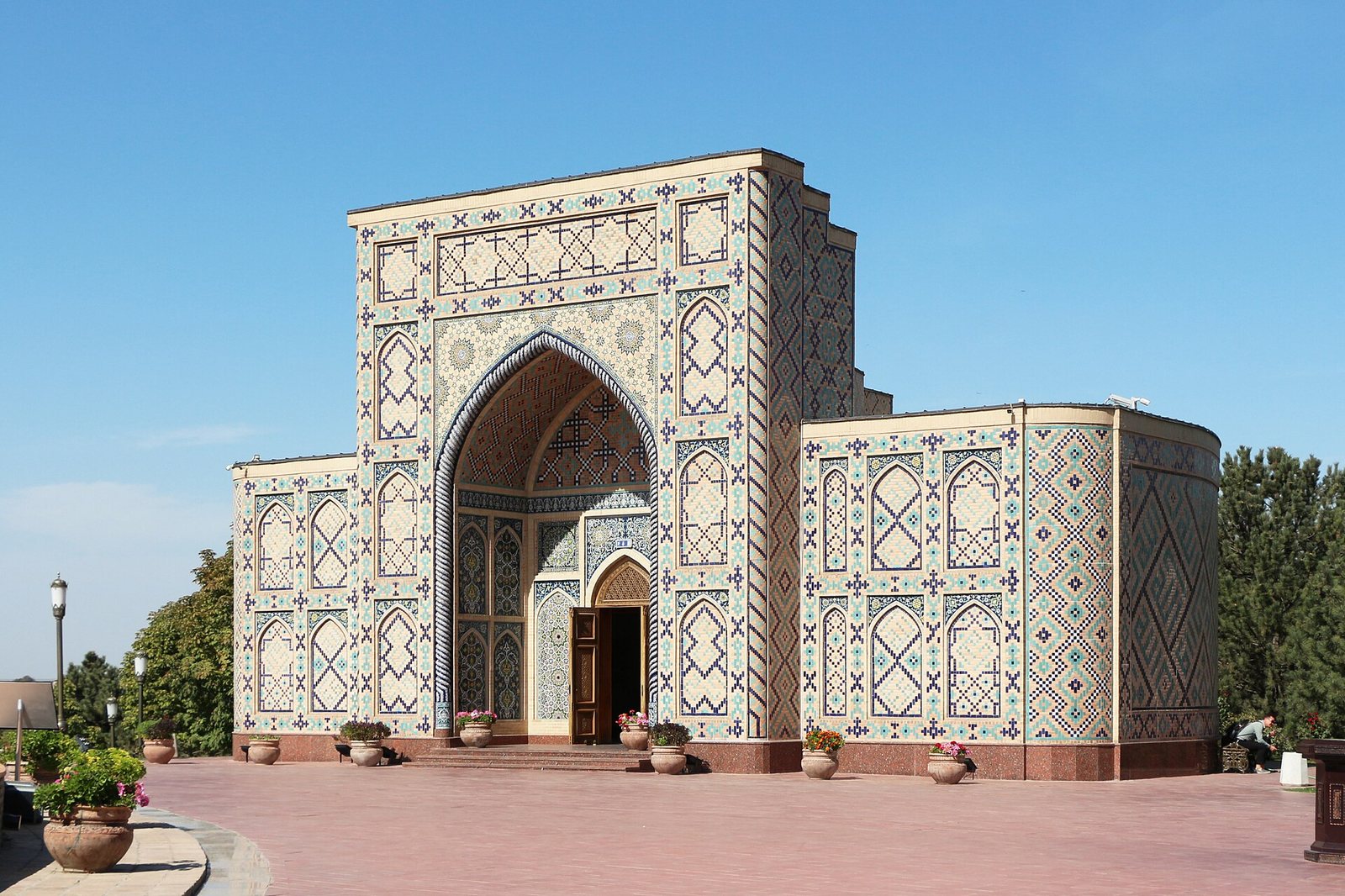
The Ulugh Beg Observatory shows the curved trench of a giant sextant used by the astronomer king to map the stars with remarkable accuracy. The Afrosiyob museum, on the site of the ancient city, holds seventh century wall paintings of ambassadors arriving at the court. At Konigil, a short ride out of town, you can watch silk paper being made by hand at a water mill. On Sundays, the market at Urgut in the hills is famous for old suzani embroidery.
Silk Road Samarkand
On the east side of the city, the large new Silk Road Samarkand complex has hotels, a recreated old town called the Eternal City, restaurants, a conference centre and evening shows. Some travellers love it as a comfortable base; others prefer to stay closer to the historic centre.
Food
Samarkand plov is cooked differently from Tashkent's, with the rice laid over the meat rather than mixed in. Try it at lunchtime, along with fresh non bread, shashlik and samsa from a tandoor oven. Evening meals in restaurants near the Registan or Gur-e-Amir often come with live music.
Where to stay
The area around Gur-e-Amir and the Registan is the most convenient, with family run guesthouses and mid-range hotels in walking distance of the main sights. The Silk Road Samarkand complex suits travellers who want resort style comfort.
Getting there and around
The high speed Afrosiyob train from Tashkent takes about two hours, and Samarkand airport has international and domestic flights. In town, the main sights are walkable, and ride hailing apps cover the rest. Buy a combined or individual ticket at each monument; prices are set officially and shown at the gate.
Questions about Samarkand
How many days do I need in Samarkand?
Two full days covers the Registan, Shah-i-Zinda, Gur-e-Amir, Bibi-Khanym and the observatory. Add a day for Konigil, Urgut market or a trip to Shahrisabz.
Can I visit Samarkand as a day trip from Tashkent?
It is possible on the early high speed train, but rushed. Staying at least one night lets you see the Registan lit up and visit Shah-i-Zinda in the soft afternoon light.
What should I wear at Samarkand's monuments?
Modest clothing with shoulders and knees covered. Women should carry a scarf for mosques and shrines such as Shah-i-Zinda.
Can I go inside the Registan madrasas?
Yes. One ticket covers the square's three madrasas, their courtyards and the gold painted mosque in the Tilya-Kori.
Facts checked . Fees, schedules and entry rules change, so always confirm the latest with the official source.