At a glance
- Best for
- Wandering an old town, crafts and evening atmosphere
- Airport
- Bukhara International (BHK)
- Time needed
- Two to three days
- Best season
- April to May and September to October
- Train from Samarkand
- About an hour and a half by high speed train
- Getting around
- On foot in the old town
Why visit Bukhara
For more than a thousand years Bukhara was one of the great centres of Islamic learning and trade, with hundreds of mosques and madrasas. Much of its historic centre survives, and because people still live, pray and trade within it, it feels like a town rather than a museum. It is compact, flat and best explored slowly on foot.
Lyabi-Hauz
The heart of the old town is Lyabi-Hauz, a pool shaded by ancient mulberry trees and framed by the Kukeldash Madrasa and the Nadir Divan-Beghi Madrasa, whose portal shows two phoenixes and a sun with a human face. Teahouses around the water serve shashlik and plov, and in the evening it is the place to be.
Poi Kalyan
The Kalyan Minaret has stood over Bukhara since the twelfth century. Legend says even Genghis Khan spared it. Beside it, the vast Kalyan Mosque and the working Mir-i-Arab Madrasa face each other across a square that is magical at sunset, when the brick turns gold.
The Ark and beyond
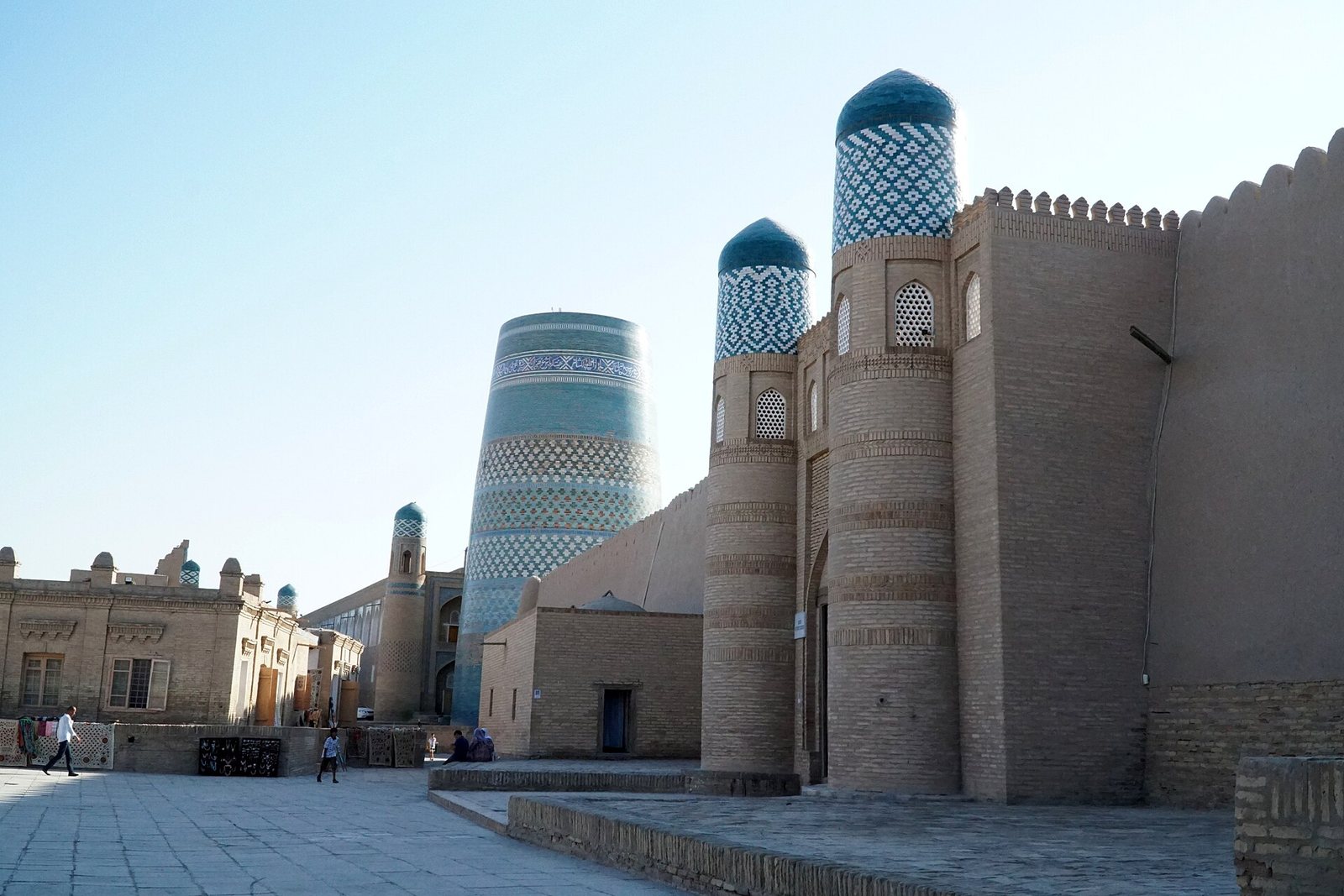
The Ark is the massive fortress where the emirs of Bukhara ruled until 1920, with museums inside its walls. Across the road, the Bolo Hauz Mosque has slender carved wooden columns reflected in a pool. A short walk away, the Samanid Mausoleum, built in the tenth century, shows how much beauty can be made from simple baked brick. Do not miss Chor Minor, a little gatehouse with four turquoise domed towers hidden in a residential lane.
The trading domes
Bukhara's medieval covered bazaars still trade. Each dome was once devoted to one trade, such as jewellers or money changers, and today they sell carpets, suzani, ceramics, miniatures and the famous stork shaped scissors made by local blacksmiths. Take your time, chat with the craftspeople and bargain politely.
Outside the old town
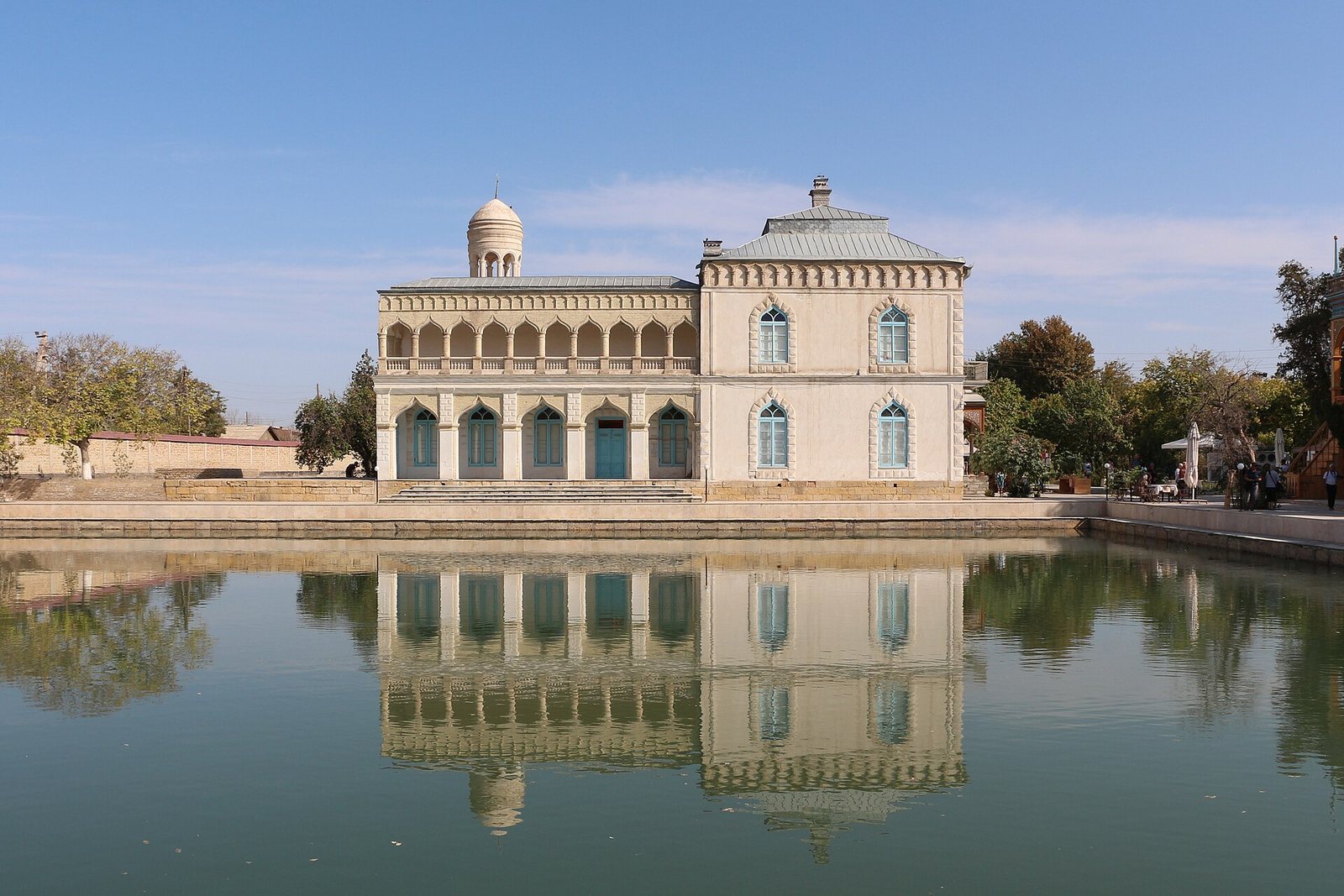
The Sitorai Mohi Hosa palace, the last emir's summer residence, mixes Russian and Uzbek styles with a light touch of eccentricity. The Bahauddin Naqshband complex is one of the most important Sufi shrines in Central Asia, and the Chor Bakr necropolis is a quiet city of tombs. Further afield, yurt camps near Aydarkul Lake in the Kyzylkum desert offer camel rides, starry skies and a swim.
Food
Bukhara is known for its own style of plov and for oshi sabo, a slow cooked dish made in clay pots. Try fresh bread from the tandoor, samsa and green tea in a teahouse by the pool. Several restaurants have rooftop terraces with views over the domes at sunset.
Where to stay
Stay inside or close to the old town. Bukhara has many boutique hotels in restored merchants' houses, with courtyards, carved wood and painted ceilings, as well as simple family guesthouses and hostels. All are within walking distance of Lyabi-Hauz.
Getting there and around
High speed trains link Bukhara with Samarkand and Tashkent, and the station is in Kagan, a short taxi ride from the centre. Bukhara airport has domestic and some international flights. Onward to Khiva, take the train or a long but scenic road trip across the desert with a licensed driver arranged through your hotel. In the old town, walk everywhere.
Questions about Bukhara
How many days do I need in Bukhara?
Two full days lets you see the main sights and enjoy the old town at an easy pace. Add a night in a desert yurt camp if you can.
Is Bukhara better than Samarkand?
They are different. Samarkand has grander monuments; Bukhara has a more complete, walkable old town and a gentler atmosphere. Most visitors see both.
How do I get from Bukhara to Khiva?
By train, which takes several hours, or by road across the Kyzylkum desert. Check current timetables, as services change by season.
Is Bukhara very hot in summer?
Yes. July and August days are extremely hot, so sightsee early and late and rest in the afternoon. Spring and autumn are far more comfortable.
Facts checked . Fees, schedules and entry rules change, so always confirm the latest with the official source.