At a glance
- Best for
- A walled old town, sunsets and desert fortresses
- Airport
- Urgench International (UGC), about forty minutes away
- Time needed
- One to two days
- Best season
- April to May and September to October
- Getting around
- On foot inside the walls
- Nearby
- The Ayaz Kala and Toprak Kala fortresses
Why visit Khiva
Khiva was the capital of a khanate that grew rich and feared on the caravan and slave trade until the Russians took it in 1873. The Itchan Kala was the first site in Uzbekistan listed by UNESCO, and it is small enough to cross on foot in minutes yet rich enough to fill two days. It is quieter than Samarkand or Bukhara and most rewarding if you stay overnight.
Inside the walls
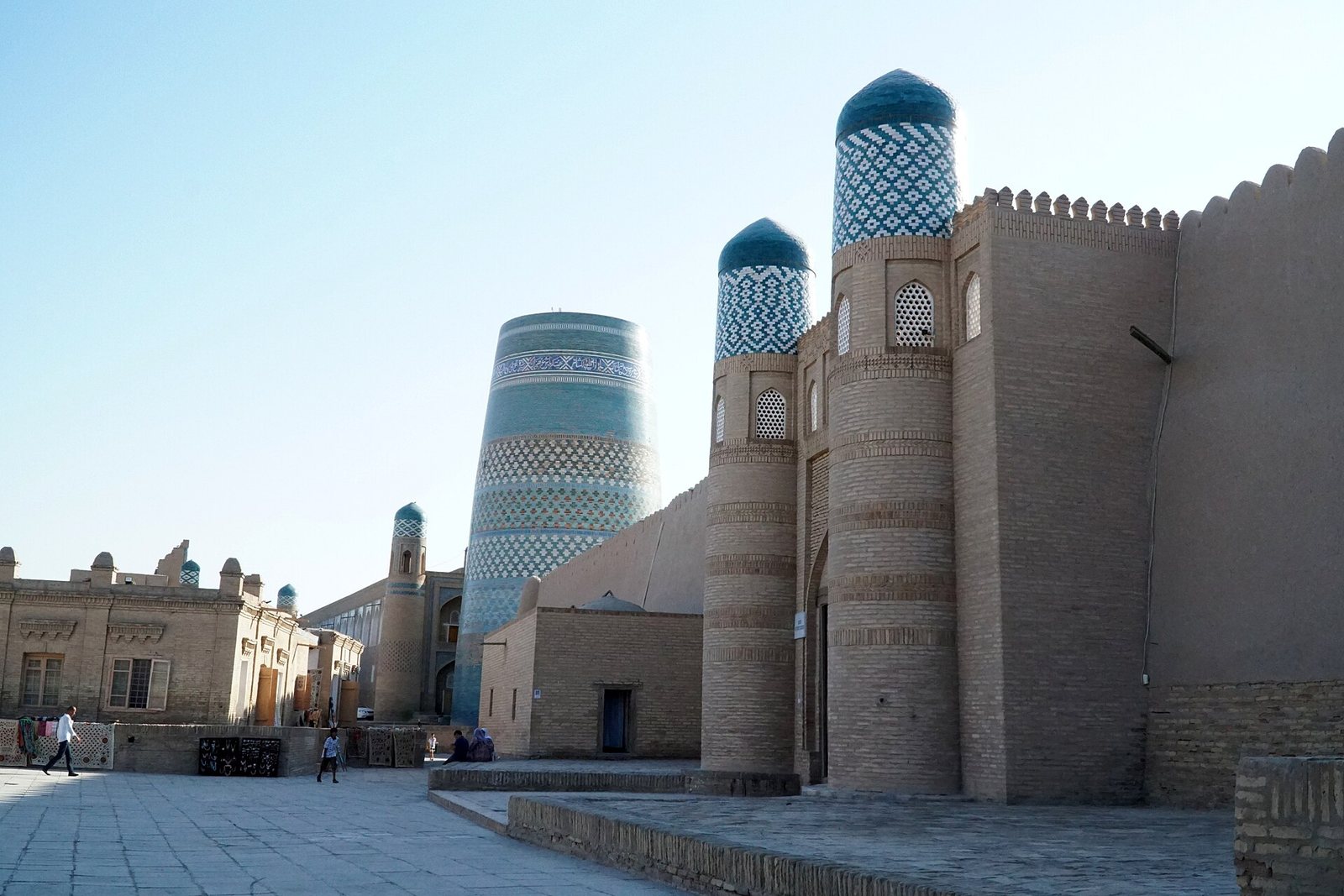
Enter through the West Gate, where tickets are sold, and the stubby, turquoise Kalta Minor Minaret greets you, left unfinished when its builder died. Nearby, the Kunya Ark was the khans' fortress, and its watchtower is the best spot in town at sunset. The Juma Mosque is a hushed forest of over two hundred carved wooden columns, some brought from older buildings. The Tash Hauli Palace has tiled courtyards and the khan's harem, and the Pakhlavan Makhmud Mausoleum honours a poet, philosopher and wrestler who became Khiva's patron saint.
Climb a minaret
The Islam Khodja Minaret is the tallest in Khiva, and climbing its narrow stairs rewards you with views over the domes and the desert beyond. You can also walk sections of the city walls for a different angle.
Crafts
Khiva is famous for woodcarving, and workshops around the old town carve doors, columns and Quran stands in the traditional style. A silk carpet workshop revives old Khorezm patterns with natural dyes, and you can watch the weavers at work.
Outside the walls
The outer town, the Dishan Kala, holds the Nurullabay Palace and the local bazaar. North of Khiva, in Karakalpakstan, the ruined desert fortresses of the ancient Khorezm kingdom, including Ayaz Kala and Toprak Kala, make an unforgettable day trip, and there are yurt camps for an overnight stay. Further still, the city of Nukus holds the Savitsky Museum, one of the world's great collections of Soviet avant garde art.
Food
Khorezm cooking is different from the rest of Uzbekistan. Try shivit oshi, bright green dill noodles with a meat stew, tukhum barak, egg filled dumplings, and fresh bread. Rooftop restaurants inside the walls serve dinner with sunset views.
Where to stay
Stay inside the Itchan Kala if you can, so you can walk the lanes at dawn and after dark when day visitors have gone. Options range from hotels in former madrasas to small family guesthouses. Hotels just outside the walls are larger and also walkable.
Getting there
Trains run to Khiva from Bukhara, Samarkand and Tashkent, and the town also links with Urgench, which has the airport and more train services. Most travellers fly back to Tashkent from Urgench at the end of the classic loop. Check current timetables and book ahead in busy seasons.
Practical tips
A single ticket bought at the West Gate covers most museums inside the walls; a few sights, like the minarets, charge extra. Cash is still important in Khiva, so bring enough som from a larger city. Summer is extremely hot, and winter is cold and very quiet.
Questions about Khiva
How many days do I need in Khiva?
One full day and two nights is ideal, so you can see the old town at sunset and dawn. Add a day for the desert fortresses.
Is Khiva worth the long trip?
Yes, for most visitors. It is the most complete walled town in Central Asia and makes a memorable end to the Silk Road route.
Can I use cards in Khiva?
Some hotels accept them, but many shops, cafés and guesthouses want cash. Bring enough som, as ATMs can be unreliable.
Should I stay inside the walls?
If you can. Being able to walk out at sunrise and after dark, when the crowds have gone, is the highlight of a stay.
Facts checked . Fees, schedules and entry rules change, so always confirm the latest with the official source.