At a glance
- Best for
- Live music, food, festivals, history and architecture
- Airport
- Louis Armstrong New Orleans International (MSY)
- Time needed
- Three to four days
- Best season
- February to May and October to November
- Getting around
- Walking, streetcars, buses and ride-hailing
- Good base for
- Swamp tours, plantation history sites and Cajun Country
Why go
New Orleans is the birthplace of jazz and still has live music every night of the week. Its food, from gumbo and jambalaya to po' boys and beignets, is a reason to visit on its own. Its architecture, with Creole cottages, shotgun houses and wrought iron balconies, feels more Caribbean than American. And its festivals, above all Mardi Gras, are among the most joyful anywhere.
Top things to do
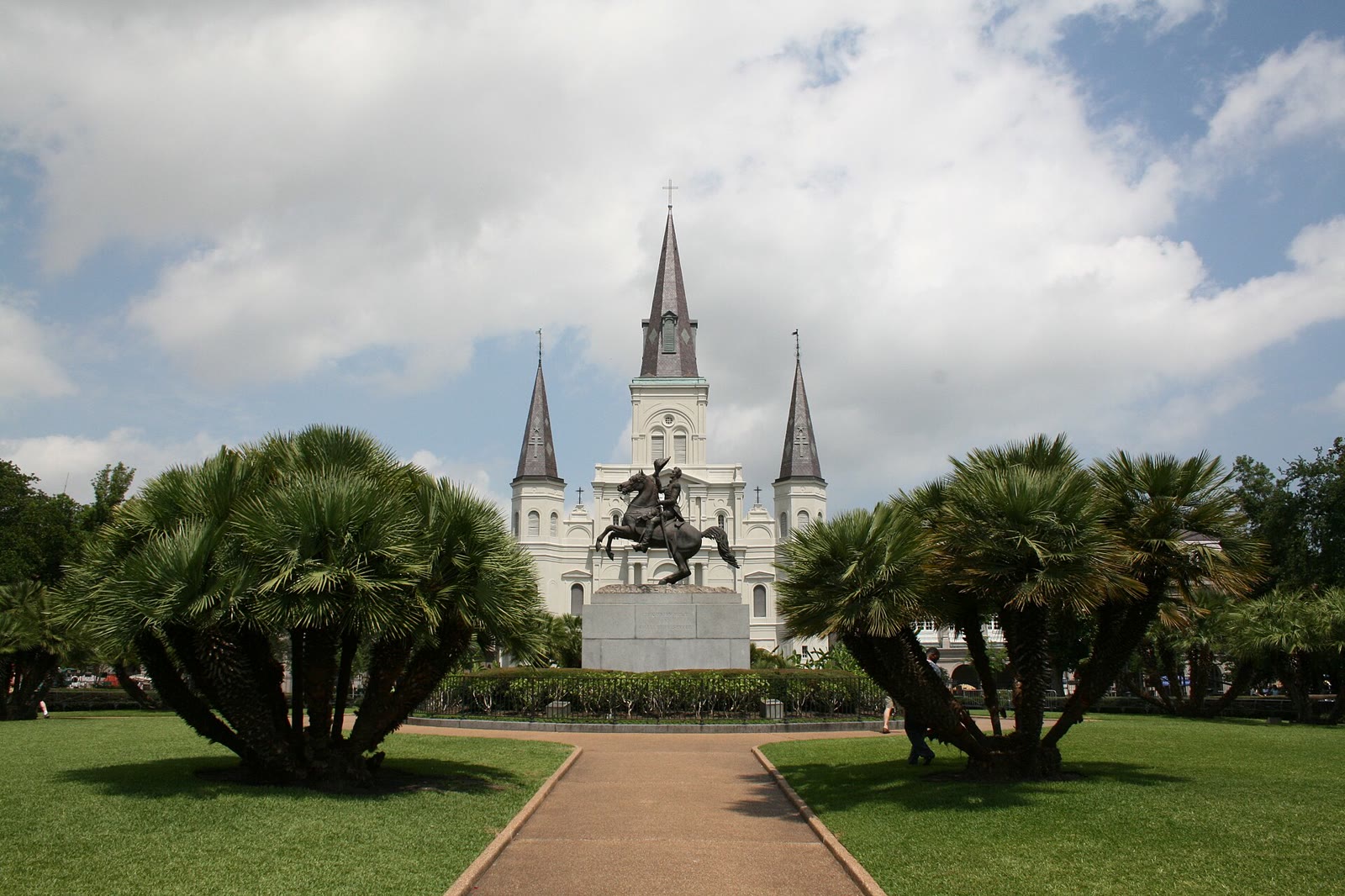
Begin in the **French Quarter**, the oldest neighbourhood, with **Jackson Square**, **St. Louis Cathedral** and the **French Market**. Have beignets and café au lait at **Café du Monde**. Walk Royal Street for galleries and antique shops and street performers. Bourbon Street is loud and crowded at night; see it once, then head somewhere better for music.
Hear traditional jazz at **Preservation Hall**, where short sets are played in a simple, historic room, then walk to **Frenchmen Street** in the Marigny, where clubs line the block and bands play from early evening. The **National WWII Museum** in the Warehouse District is one of the finest museums in the country and needs most of a day.
Ride the **St. Charles streetcar** through the **Garden District**, past oak trees and grand homes, and walk among the tombs of Lafayette Cemetery No. 1. **City Park** has huge live oaks, the New Orleans Museum of Art and its free sculpture garden. Outside the city, swamp tours and the boardwalks of the **Barataria Preserve** show the wetlands and their alligators.
Neighbourhoods
**Tremé** is one of the oldest African American neighbourhoods in the country, home of second line parades and brass band culture. The **Bywater** and **Marigny** are artsy and colourful. **Uptown** and **Magazine Street** have shops, cafés and restaurants that locals love.
Food
Try gumbo, jambalaya, red beans and rice (traditionally on Mondays), crawfish in spring, chargrilled oysters, muffulettas and po' boys. Creole fine dining at **Commander's Palace** or **Dooky Chase's** is a classic treat, and a jazz brunch is a local tradition. Our places to visit list has more ideas.
Festivals
**Mardi Gras** season runs from early January to Fat Tuesday, with parades in the final two weeks. The **New Orleans Jazz and Heritage Festival** fills two weekends in late April and early May. The **French Quarter Festival** in April is large and free. Hotels fill and prices rise during all of them, so book early.
Getting around
The French Quarter, Marigny and Warehouse District are walkable. Streetcars and buses are run by the RTA; use the Le Pass app or exact change. Ride-hailing is useful at night. From the airport, there is a public bus, but most visitors take a taxi or ride-hailing car.
Where to stay
The French Quarter puts you in the middle of everything, but rooms near Bourbon Street are noisy. The Marigny is close to music and calmer. The Garden District and Uptown are leafy and quieter.
Practical tips
Summer is very hot and humid, and the Atlantic hurricane season runs from June to November, peaking from August to October, so watch forecasts. Stick to busy, well-lit streets at night, use ride-hailing after dark, and keep a close eye on belongings in crowds. Use the free trip planner to time your visit around festivals.
Questions about New Orleans
When is the best time to visit New Orleans?
February to May and October to November have the most comfortable weather and many festivals. Summer is hot, humid and in hurricane season.
Is New Orleans safe for tourists?
Most visits are trouble free, but street crime is a real issue. Stay in busy areas, avoid walking alone late at night, and use ride-hailing after dark.
Can I drink alcohol on the street in New Orleans?
Drinking in plastic cups outdoors is allowed in much of the city, but glass containers are not. Local laws can change, so follow posted rules.
How many days do I need in New Orleans?
Three to four days covers the French Quarter, music, the Garden District and the WWII Museum.
Facts checked . Fees, schedules and entry rules change, so always confirm the latest with the official source.