At a glance
- Best for
- Free museums, history, monuments and politics
- Airports
- Washington Dulles (IAD), Reagan National (DCA) and Baltimore (BWI)
- Time needed
- Three to four days
- Best season
- Late March to June and September to November
- Getting around
- Metro, buses, bikes and walking
- Good base for
- Mount Vernon, Arlington, Annapolis and Baltimore
Why go
No other American city offers so much for free. The Smithsonian Institution runs more than a dozen museums on and around the Mall, plus the National Zoo, all without an entry charge. The monuments tell the story of the country's ideals and conflicts, and walking among them at night, when they are lit and quiet, is one of the great experiences of any US trip. The city is compact, green and easy to navigate.
Top things to do
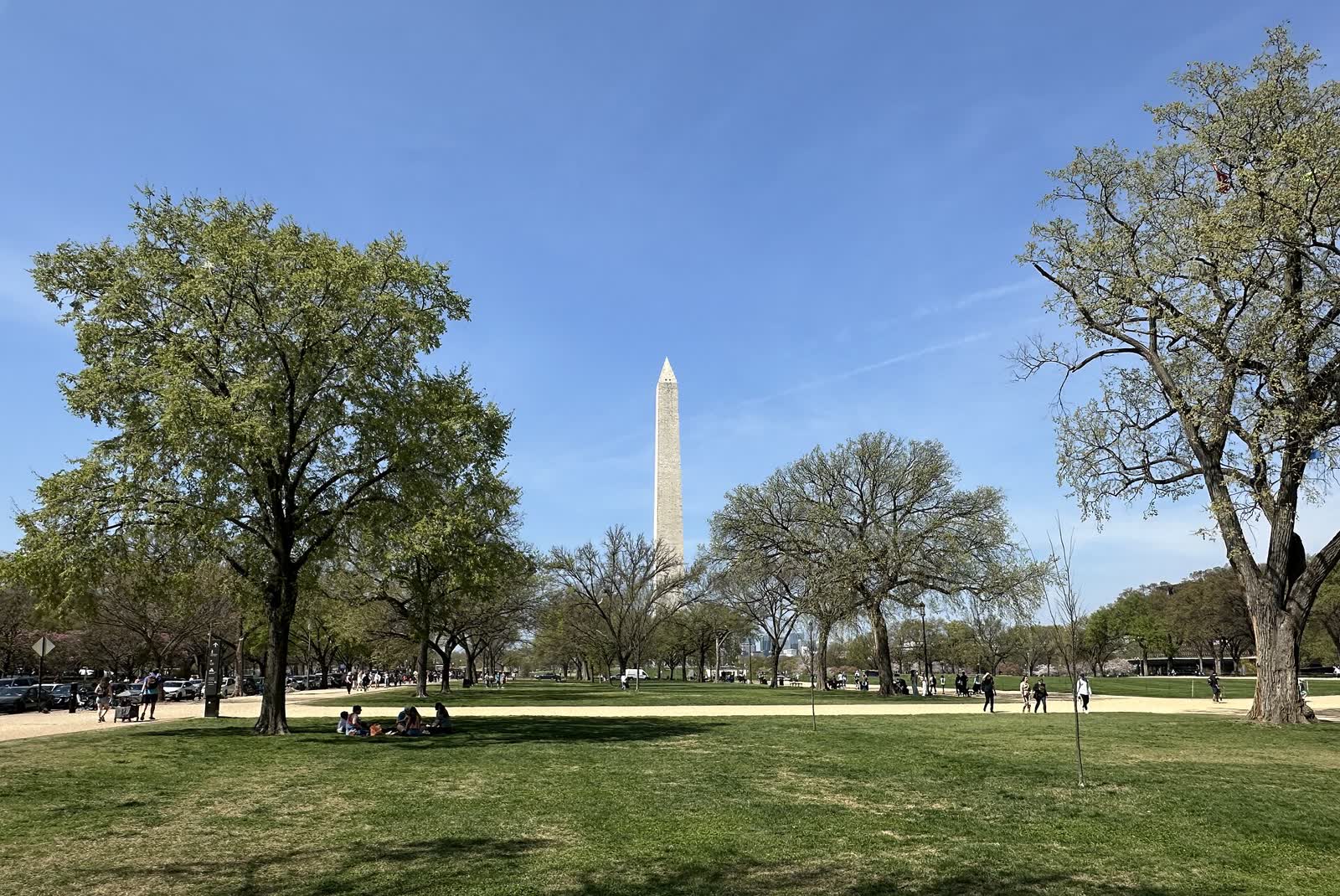
Walk the **National Mall** from the **United States Capitol** past the **Washington Monument** to the **Lincoln Memorial**, with stops at the World War II Memorial, the Vietnam Veterans Memorial and the Martin Luther King Jr. Memorial on the Tidal Basin. Free tours of the Capitol can be booked online through the official visitor centre, and the **Library of Congress** Jefferson Building next door has one of the most beautiful interiors in the country.
Among the museums, start with the **National Museum of African American History and Culture**, which often requires free timed passes; the **National Air and Space Museum**, with the Wright Flyer and Apollo spacecraft; and the **National Museum of Natural History**, home of the Hope Diamond. The **National Gallery of Art** holds the only painting by Leonardo da Vinci in the Americas. The **White House** can be seen from Lafayette Square and the Ellipse; public tours must be requested well in advance through a member of Congress or, for international visitors, their embassy.
Across the river in Virginia, **Arlington National Cemetery** includes the Tomb of the Unknown Soldier and the Kennedy graves. **Mount Vernon**, George Washington's estate, makes an easy half-day trip.
Neighbourhoods
**Georgetown** is the oldest neighbourhood, with Federal-style townhouses, the C and O Canal towpath and a riverside park. **Capitol Hill** has Eastern Market and quiet residential streets. **U Street** and **Shaw** are the historic heart of Black Washington, once known as Black Broadway, and now full of music venues and restaurants. **Adams Morgan** is lively at night, and the **Wharf** on the Southwest Waterfront has restaurants, concerts and the oldest continuously operating fish market in the country.
Food
Washington's local classic is the **half-smoke**, a spicy sausage served with chili at places like Ben's Chili Bowl on U Street. The region has one of the largest Ethiopian communities outside Africa, so injera and wat are easy to find. Food halls such as Union Market are good for groups who want different things.
Getting around
The **Metro** covers the city and links to Reagan National Airport and, on the Silver Line, to Dulles Airport. Pay with a contactless bank card, a phone wallet or a SmarTrip card. Buses and the Capital Bikeshare scheme fill the gaps. Much of the Mall is best seen on foot, but distances are larger than they look, so wear comfortable shoes and carry water in summer.
Where to stay
Downtown and Penn Quarter are closest to the museums. Dupont Circle and Logan Circle are leafy and full of restaurants. Georgetown is charming but has no Metro station. Hotels across the river in Arlington and Crystal City, Virginia, can be better value and are a short Metro ride away. Prices rise sharply during the cherry blossom season and major events.
Practical tips
Summers are hot and humid, so plan museum time for the afternoon. Security checks are standard at museums and government buildings, and some items are not allowed, so travel light. During government shutdowns, museums and some sites can close, so check before you go. The free trip planner can combine Washington with New York City, which is about three hours away by train.
Questions about Washington, D.C.
Are the museums in Washington, D.C. really free?
Yes. The Smithsonian museums, the National Gallery of Art and the National Zoo are free, though a few exhibitions and some private museums charge or need timed passes.
How many days do I need in Washington, D.C.?
Three days covers the monuments and the main museums. Add a fourth day for Arlington, Mount Vernon or the neighbourhoods.
Can I visit the White House?
Public tours exist but must be requested well in advance. US citizens apply through their member of Congress; international visitors should contact their embassy in Washington.
When do the cherry blossoms bloom?
Usually in late March or early April. The peak lasts only a few days and changes each year, so check the National Park Service bloom forecast.
Facts checked . Fees, schedules and entry rules change, so always confirm the latest with the official source.