At a glance
- Best for
- Island life, lagoon swims, culture
- Time needed
- Three to seven days, shaped by flights
- Getting there
- Funafuti International Airport, via Fiji
- When to visit
- May to October is drier and calmer
- Language
- Tuvaluan and English
- Good to know
- Sundays are quiet; most shops close
Getting your bearings
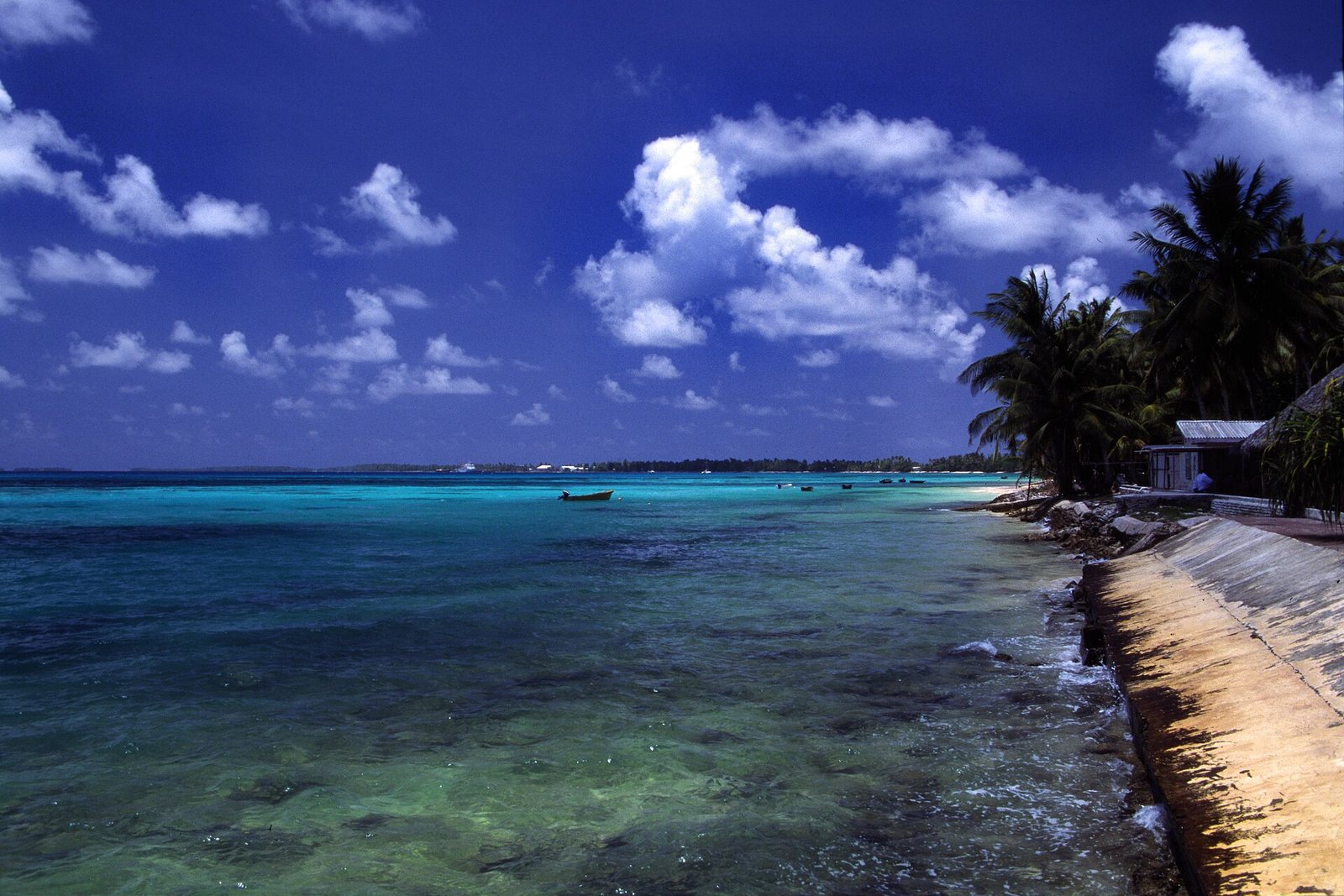
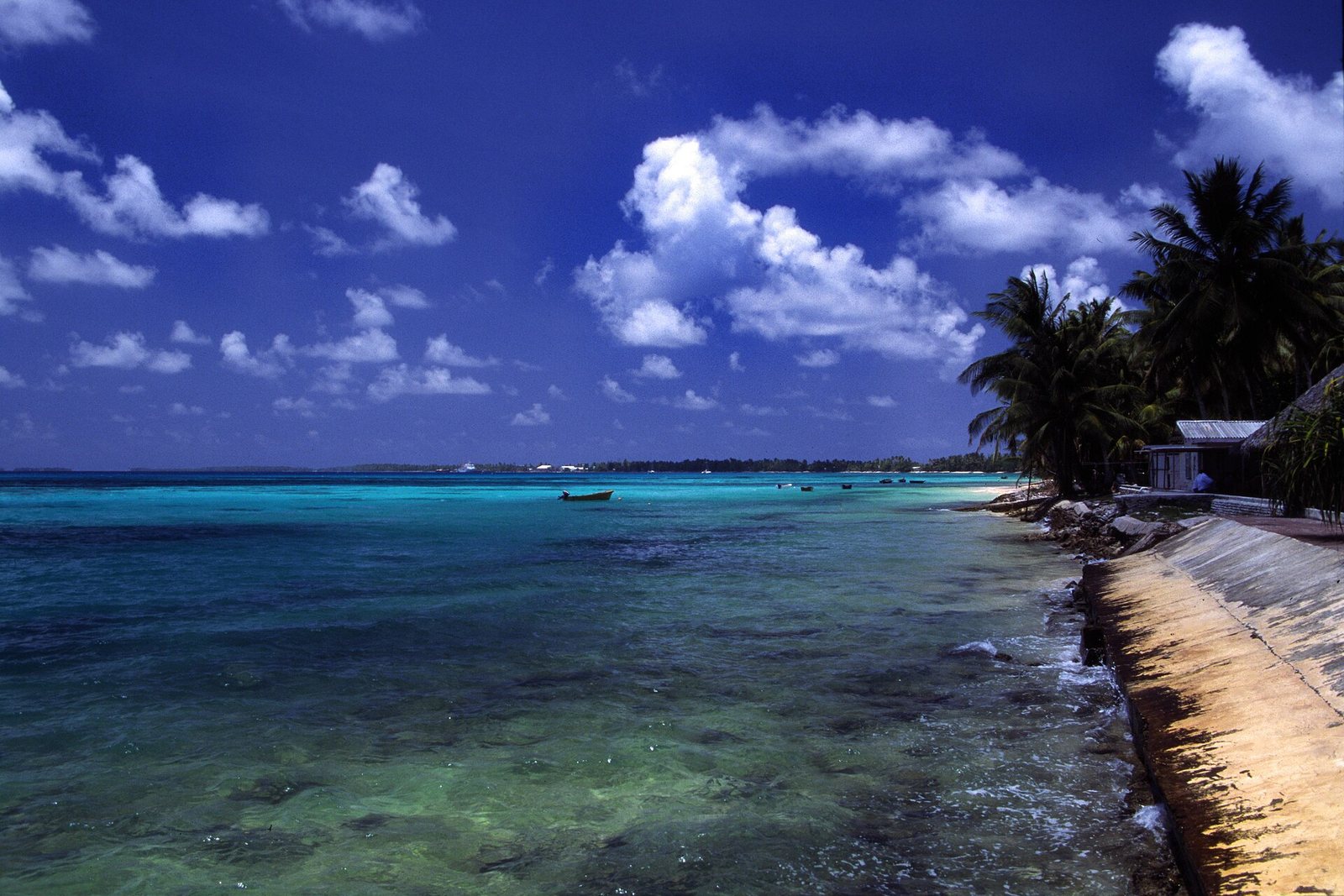
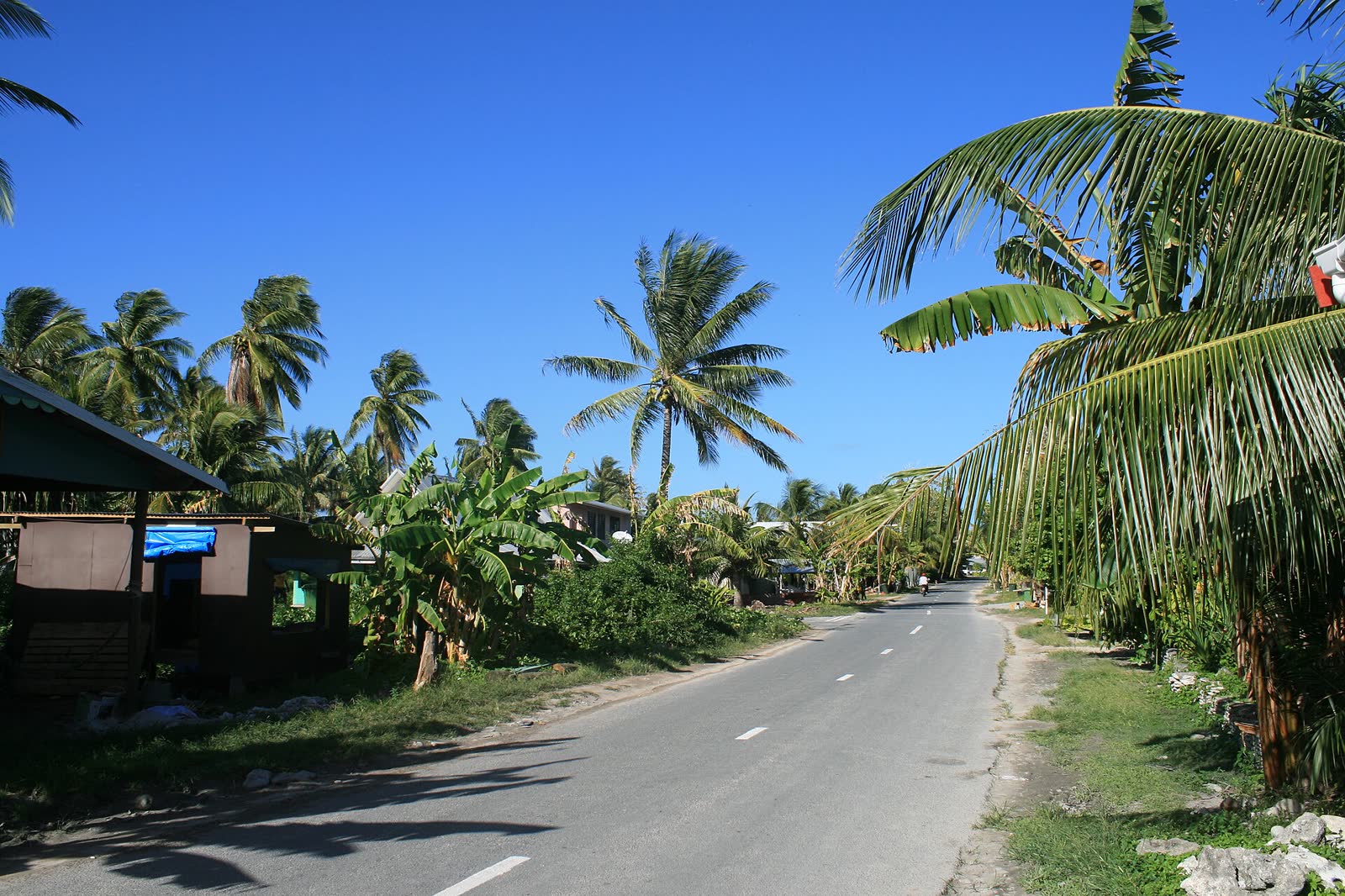
Fongafale is a long, curving strip of land, in places only a few dozen metres wide. The **lagoon** lies on the western side, calm and turquoise, and the **ocean side** faces the open Pacific, with surf breaking on the reef. One main road runs the length of the islet. The district around the airport is **Vaiaku**, where you will find the government building, the main hotel, the post office and most guesthouses. North of Vaiaku are the villages of **Fakaifou** and **Tengako**; to the south the islet narrows and grows quieter.
The runway
The airstrip takes up a large part of the land, and it is far more than a runway. On the few days a week when no plane is due, it becomes the town's park. In the late afternoon, people play **volleyball**, **football** and **te ano**, children ride bikes, couples stroll and some families even sleep on the cool tarmac on hot nights. A siren warns everyone to clear off before a flight lands. Joining the evening crowd here is one of the best ways to feel part of Funafuti.
The lagoon
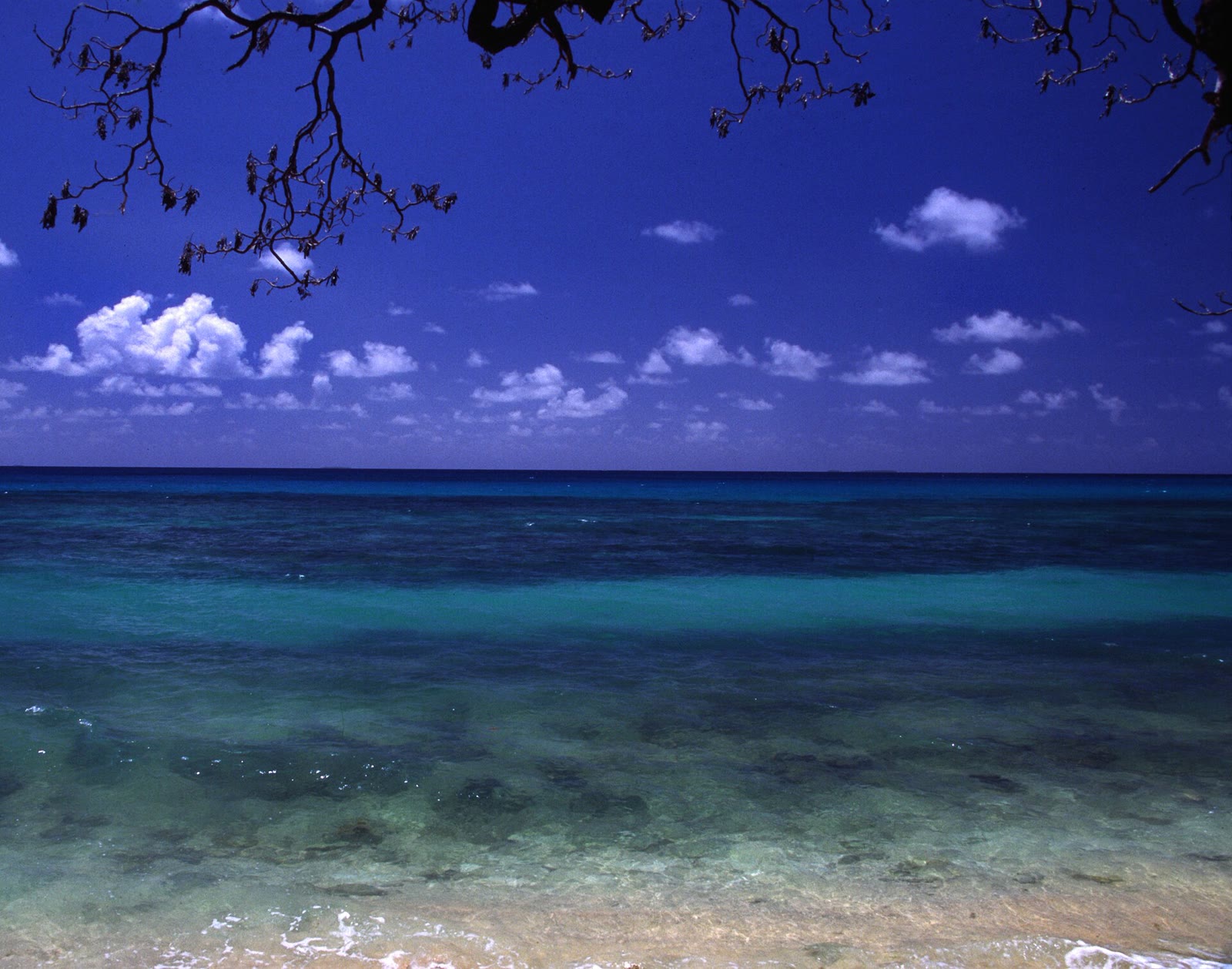
The **Funafuti lagoon** is the island's living room. Swim from the lagoon shore near Vaiaku, snorkel in the shallows or simply sit under a palm and watch fishing boats come and go. Sunsets over the water are superb. For the very best snorkelling, take a boat across to the Funafuti Conservation Area on the western rim.
Culture and community
Life in Funafuti revolves around church, family and the **maneapa**, the open sided community meeting house. Each outer island community living in Funafuti has its own maneapa, and celebrations there often include **fatele**, the high energy Tuvaluan dance in which singers and drummers speed up until the dancers can barely keep pace. If you are invited, go, dress modestly and accept food graciously. On Sunday, visit the **Fetu Ao Lima Church** of the Church of Tuvalu to hear remarkable singing.
Climate and the changing shore
Tuvalu is one of the countries most exposed to sea level rise, and you will see that story everywhere. During the highest **king tides**, usually early in the year, seawater can bubble up through the ground. Recent coastal projects have built new land and seawalls along the lagoon, and the old wartime **borrow pits** have been filled in. Locals are often glad to talk about it, and it gives real meaning to a visit.
Food and supplies
Food is simple. Expect fish, rice, chicken, breadfruit and **pulaka**, the swamp taro grown in deep pits. Small shops and a few Chinese restaurants sell filling plates, and the hotel restaurant offers lagoon views. Much food is imported, so shelves can run short before a ship arrives. Drink bottled or properly treated water, and try a fresh drinking coconut or sweet **kaleve**, coconut toddy.
Where to stay
Rooms are few. The **Funafuti Lagoon Hotel** sits by the water in Vaiaku, and a handful of guesthouses such as **Filamona Moonlight Hotel** and **Esfam Lodge** are close by. Book well ahead, especially around **Independence Day** on 1 October and when conferences are in town.
Getting around
Most visitors rent a **scooter** or a **bicycle** from their lodging. Traffic is light but drives on the left, helmets are sensible, and dogs can chase at night. Walking is pleasant in the early morning and evening, when the heat eases. Use the places finder to map stops.
Questions about Funafuti
How long should I spend in Funafuti?
Most people stay three to seven days, set by the flight schedule. That is enough for the lagoon, the runway evenings, a Conservation Area trip and some time to slow down.
Can I really walk on the runway?
Yes, outside flight times it is used as public space. Clear off promptly when the warning siren sounds before a plane arrives.
Is there a beach in Funafuti?
The lagoon shore has sandy stretches where you can swim. The finest beaches are on the islets of the Conservation Area and at Funafala, reached by boat.
Are shops open on Sunday?
Most are closed, as Sunday is a day for church and family. Stock up on Saturday and plan a quiet day.
Facts checked . Fees, schedules and entry rules change, so always confirm the latest with the official source.