At a glance
- Best for
- Matterhorn views, hiking, skiing and mountain dining
- Nearest airport
- Geneva (GVA) or Zurich (ZRH), about three and a half hours by train
- Time needed
- Two to four days
- Best season
- July to September for hiking, December to April for skiing
- Getting around
- Walking, electric taxis and buses, mountain railways and lifts
- Good base for
- Gornergrat, Matterhorn Glacier Paradise, Sunnegga and the Glacier Express
Why go
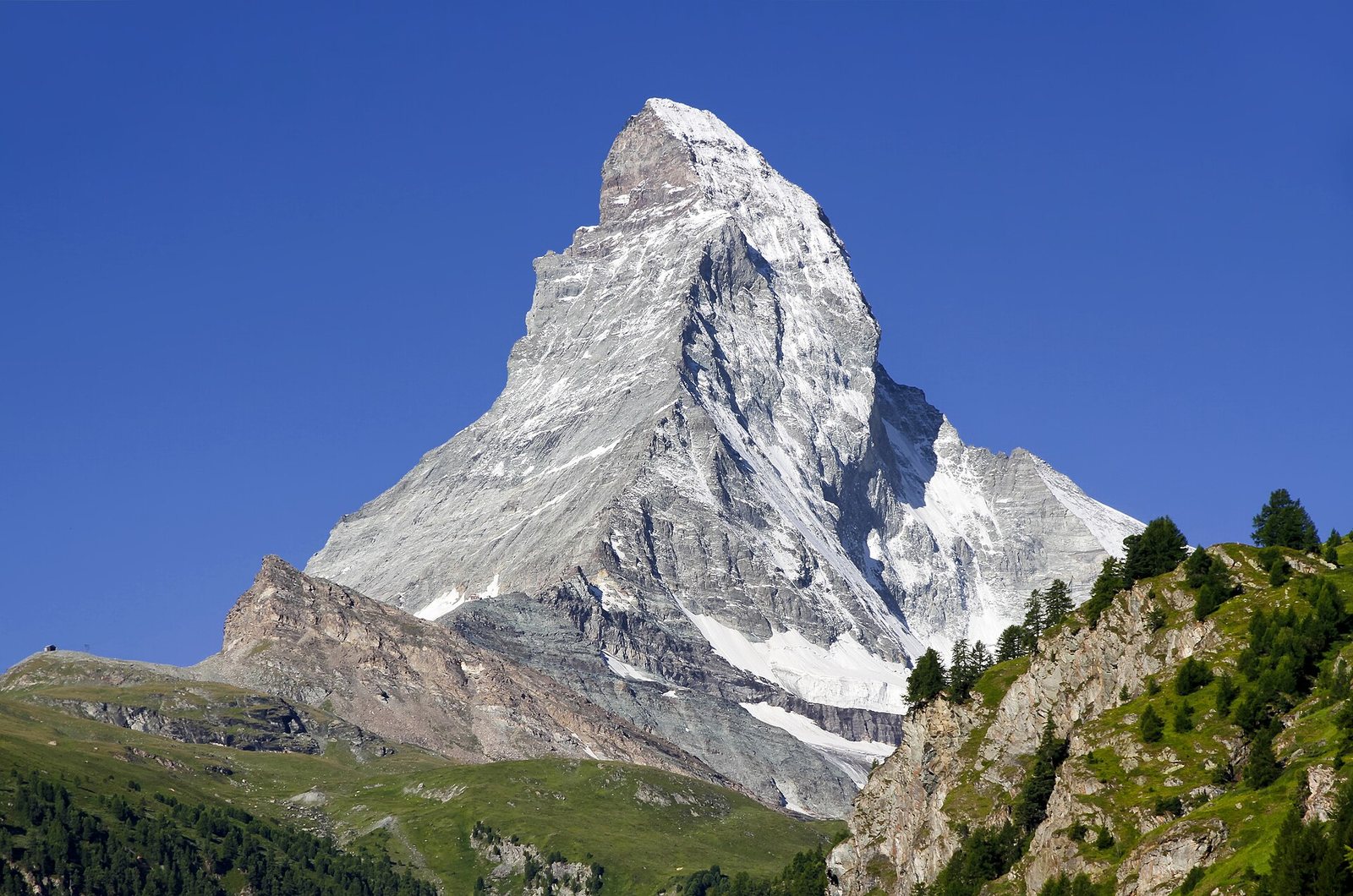
The Matterhorn's pyramid dominates every view in Zermatt, glowing pink at sunrise and white at noon. Around it lies a huge network of trails, ski slopes and mountain restaurants, with thirty-eight peaks over 4,000 metres nearby. The village has kept a strong mountain character, with traditional barns in the old quarter and a deep climbing history.
Getting there
Private cars are not allowed in Zermatt. Trains run from Visp or Brig up the valley to Zermatt station, and drivers park in Täsch and take the shuttle train. From Zurich or Geneva, allow about three and a half hours with a change in Visp. Zermatt is also one end of the **Glacier Express**, the slow, scenic panoramic train to St Moritz and Davos, which needs a seat reservation.
Gornergrat
The **Gornergrat railway**, an open-air cogwheel line opened in 1898, climbs from opposite the main station to a ridge at over 3,000 metres, with the Matterhorn on one side and the Gorner Glacier and Monte Rosa on the other. Get off at Riffelsee on the way down for the famous reflection of the Matterhorn in the lake, and walk a section back if the weather is good.
Matterhorn Glacier Paradise
Cable cars climb to the **Matterhorn Glacier Paradise** on the Klein Matterhorn, the highest cable car station in Europe at 3,883 metres. Up top are a viewing platform over Italy, France and Switzerland, a glacier palace carved in the ice, and summer skiing. The Matterhorn Alpine Crossing continues by lift to Cervinia in Italy. Altitude is high here: move slowly, drink water and come down if you feel unwell.
Sunnegga and the five lakes
The underground funicular to **Sunnegga** is quick and family friendly, with a small lake and playground. From Blauherd, the **Five Lakes Walk** passes Stellisee, Grindjisee, Grünsee, Moosjisee and Leisee, several with Matterhorn reflections. It is one of the best half-day hikes in the Alps.
The village
Wander the **Hinterdorf**, the old quarter of dark larch barns on stone stilts built to keep out mice. The **Matterhorn Museum** tells the dramatic story of the first ascent in 1865, and the **mountaineers' cemetery** is a sobering reminder of the mountain's dangers. Walk up to the **Gorner Gorge** for a wooden walkway over a roaring torrent.
Skiing
Zermatt has one of the highest and longest ski seasons in the Alps, with linked slopes into Cervinia. Snow is usually reliable from late November to April, and the glacier area is open in summer. Book lessons and ski hire in town; prices and pass options are on the official Zermatt Bergbahnen site.
Food
Mountain restaurants on the slopes are part of the experience, from simple huts serving rösti to destination dining with Matterhorn views. In the village, raclette, fondue and Valais specialities like dried beef and rye bread are everywhere, and Valais wines such as Fendant and Cornalin are worth trying.
Where to stay
Zermatt is expensive, but it has hostels and simple guesthouses alongside luxury hotels. Stay close to the station for convenience, or book a room with a Matterhorn view if your budget allows. Täsch, one stop down the valley, is often cheaper. Pair Zermatt with Geneva or the Glacier Express to make the long journey worthwhile.
Questions about Zermatt
Can you drive to Zermatt?
No. Zermatt is car-free. Park in Täsch and take the shuttle train, or simply arrive by train from Visp.
When can you see the Matterhorn?
On clear days, which are most common early in the morning. Clouds often build in the afternoon, so plan viewpoints early and check the live webcams.
Is Zermatt good for non-skiers?
Yes. Railways and lifts reach viewpoints all year, and summer hiking is outstanding. Winter walking trails and sledging runs are open too.
Gornergrat or Glacier Paradise?
Gornergrat gives the classic Matterhorn view and glacier panoramas; Glacier Paradise is higher, with snow and ice year-round. If you only do one, most first-timers choose Gornergrat.
Facts checked . Fees, schedules and entry rules change, so always confirm the latest with the official source.