At a glance
- Best for
- History, flamenco, tapas and festivals
- Airport
- Seville (SVQ), about twenty to thirty minutes by airport bus or taxi
- Time needed
- Two to three days
- Best season
- March to May and October to November
- Getting around
- Walking, trams, buses and bikes
- Good to know
- Summer afternoons are extremely hot
Why go
For centuries Seville was one of the richest cities in Europe, first under Moorish rule and then as the port that controlled trade with the Americas. That wealth left an extraordinary old town. The **Real Alcázar**, the **cathedral** and the **Archivo de Indias** together form a UNESCO World Heritage site, and the lanes around them are made for slow wandering.
What to see
The **Real Alcázar** is a royal palace still used by the Spanish royal family, with Mudéjar halls, carved plaster, tiled courtyards and fountain filled gardens. Book a timed ticket online. The **cathedral** is the largest Gothic church in the world and holds the tomb of Christopher Columbus; climb the ramps of the **Giralda**, once a minaret, for views over the rooftops. Then wander the **Barrio Santa Cruz**, the old Jewish quarter of tiny squares.
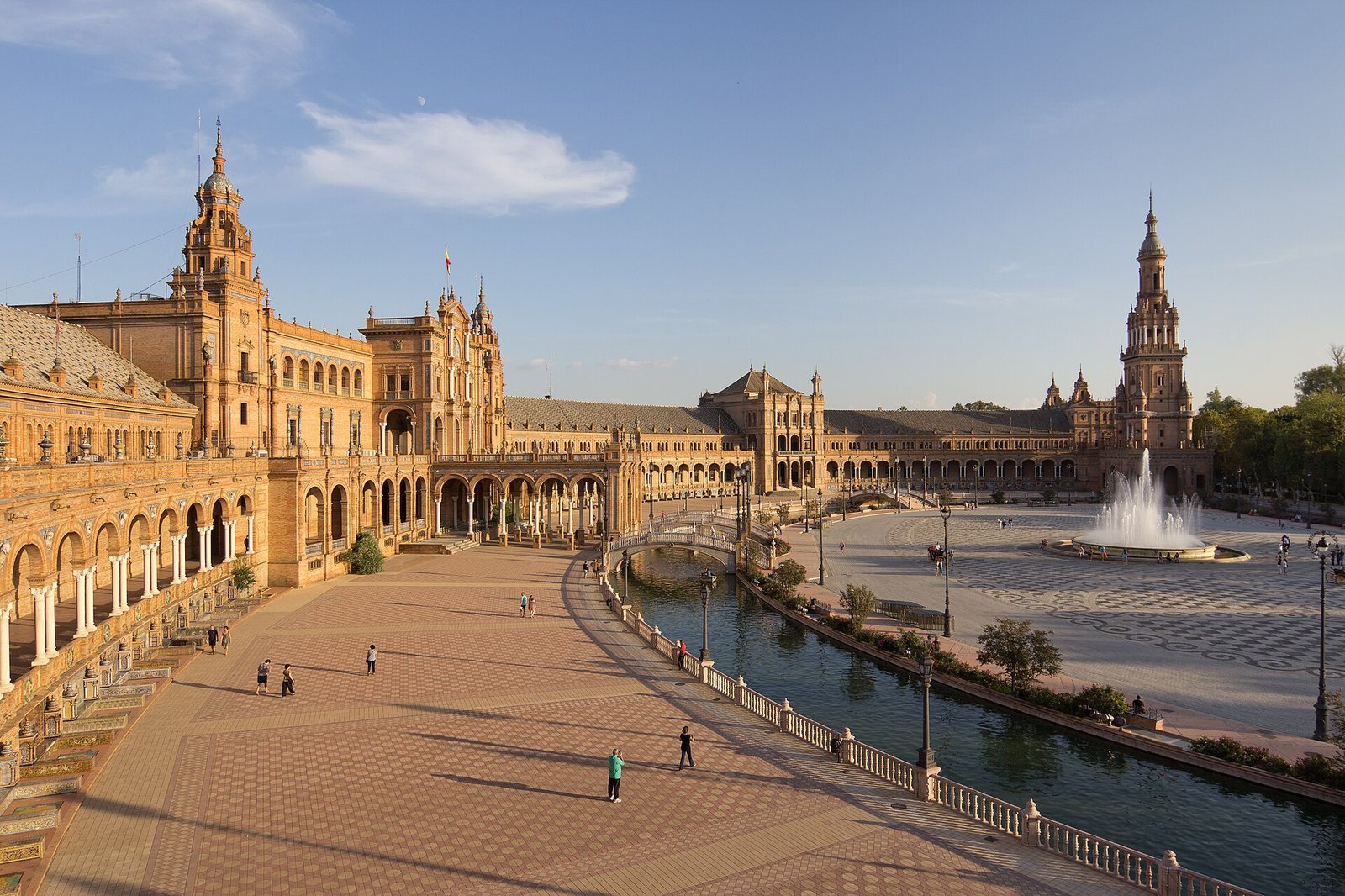
The **Plaza de España**, built for the 1929 exhibition, is a sweeping half circle of tiled alcoves, bridges and a canal, set in the leafy **Parque de María Luisa**. The **Setas de Sevilla**, a giant wooden canopy, has a rooftop walkway. Quieter palaces include **Casa de Pilatos** and **Palacio de las Dueñas**. Across the river, **Triana** is the old potters' and sailors' quarter, with ceramic workshops, a market built over a castle and a strong flamenco tradition.
Flamenco
Seville is one of the homes of flamenco. Small venues such as **Casa de la Memoria** and the **Flamenco Dance Museum** run nightly shows, and bars in Triana and the Alameda sometimes have spontaneous sessions. A show is a must on any first visit.
Festivals
**Semana Santa**, Holy Week, brings solemn processions with huge candlelit floats carried through the streets day and night. Two weeks later, the **Feria de Abril** is a week of flamenco dresses, horses and dancing sevillanas in striped casetas, many of them private. Both are unforgettable, but hotels fill and rates rise, so book months ahead.
Eating and drinking
Seville is a tapas city. Try **espinacas con garbanzos**, spinach with chickpeas, **salmorejo**, a thick cold tomato soup, **pringá**, slow cooked meats in a small roll, **cola de toro**, oxtail stew, fried fish, and Iberian ham. Drink chilled **manzanilla** or **fino** sherry from nearby Jerez and Sanlúcar, or a tinto de verano in summer. Areas such as the Alfalfa, San Lorenzo, the Alameda de Hércules and Triana have the best bars.
Coping with the heat
Seville is one of Europe's hottest cities. From June to September afternoons are often fierce, so sightsee early, retreat indoors or to a pool after lunch and head out again after dark, when the city comes alive. Drink plenty of water and wear a hat. Spring and late autumn are ideal.
Day trips
The Roman ruins of **Itálica** are just outside the city. **Córdoba**, with its Mezquita, is under an hour by high speed train. **Carmona** is a hilltop town close by, and **Jerez** and **Cádiz** make a fine day of sherry and sea. The white villages, including **Arcos de la Frontera** and **Ronda**, are best by tour or bus.
Where to stay
Stay in **Santa Cruz** or the **Arenal** to be near the sights, **Alfalfa** or **San Lorenzo** for local bars, or **Triana** for a neighbourhood feel across the river. Choose a hotel with good air conditioning, and a rooftop pool is a real bonus in summer.
See all our Spain destinations or use the free trip planner to link Seville with Granada and Córdoba.
Questions about Seville
How many days do I need in Seville?
Two full days covers the Alcázar, the cathedral, Plaza de España and Triana. Add a third for Córdoba or a slower pace.
When is the best time to visit Seville?
March to May and October to November. Spring brings orange blossom and festivals, while July and August are extremely hot.
Do I need to book the Alcázar in advance?
Yes, booking a timed slot online is strongly recommended, especially in spring and at weekends.
Can I visit the Feria de Abril as a tourist?
Yes. The streets and public casetas are open to all, though many casetas are private. Go in the evening and dress smartly.
Facts checked . Fees, schedules and entry rules change, so always confirm the latest with the official source.