At a glance
- Best for
- The Alhambra, history, tapas and mountains
- Airport
- Granada (GRX) for domestic flights, or Málaga (AGP) about ninety minutes away by bus
- Time needed
- Two to three days
- Best season
- March to June and September to November
- Getting around
- Walking and small city buses
- Good to know
- Alhambra tickets sell out weeks ahead
Why go
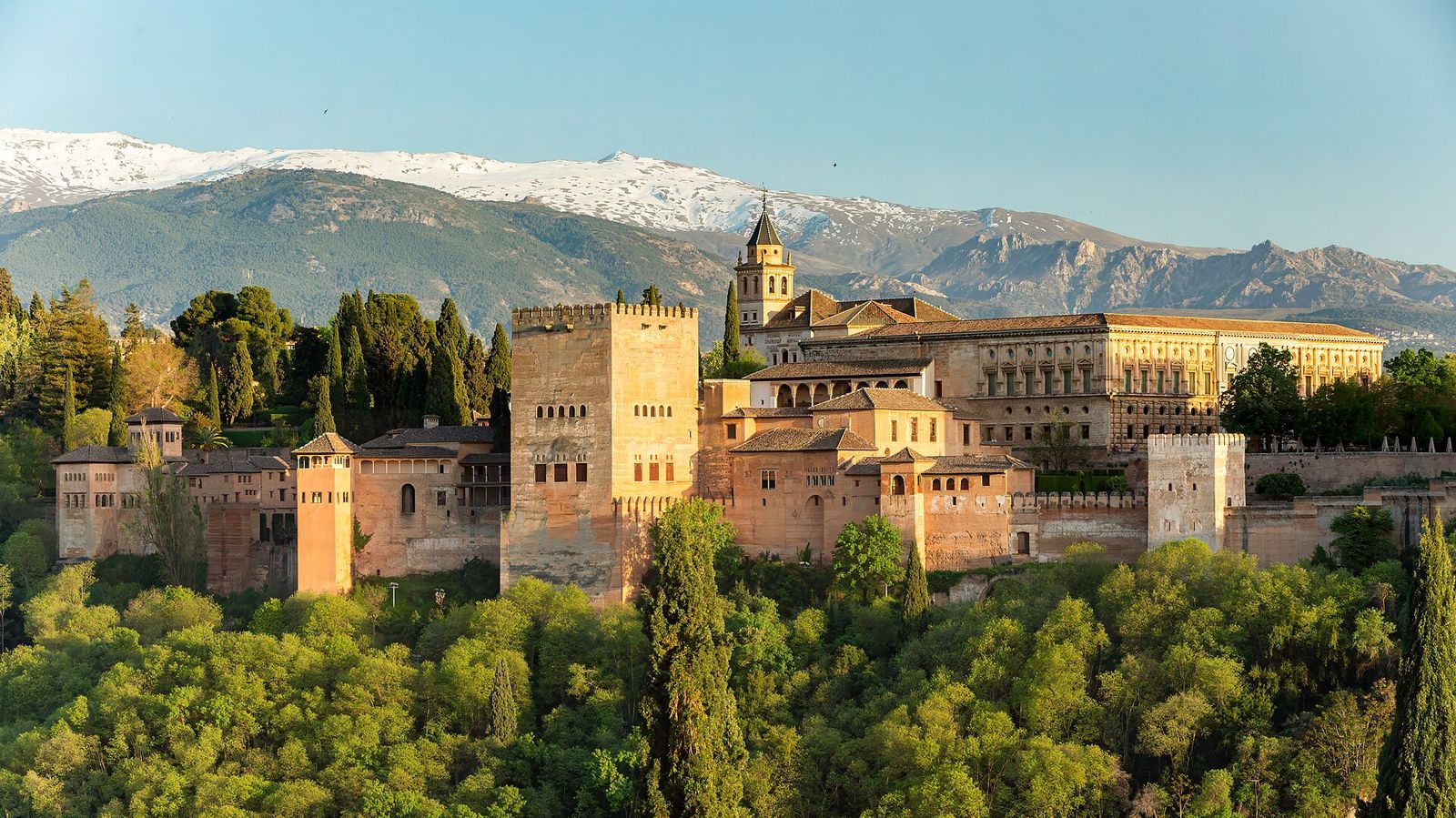
For more than two centuries, until 1492, Granada was the capital of the Nasrid kingdom, the last Muslim state on the Iberian Peninsula. Its rulers built the **Alhambra**, a fortress and palace city of carved stucco, tiled walls, pools and gardens. The Catholic Monarchs, Isabella and Ferdinand, then made the city their own, and they are buried here. The mix of Moorish, Jewish, Christian and Roma history gives Granada its unique feel.
The Alhambra
The Alhambra has four main parts: the **Nasrid Palaces**, with the Court of the Lions and the Hall of the Ambassadors, the **Alcazaba** fortress, the **Palace of Charles V** and the **Generalife** summer gardens. General tickets include a fixed entry time for the Nasrid Palaces, and you must arrive on time or lose that part of the visit. Tickets are released in advance on the official site and sell out quickly, especially in spring and autumn, so book as soon as your dates are set and buy only through official channels or licensed tour operators. Allow at least three hours, and bring your passport or ID, as tickets are personal.
The Albaicín and Sacromonte
The **Albaicín**, a UNESCO site along with the Alhambra, climbs the hill opposite in a tangle of cobbled lanes and carmenes, walled houses with gardens. Walk along the **Carrera del Darro** by the river, visit the eleventh century Arab baths at **El Bañuelo**, sip mint tea on Calle Calderería Nueva and watch sunset from the **Mirador de San Nicolás**, or the quieter **Mirador de San Cristóbal**. Above it, **Sacromonte** is the cave quarter where Granada's Roma community developed zambra flamenco; see a show in a cave and visit the **Sacromonte Caves Museum**.
The city centre
The **Royal Chapel** holds the tombs of Isabella and Ferdinand, next to the white Renaissance **cathedral**. The **Alcaicería** lanes recall the old silk market, and **Plaza Bib Rambla** is a pleasant square for churros. The **Realejo**, the old Jewish quarter, has street art and good bars. Families enjoy the hands on **Parque de las Ciencias**.
Free tapas
Granada keeps alive the tradition of a free tapa with every drink. Order a caña or a glass of wine and a small plate arrives, often getting more generous with each round. **Calle Navas**, the area around **Plaza Nueva** and the **Realejo** are good for a tapas crawl. Try **habas con jamón**, broad beans with ham, **tortilla del Sacromonte**, fried fish, and **piononos**, small cream topped cakes from nearby Santa Fe.
Mountains and villages
The **Sierra Nevada** rises behind the city, with Europe's southernmost ski resort in winter and high hiking in summer. To the south, the **Alpujarras** are a string of white villages with flat roofs and chimneys, such as Pampaneira, Bubión and Capileira, linked by mule tracks and walking trails. The coast of the Costa Tropical is about an hour away.
Where to stay
The **Albaicín** is atmospheric but steep, with cobbles that are hard work with luggage. The **centre** around Plaza Nueva and the cathedral is flat and convenient. The **Realejo** is lively and local. Staying near the Alhambra itself is quiet but far from the bars.
Getting around
The centre is walkable, and small minibuses climb to the Alhambra, the Albaicín and Sacromonte. Granada has a high speed train link to Madrid and good buses to Málaga, Seville and Córdoba.
See all our Spain destinations or use the free trip planner to link Granada with Seville.
Questions about Granada
What if the Alhambra is sold out?
Check the official site regularly for released tickets, look at night visits and the Alhambra card, or book a licensed guided tour. Avoid resellers outside official channels.
How many days do I need in Granada?
Two days covers the Alhambra, the Albaicín and Sacromonte. Add a day for the Alpujarras or the Sierra Nevada.
Are the tapas really free in Granada?
Yes, most traditional bars serve a tapa with each drink. You pay only for the drinks, so it is a great value way to eat.
Is the Albaicín safe at night?
Generally yes, but the lanes are dark and maze like. Stay on busier routes, avoid flashing phones and take a taxi or minibus back if you are unsure.
Can I visit Granada as a day trip?
It is possible from Málaga or Seville, but an overnight stay is far better and lets you see the Albaicín at sunset.
Facts checked . Fees, schedules and entry rules change, so always confirm the latest with the official source.