At a glance
- Best for
- Art, food, nightlife and day trips
- Airport
- Madrid Barajas (MAD), about twenty to forty minutes by metro, train or express bus
- Time needed
- Three to four days
- Best season
- April to June and September to November
- Getting around
- Walking, metro, buses and Cercanías trains
- Good to know
- Dinner starts late and August is hot and half shut
Why go
Madrid is the place to understand Spain's art and its love of life outdoors. The Paseo del Arte holds the **Prado**, with Velázquez's Las Meninas and Goya's black paintings, the **Reina Sofía**, home of Picasso's Guernica, and the **Thyssen Bornemisza**, which fills the gaps from early Italian painting to pop art. Between visits you can row a boat in **Retiro Park**, a UNESCO listed landscape together with the Paseo del Prado, and finish the day with tapas and vermouth in a crowded bar.
Neighbourhoods to know
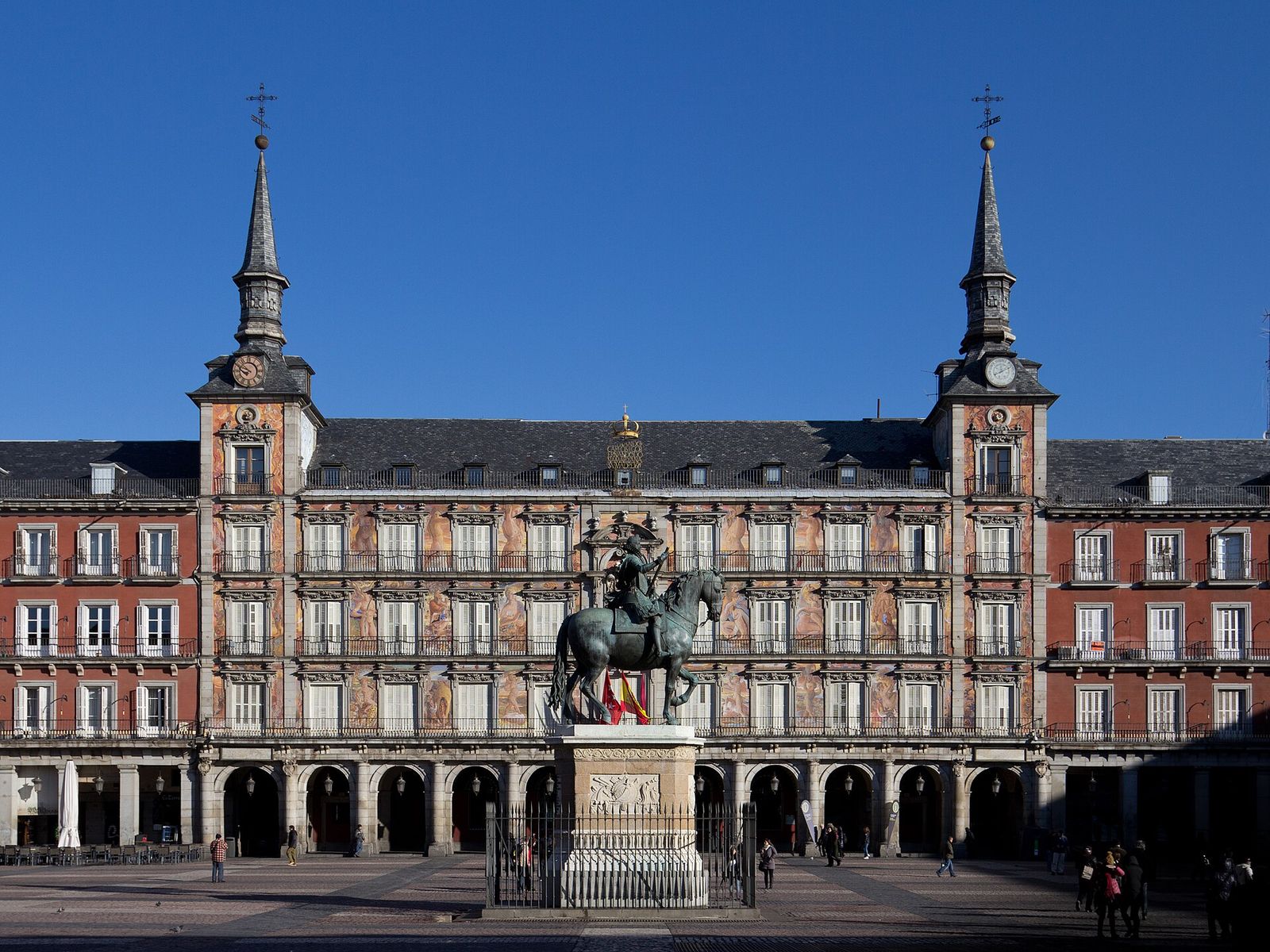
**Sol and the Austrias** form the historic core around Puerta del Sol and the arcaded **Plaza Mayor**, with the **Royal Palace** and **Almudena Cathedral** a short walk west. **La Latina** is the tapas heart, especially Calle Cava Baja, and hosts the **Rastro** flea market on Sunday mornings. **Barrio de las Letras** was home to Cervantes and Lope de Vega and sits right by the museums. **Malasaña** and **Chueca** are young, creative and lively at night, while **Lavapiés** is the city's most multicultural quarter. **Salamanca** is upmarket shopping, and **Chamberí** shows everyday local life.
What to see and do
Tour the Royal Palace, one of the largest in Europe, and watch the changing of the guard on the first Wednesday of most months. Walk Gran Vía for its early twentieth century skyline and catch sunset at the **Templo de Debod**, a real Egyptian temple gifted to Spain. Football fans tour the **Santiago Bernabéu**, Real Madrid's home. Quieter gems include the painter's house at **Museo Sorolla**, the **Cerralbo Museum** and the arts centre at **Matadero**. In May, the **San Isidro** festival brings traditional dress and free concerts; in summer, the neighbourhood fiestas of **San Cayetano, San Lorenzo and La Paloma** take over La Latina and Lavapiés.
Eating and drinking
Madrid eats late. Lunch runs from about two, dinner from nine, and many people graze on tapas instead. Try **cocido madrileño**, a chickpea and meat stew served in courses, the **bocadillo de calamares**, a squid sandwich near Plaza Mayor, **huevos rotos**, **callos** and **churros with chocolate**. The **menú del día** at lunchtime is the best value meal in the city. Markets such as **San Miguel** are pretty but touristy; **San Fernando** in Lavapiés and **Antón Martín** feel more local.
Day trips
Fast trains make Madrid a superb base. **Toledo**, a walled city of churches, synagogues and mosques, is about half an hour away. **Segovia** has a Roman aqueduct and a fairytale Alcázar. **El Escorial**, the vast monastery palace of Philip II, and the university city of **Alcalá de Henares**, birthplace of Cervantes, are reached by local train. **Ávila** has complete medieval walls.
Where to stay
For a first visit, stay around **Sol, Ópera or Barrio de las Letras** to walk everywhere. **Malasaña** and **Chueca** suit night owls, **Salamanca** and **Retiro** are calmer and more polished, and **Chamberí** feels residential. Rooms facing the street can be noisy late, so ask for an interior room if you sleep lightly.
Getting around
The metro is clean, safe and covers the whole city, including the airport. Buy a rechargeable public transport card at any station. Cercanías trains link the airport, Atocha and Chamartín stations and the suburbs. The centre is flat enough to walk, and taxis and ride hailing apps are easy. Pickpockets work the metro, Sol and the Rastro, so keep phones out of back pockets.
See all our Spain destinations, or use the free trip planner to fit Madrid into a wider route.
Questions about Madrid
How many days do I need in Madrid?
Three days covers the museums, the palace, Retiro and the tapas neighbourhoods. Add a day or two for Toledo and Segovia.
Which Madrid museum should I choose if I only have time for one?
The Prado, for Velázquez and Goya. Book a timed ticket online and go early or in the last two hours, when entry is often free; check the official site for current free hours.
Is Madrid too hot in summer?
July and August often bring very hot afternoons, and many locals leave in August. Sightsee in the morning, rest after lunch and go out again in the evening, as madrileños do.
Is Madrid safe at night?
Yes, the centre stays busy late and feels safe. Watch for pickpockets on the metro and around Sol, Gran Vía and the Rastro.
Facts checked . Fees, schedules and entry rules change, so always confirm the latest with the official source.