At a glance
- Best for
- Snorkelling, turtles and coastal drives
- Gateway
- São Tomé city, about an hour away
- Time needed
- One to three nights
- Best season
- June to September for dry roads, October to March for turtles
- Getting there
- Shared taxi or a driver arranged locally
- Main towns
- Guadalupe, Neves and Santa Catarina
Why go
This is the island's most accessible stretch of coast and, for many visitors, its most beautiful. The road west from the capital passes through the old plantation town of Guadalupe, dips down to bays fringed with palms and baobabs, and climbs along sea cliffs where the forest falls straight into the Atlantic. Everything is close enough to combine with a stay in the city, yet it feels far from it.
The highlights
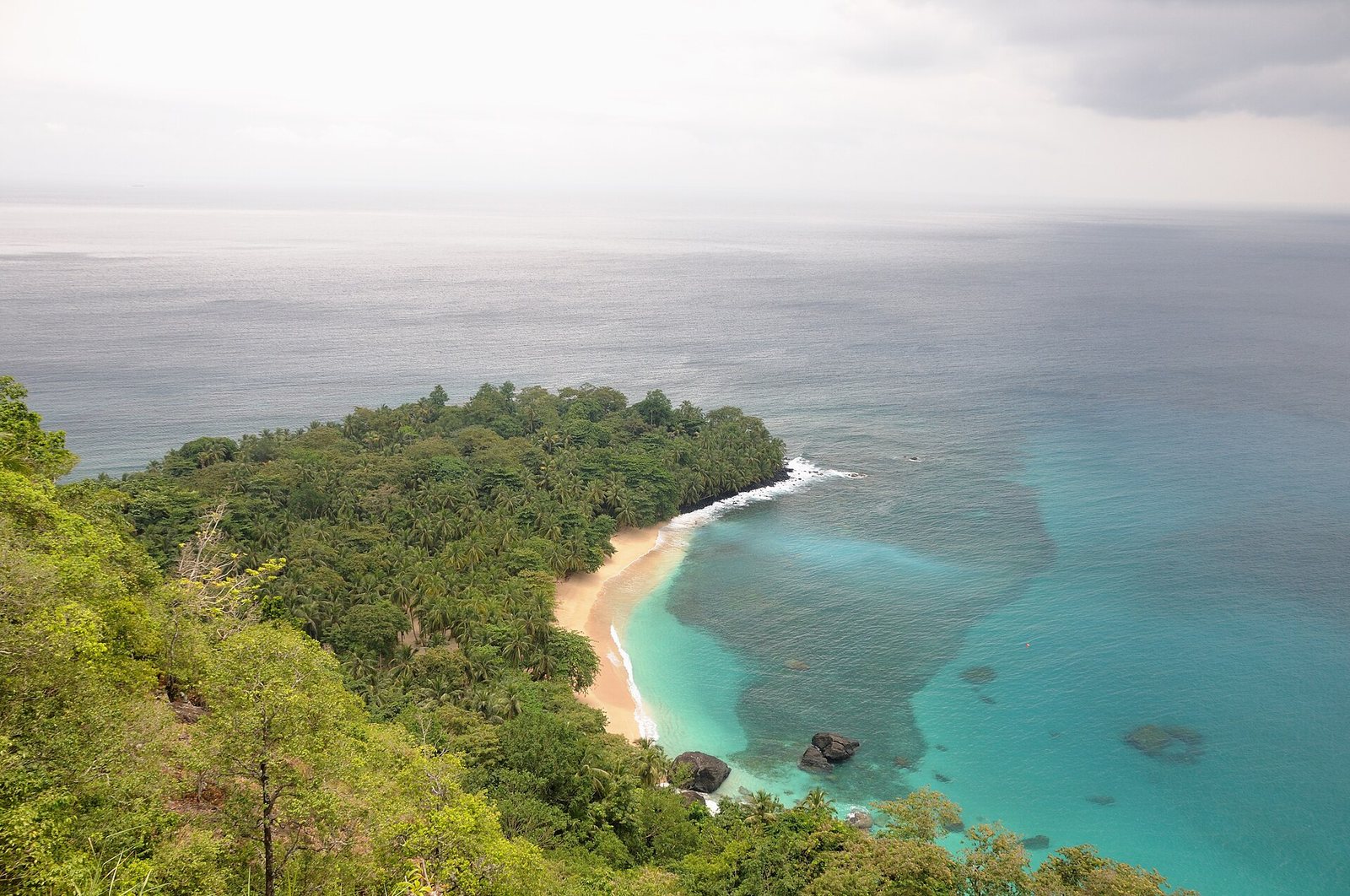
**Lagoa Azul** is the classic stop: a sheltered turquoise bay with clear water, rocks for snorkelling and huge baobab trees on the headland. Come in the morning when the light is soft. Close by, **Praia dos Tamarindos** near Morro Peixe is a wide golden beach shaded by tamarind trees, and **Praia Diogo Nunes** is a sheltered cove where local families swim at weekends.
At **Morro Peixe**, the community turtle project known as Tatô runs night walks in the nesting season, roughly October to March, when green, olive ridley, hawksbill and leatherback turtles come ashore. Going with the project supports conservation and local guides.
Inland from Guadalupe, **Roça Agostinho Neto** is one of the island's grandest plantations, with a long avenue rising to the ruined hospital. It is still home to families, so ask before taking photos and consider buying a drink or a guide's time.
Neves and the end of the road
**Neves** is the island's second port, a busy fishing town and home of **Rosema**, the local beer everyone drinks. The harbour is a lively place for grilled fish at lunchtime. Past Neves the road narrows and winds along cliffs to the short **Santa Catarina tunnel**, cut through a headland, and the village of Santa Catarina. Beyond, the west coast becomes rough tracks, so this is where most trips turn back.
Where to stay
The best known base is **Mucumbli** at Ponta Figo, wooden bungalows on a cliff with a terrace restaurant and ocean views. Small guesthouses and homestays operate in and around Neves and Morro Peixe. Many travellers simply visit as a day trip from the capital.
Getting there and around
Shared taxis run from the capital to Guadalupe and Neves, but many visitors hire a driver for the day through their hotel so they can stop at beaches and viewpoints. Allow a full day to reach Santa Catarina and back with stops.
Practical tips
Bring cash, water, snorkel gear and reef-safe sunscreen, as there are few shops at the beaches. Respect turtle rules: no lights, flash or touching on nesting beaches. Some beaches have currents, so swim where locals do.
A suggested day
Leave the capital early and stop first at Lagoa Azul while the water is calm and clear. Swim and snorkel for an hour or two, then continue to Praia dos Tamarindos for a walk under the trees. Have a grilled fish lunch at the harbour in Neves, perhaps with a cold Rosema, then drive the cliff road to the Santa Catarina tunnel in the afternoon light. If you are staying the night in turtle season, book a walk with the Morro Peixe project and keep the evening free.
Who it suits
The north coast suits families, snorkellers, photographers and anyone who wants beautiful beaches without long journeys on rough roads. It is also the easiest region to explore for nervous first-timers, because distances are short and the capital is never far away.
Questions about the north coast
Can I visit Lagoa Azul as a day trip?
Yes. It is roughly an hour from the capital by road, so it works well as a half day or full day trip combined with other north coast beaches.
When can I see turtles on the north coast?
The nesting season runs roughly from October to March. Night walks with the community project at Morro Peixe are the most responsible way to see them.
Is the north coast road paved?
The road from the capital to Neves and Santa Catarina is the best on the island, though potholes and landslides happen in the rains. Beyond Santa Catarina it becomes a rough track.
Is the water safe for swimming?
Sheltered bays like Lagoa Azul are usually calm, but open beaches can have strong currents. Ask locally and avoid swimming alone.
Facts checked . Fees, schedules and entry rules change, so always confirm the latest with the official source.