At a glance
- Best for
- History, architecture, food, nightlife and day trips
- Airport
- Kraków John Paul II International Airport (KRK), about twenty minutes by train from the centre
- Time needed
- Three to four days
- Best season
- May to June and September, plus December for the Christmas market
- Getting around
- Walking, trams and taxi apps
- Good base for
- Auschwitz Birkenau, Wieliczka Salt Mine, Zakopane and Ojców National Park
Why go
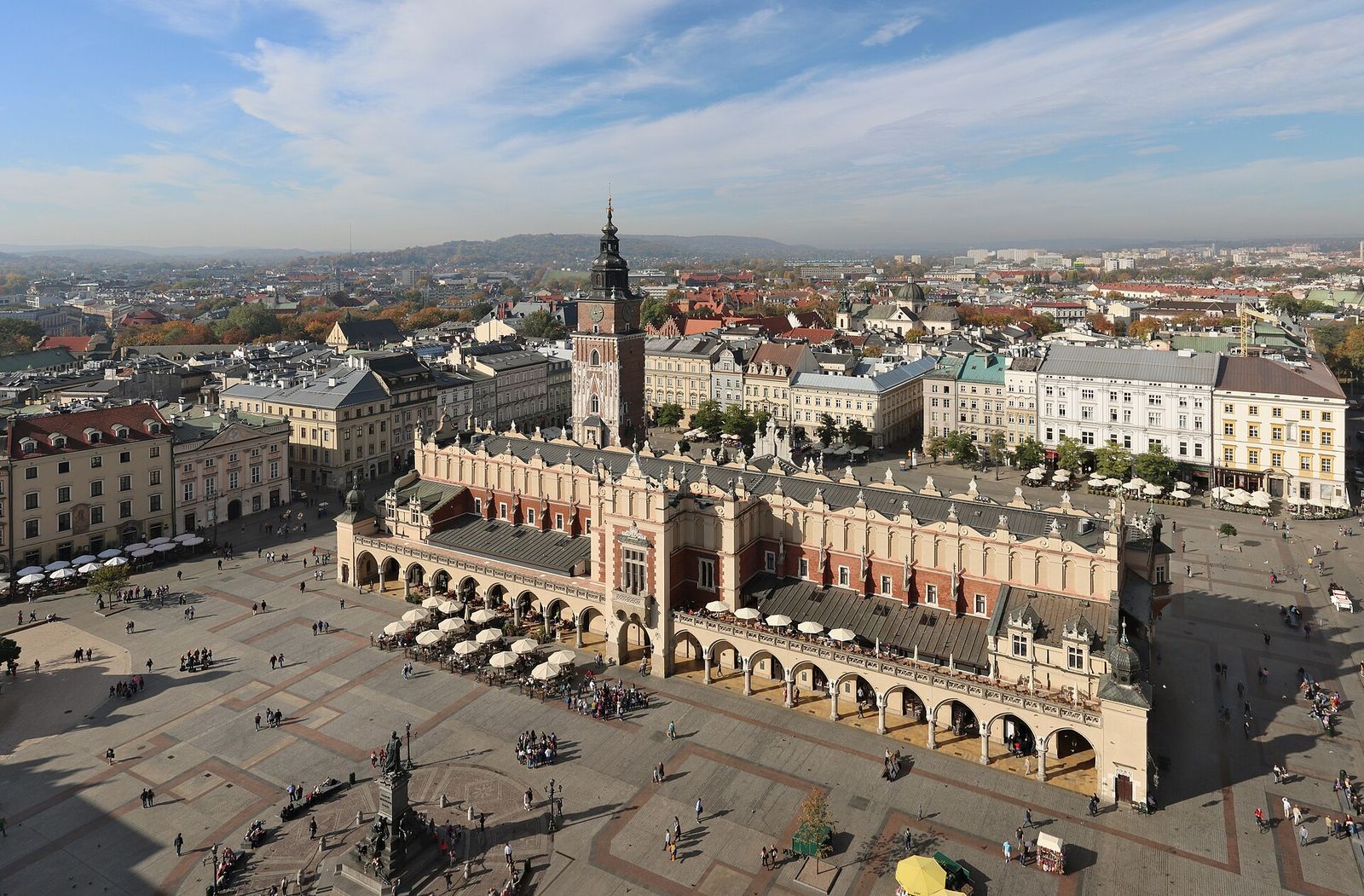
Few European cities pack so much into a small, walkable centre. The **Main Square** (Rynek Główny) is one of the largest medieval squares in Europe, with the **Cloth Hall** in the middle and **St Mary's Basilica** at one corner. Every hour a trumpeter plays the hejnał from its tower and stops mid note, remembering a watchman said to have been struck by an arrow. A ring of park, the Planty, follows the line of the old walls around the centre.
What to see
Walk the **Royal Road** from the Barbican through Floriańska Street and the square to **Wawel Hill**, where the castle and cathedral hold royal tombs, tapestries and the great Sigismund Bell. Below the hill, the dragon's den and a fire breathing dragon statue keep children happy.
South of Wawel lies **Kazimierz**, the old Jewish quarter, with synagogues, the Remuh Cemetery, the Galicia Jewish Museum and a lively scene of cafés, bars and the round food stalls of Plac Nowy, famous for zapiekanka, a long open sandwich. Across the river, **Podgórze** holds the wartime ghetto, the memorial chairs of Ghetto Heroes Square and **Oskar Schindler's Enamel Factory**, now a moving museum of the city under occupation.
Also worth time: the underground **Rynek Underground** museum beneath the square, the **Czartoryski Museum** with Leonardo's Lady with an Ermine, and **Nowa Huta**, a planned socialist district with wide boulevards and its own fascinating story.
Day trips
The **Auschwitz Birkenau Memorial and Museum** at Oświęcim is around an hour and a half away. Entry is free but must be reserved on the official site, and guided visits fill up weeks ahead in summer. Allow a full day and give yourself quiet time afterwards. The **Wieliczka Salt Mine**, a UNESCO site with chapels and statues carved from salt, is twenty minutes by train. **Ojców National Park** offers limestone valleys and a castle on a crag, and **Zakopane** is a long day or better an overnight trip.
Food and drink
Kraków is the place to try **obwarzanek**, the ring shaped bread sold from carts, **pierogi** of every kind, sour **żurek** soup in a bread bowl and smoked oscypek cheese grilled with cranberry. Milk bars such as Bar Mleczny Pod Temidą serve simple home cooking at low cost, while Kazimierz and the old town have creative modern Polish restaurants. Vodka tasting bars and cellar pubs keep the evenings lively.
Where to stay
The **Old Town** puts you in the heart of the action but can be noisy at night. **Kazimierz** has character, cafés and boutique stays, and quieter streets in the morning. **Podgórze** across the river is calmer and close to the Schindler museum, and the area near **Wawel** offers a good middle ground.
Getting around
Most sights are walkable, and trams cover the rest. Buy tickets from machines or the app and validate paper tickets when you board. From the airport, a train runs to Kraków Główny station in around twenty minutes. Use taxi apps rather than street cabs.
Good to know
Avoid the bars with touts on Floriańska Street who promise free entry, and keep an eye on your drink. Book Auschwitz and Wieliczka in advance, and if you go to Zakopane on a summer weekend, travel early to beat the traffic.
Questions about Kraków
How many days do I need in Kraków?
Three days covers the city at a comfortable pace. Add one day for Auschwitz Birkenau and half a day for Wieliczka.
Do I need to book Auschwitz in advance?
Yes. Entry must be reserved on the official memorial website, and guided slots in popular languages sell out weeks ahead in summer.
Is Kraków walkable?
Very. The Old Town, Wawel and Kazimierz are all within a short walk, and trams fill the gaps.
Is Kraków good for families?
Yes. The dragon at Wawel, the salt mine, the Planty park and horse carriages on the square are all popular with children.
Facts checked . Fees, schedules and entry rules change, so always confirm the latest with the official source.