At a glance
- Best for
- History, architecture, beaches, seafood and amber
- Airport
- Gdańsk Lech Wałęsa Airport (GDN), about twenty five minutes by train from the centre
- Time needed
- Three days, including Sopot and Malbork
- Best season
- June to September
- Getting around
- Walking, trams and the SKM commuter train along the Tricity
- Good base for
- Sopot, Gdynia, Malbork Castle, the Hel Peninsula and Westerplatte
Why go
Gdańsk combines a beautifully rebuilt Main Town with real historical weight and a seaside on its doorstep. Together with the resort town of **Sopot** and the modernist port of **Gdynia**, it forms the **Tricity**, linked by a fast commuter train, so you can mix museums in the morning with a beach in the afternoon.
What to see
Walk the **Royal Way** from the Upland Gate through **Long Street** (Ulica Długa) to the **Long Market** (Długi Targ), where Neptune's Fountain stands before the Artus Court. At the end, the **Green Gate** opens onto the Motława river and the medieval **Crane**, once the largest port crane in Europe. **Mariacka Street**, with its stone terraces and amber workshops, is perhaps the prettiest lane in the city. **St Mary's Church** is one of the largest brick churches in the world; climb its tower for the view.
The **European Solidarity Centre** at the gates of the shipyard tells how strikes led by Lech Wałęsa in 1980 changed Europe. The **Museum of the Second World War** is one of the most powerful museums on the continent, and **Westerplatte**, where the first shots of the war were fired in 1939, can be reached by boat in summer. For something lighter, the **Amber Museum** in the old prison tower shows how fossil resin shaped the city's wealth.
Sopot and Gdynia
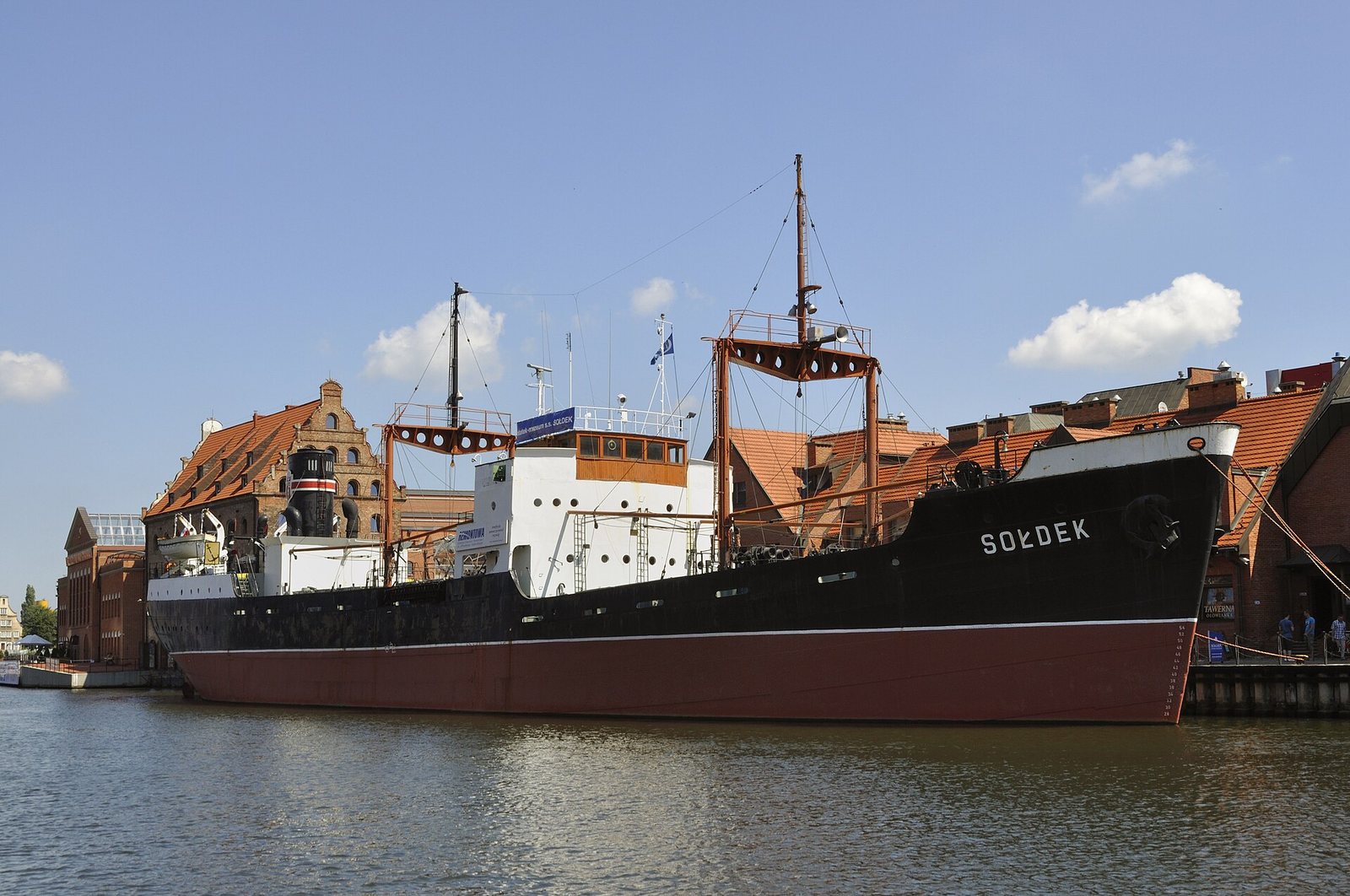
**Sopot** has a long wooden pier stretching into the Baltic, wide sandy beaches, the quirky Crooked House and a busy summer nightlife scene along Monte Cassino Street. **Gdynia**, built in the 1920s, is known for modernist architecture, the museum ships Dar Pomorza and Błyskawica, and the Emigration Museum, which is especially meaningful for diaspora visitors.
Day trips
**Malbork Castle**, the vast brick fortress of the Teutonic Knights and a UNESCO site, is about forty minutes away by train. The **Hel Peninsula** is a thin strip of dunes and pine forest with fishing villages, seal centre and calm bay waters popular with windsurfers. **Słowiński National Park**, further west, has shifting sand dunes.
Food and drink
Try Baltic herring served in many ways, smoked fish from beach shacks, fish soup and pierogi with local fillings. Goldwasser, a herbal liqueur with flakes of gold, has a long history in the city. Hala Targowa, the market hall, is a good place to browse local produce.
Where to stay
The **Main Town** is ideal for sightseeing. **Granary Island** and the riverside have newer hotels and apartments close to everything. **Sopot** suits beach lovers and night owls, and **Oliwa** is quiet and green near the cathedral and park.
Getting around
The centre is walkable. Trams cover Gdańsk itself, and the SKM train runs along the coast to Sopot and Gdynia. Trains link the airport to the Tricity, and taxi apps work well.
Good to know
The Baltic is cool even in summer, and weather changes quickly, so pack a layer. In July and August the centre is busy, so book stays ahead. When buying amber, choose established shops and ask for a certificate.
Families
Children enjoy the Hevelianum science centre on Gradowa Hill, the boat trip to Westerplatte, the Gdynia Aquarium and beach days in Sopot or Jelitkowo. In winter, the city's Christmas market and a ride on the big wheel by the river keep everyone happy.
Questions about Gdańsk
How many days do I need in Gdańsk?
Two days covers the city. Add a day for Sopot and Gdynia and another for Malbork Castle.
Can you swim in the Baltic?
Yes, in summer, though the water is cool. Choose beaches with lifeguards and follow the flags, as currents can be strong.
How do I get to Malbork Castle from Gdańsk?
Regional and Intercity trains take around forty minutes, and the castle is a short walk from Malbork station.
Is Gdańsk good in winter?
It is quieter and colder, but the museums and Christmas market make a pleasant short break. Beach life is a summer thing.
Facts checked . Fees, schedules and entry rules change, so always confirm the latest with the official source.